KINK & BDSM
Will You Hold My Anger, Daddy?
Inherited rage, a Daddy kink, and the question of whether any man can truly hold the weight of intergenerational abandonment and girlhood harm.
Inherited rage, a Daddy kink, and the question of whether any man can truly hold the weight of intergenerational abandonment and girlhood harm.

The first night I spent with Don, he put his hand, fingers splayed, across my chest. He pushed gently, as his hand, warm and soft, made small, firm circles. It felt like it covered my entire upper body, from my clavicle, down to my bellybutton, and spanning the width of my ribcage. He told me to sync my breathing to his.
“Yes, Daddy,” I said, as I focused on tempering my excited breaths.
As my body softened into his competence, he explained that he used this type of handling to calm horses.
My great-grandmother Greta Sofia was terrified of horses. In 1898, when she was only ten months old, her uncle set fire to the stable next to her home and the horses went fleeing into the cobblestone streets of Stockholm, wild and untamed with terror. Greta claimed to have a vivid memory of the stampede, one that she spoke of freely and often to my mother, her granddaughter. It must have been scary to see. Was it really possible that the memory was so strikingly terrifying that it imprinted on the mind of a baby?
I’ve never been particularly comfortable around horses myself. I don’t know how to read them and they are so big and capable of destruction. I’ve never seen one in a state of terror, but that just means my catastrophic imagination fills in the blanks. Could these hands now on me, one on my back and one on my front, large but still just human, really soak away that level of terror and restore a big beast to a state of docility?
There were so many things Greta didn’t speak about that my mother only learned after she died. My mom knew that Greta’s mother died of tuberculosis when Greta was just four years old. But she didn’t know that Greta’s father left her to grow up in an orphanage after her mother died. When I researched it, Malmqvistska orphanage, I found it described as a place for “fattiga och värnlösa flickebarn.” Poor and defenseless girls. While Greta was there, her father left Sweden for America where he started a new family. When Greta died, there were photos of her father with his new family among her keepsakes. She never spoke about wondering if her father would ever return and bring her with him to America.
[
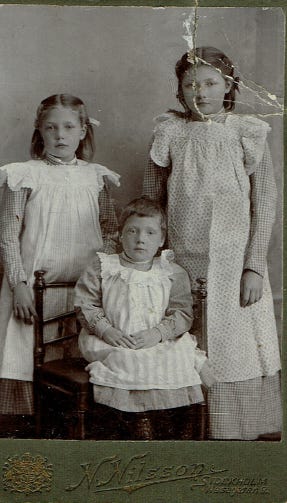
Greta (left) with her sisters Maud and Lola at Malmqvistska orphanage
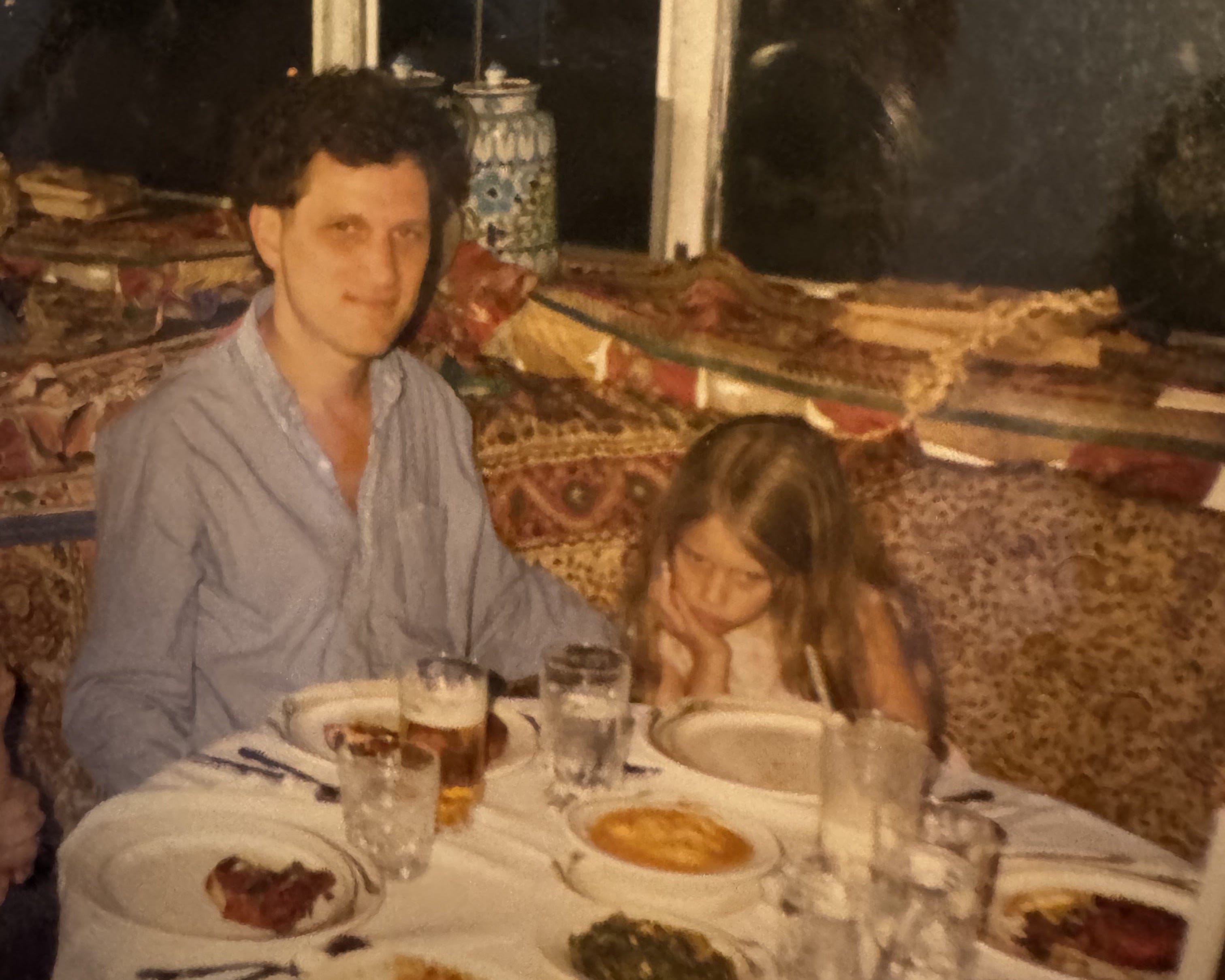
He never did. But I was born here. Because after Greta died, her granddaughter, my mother, came to America herself. She met my dad in New York in 1985 and in 1991 they had me. There was a story in my family that I was born stubborn and resolute—that I was determined and that I had a temper. In many of the family photos from when I was a child I am defiantly scowling. But I always felt more like a defenseless girl. The temper that my family saw never made it out of the home. As a child I never let my friends or teachers see it, but my younger brother felt it as thwacks on his innocent back and my parents heard it in slammed doors and thrown books. Later, after I became a mother, my coworkers wouldn’t have been able to imagine it, but my children felt it in exasperated screams and grips on their wrists that were a touch too tight.
[
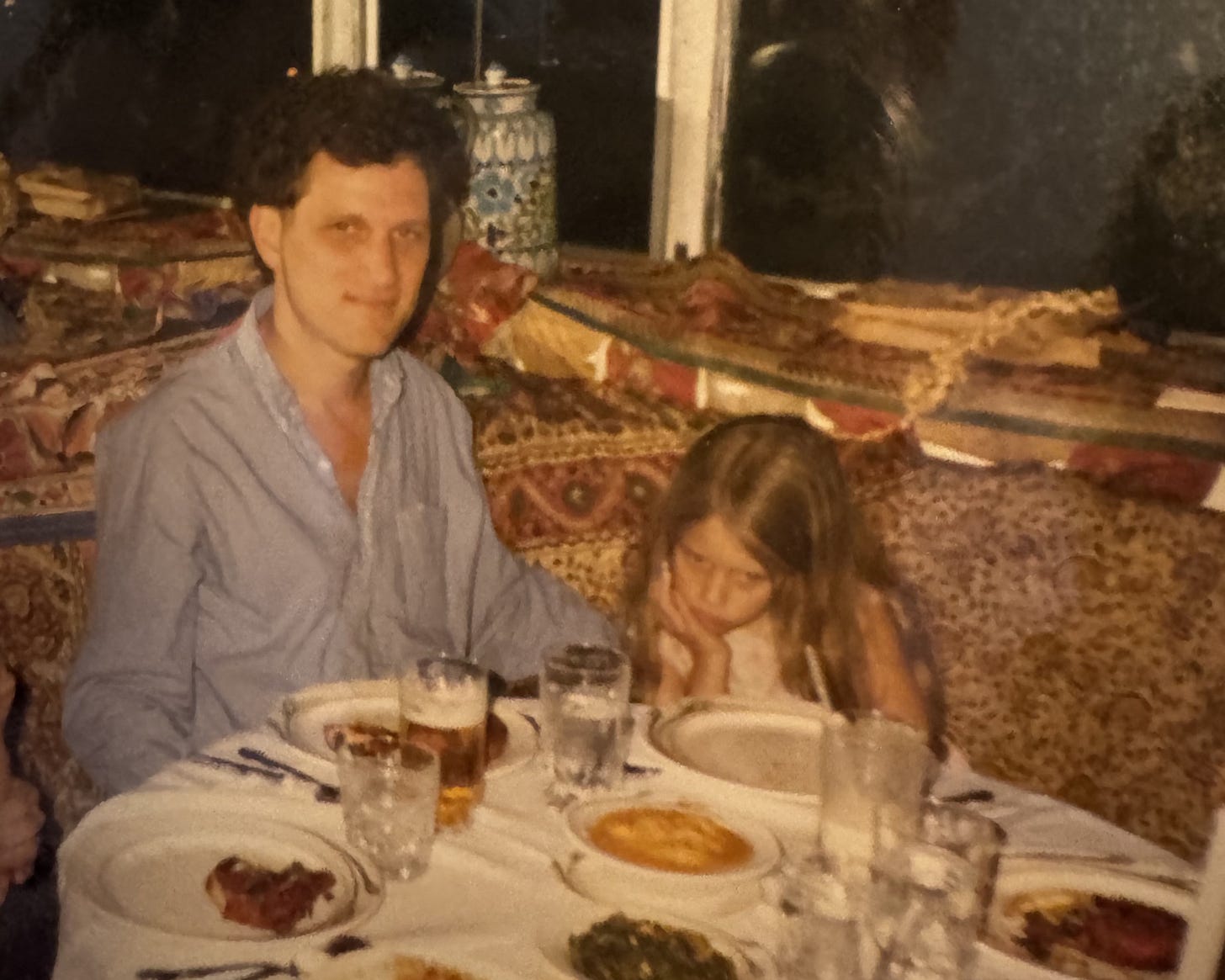
Scowling as a child.
The handyman who came into my apartment when I was 11 and made me dance with him while his penis grew hard against my leg would never know the type of anger I was capable of. Because it didn’t come out in moments like that. Later that year, the stranger who grabbed my butt on the subway with a force strong enough to strangle a baby chick wouldn’t know either, because none of the hot energy of my anger came to thaw me then.
Nearly three years after our first date, Don still puts his hand on me to center me. But sometimes I feel it less as a comfort and more like a branding iron—when the heat of his fingers touch me their calm makes me livid. I’m so angry that he doesn’t know what it feels like to be defenseless. He doesn’t know what it feels like to be a baby while wild beasts rage in terror outside your window. He doesn’t know what it feels like to be frozen—calm—when you need to be something else. He doesn’t know that being calm and docile isn’t always good. He doesn’t know anything and he is supposed to know everything. Isn’t that what it means to be Daddy? I imagine him in those stables, his hands trying to calm the horses who will burn if they don’t break free. Then my mind turns him into the uncle who set the fire. Or the father who will leave me in an orphanage if I don’t calm down. Because isn’t that what it means to be Daddy, too? To be willing to carry the burden of my projections? And to absorb all of the pain that my little girl body has endured and all of the pain that every girl has ever endured at the hand of a man? Can’t you see how crazy and sad and terrible it is that her whole life Greta was afraid of horses when she should have been afraid of the man who set the fire? I want to feel that your hands can hold that. Can they?
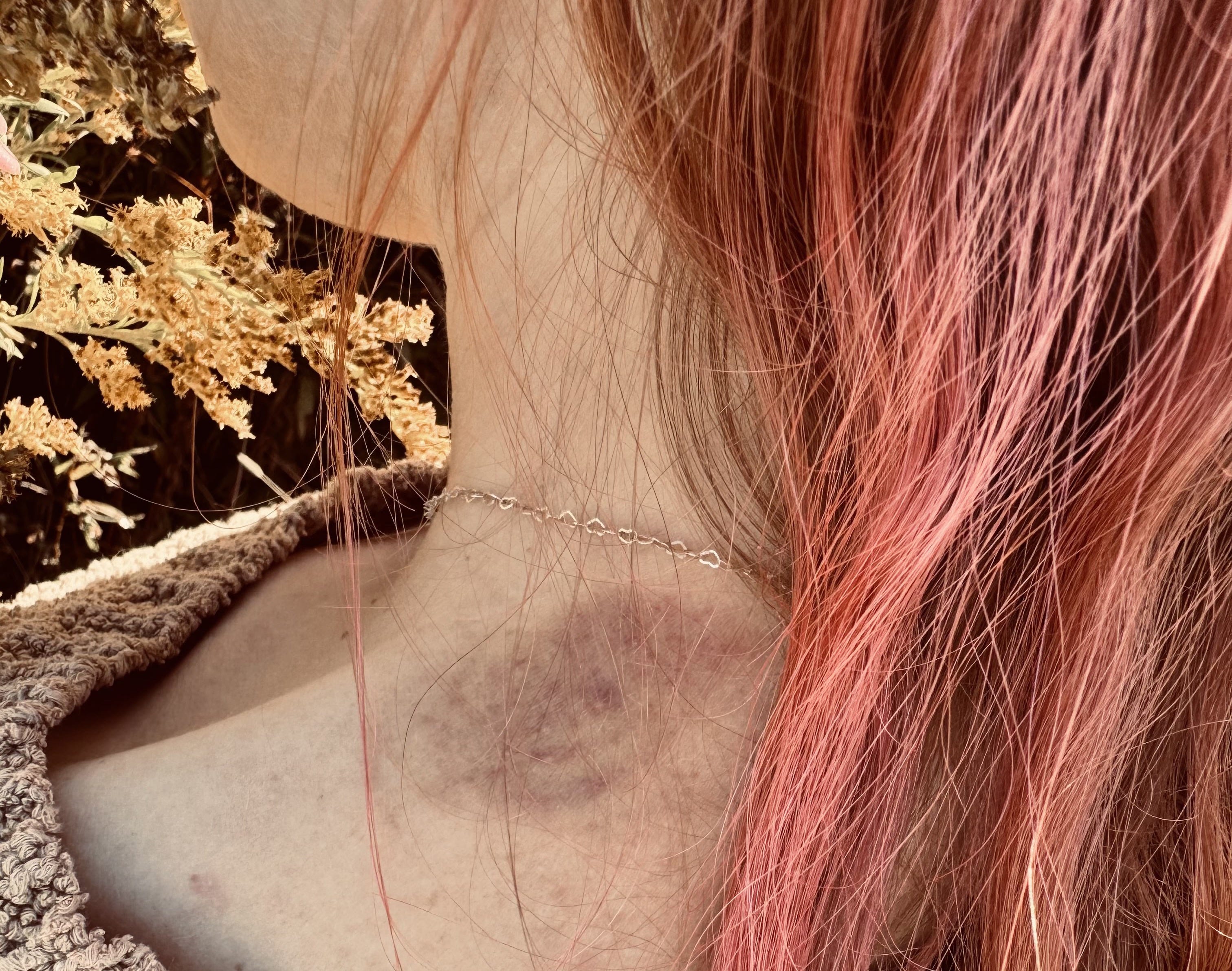
Don wants so badly to understand. And he molds his hands into gripping restraints that hold me with a force that honors the depth and opacity of my anger when I reject his calm. His mouth vacuum-seals on my neck and when I look in the mirror the next morning at the purple, I know that part of him understands. Because he knows that I need something real to look at and he wants to give that to me. He tells me how much he wants to help me make art out of it—this thing I can’t explain that he wants to understand—and my purple neck feels like art.
[
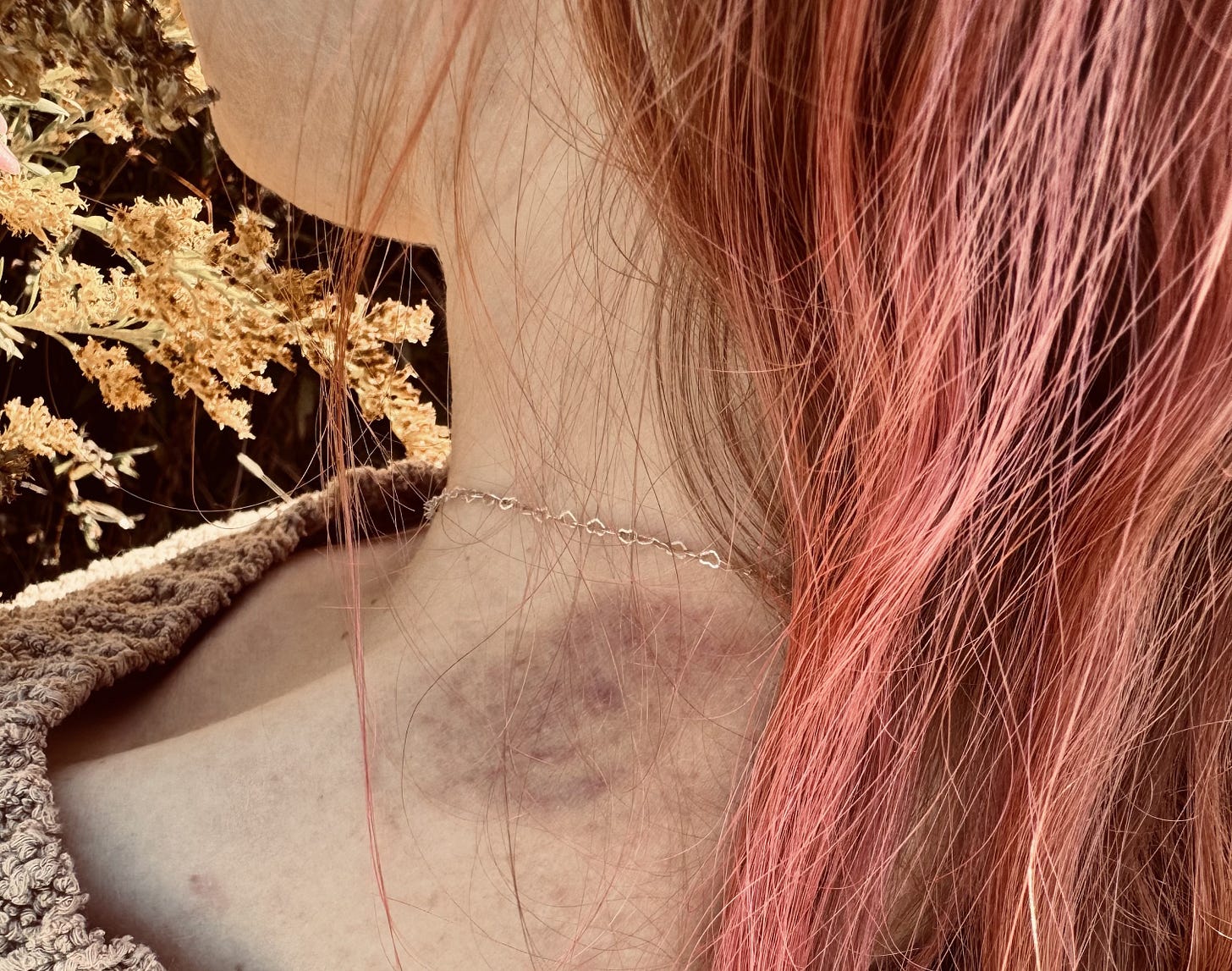
This thing I can’t explain that he wants to understand.
He wants to show me that I can let terror flee in the streets untamed, because untamed terror doesn’t scare him. Even my fear that he won’t ever understand all of it.
Original Post: Saga McFarland

Scan to download
Comments
Join the conversation — create a free account to comment.
Join the conversationLoading comments…