FEATURED
Bias Toward Non-Monogamy in Mental Health
Personal reflections on preparing for a CEU training
Personal reflections on preparing for a CEU training
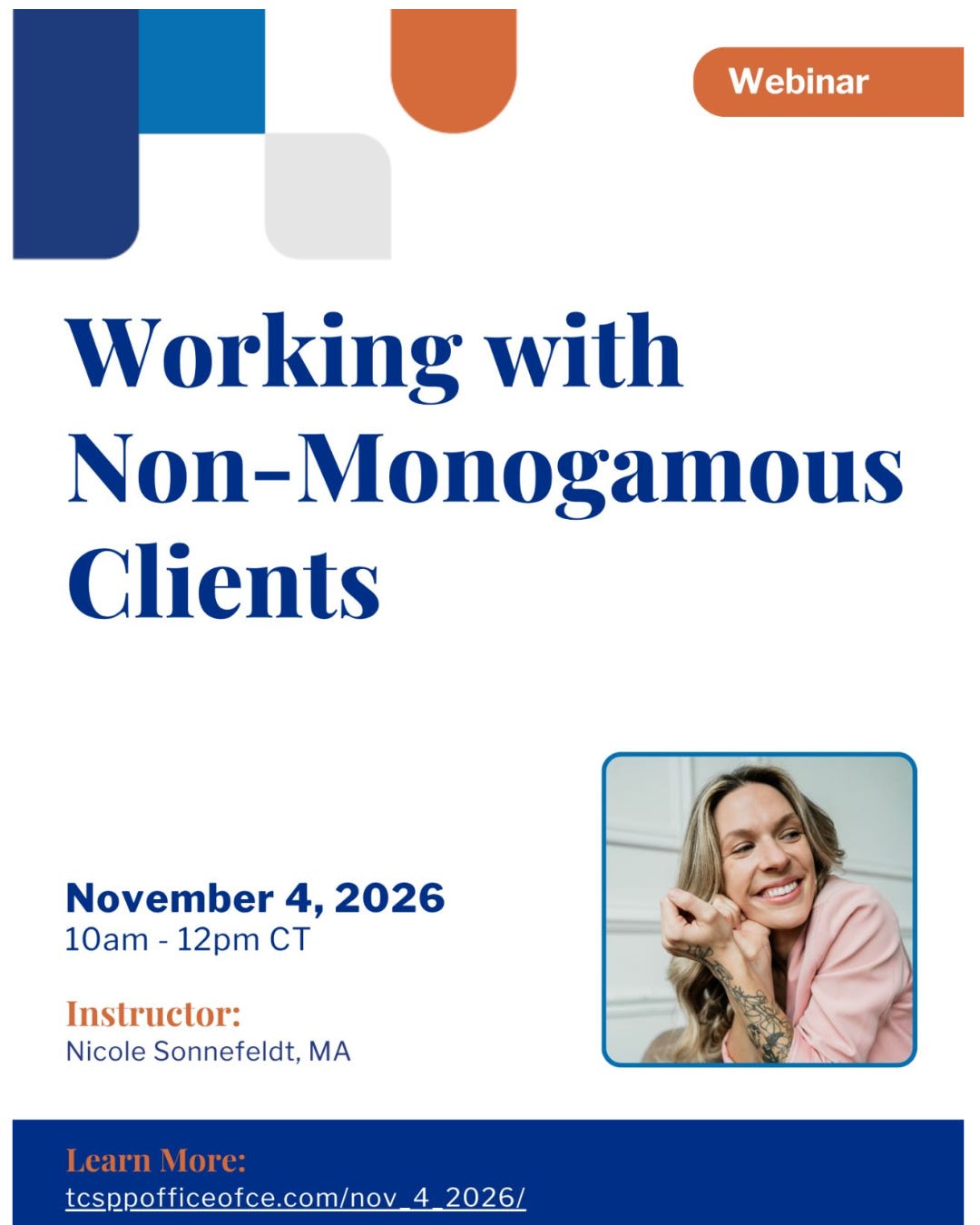
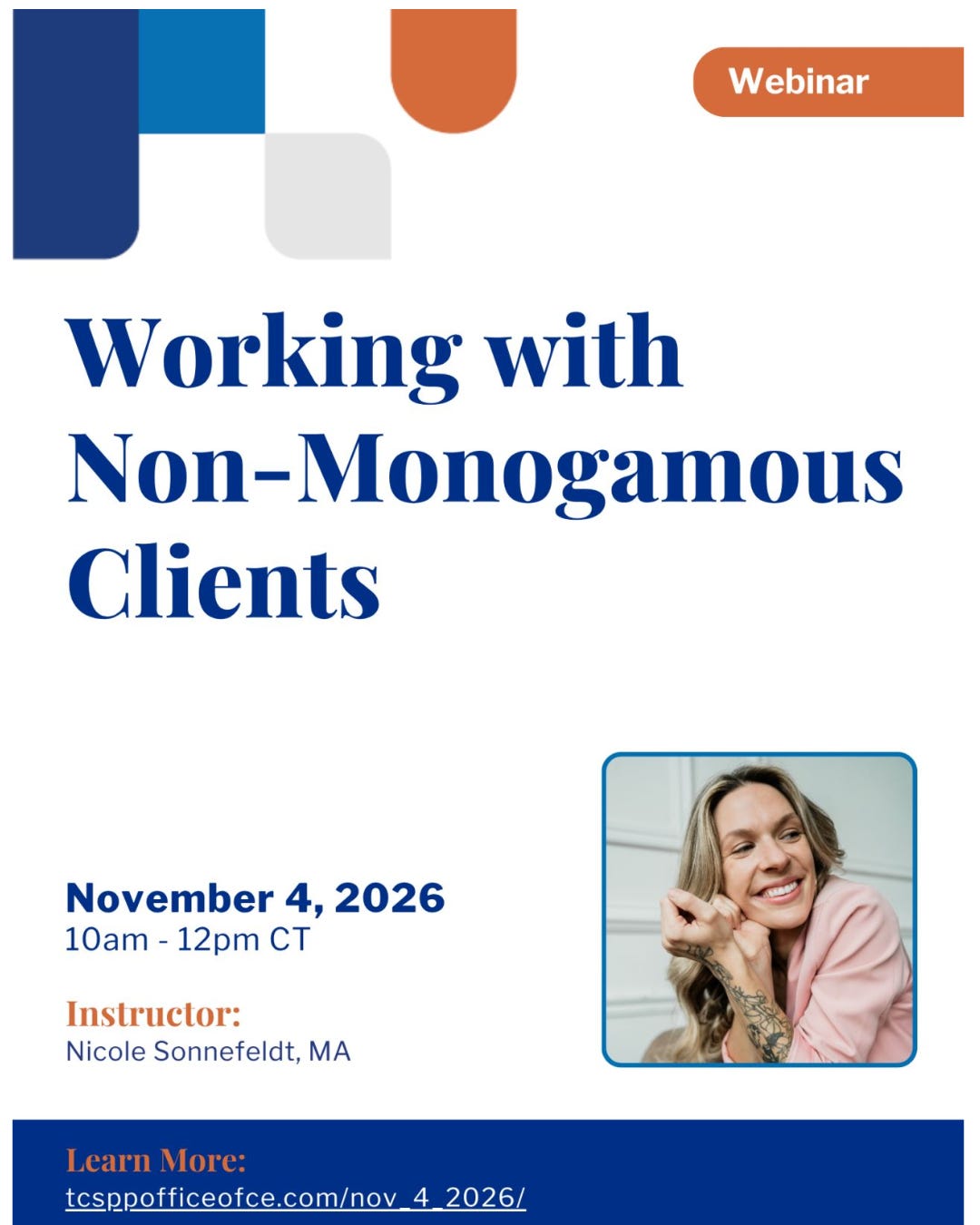
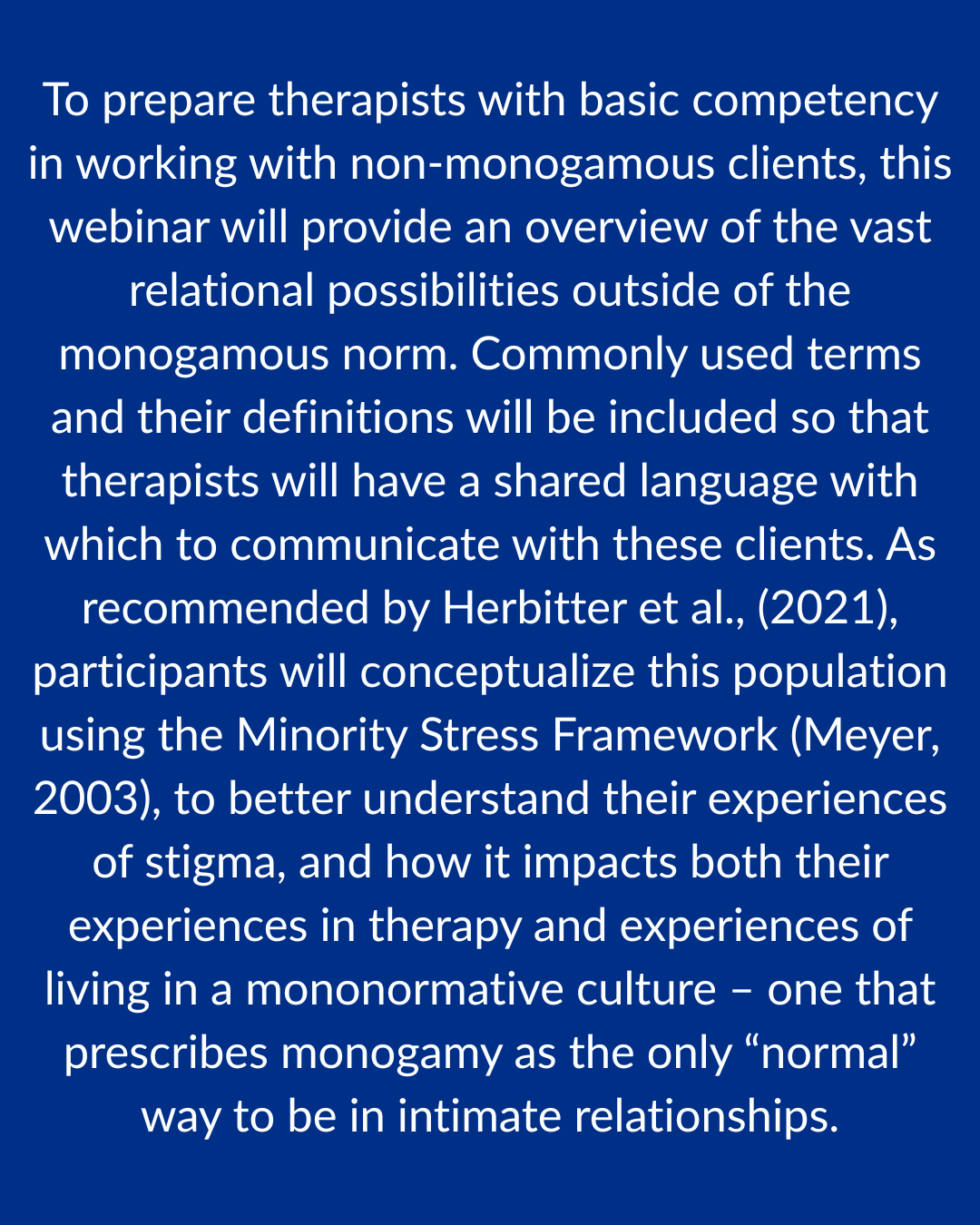
One week from today, I’ll be presenting an official CEU training for mental health professionals, “Working with Non-Monogamous Clients” (Providers: click here to sign up!). The opportunity to educate my peers on basic competency when working with my community is one I couldn’t be more honored to have. As I prepare for next week’s webinar by combing through the most current research, I’m reminded of just how necessary this training is.
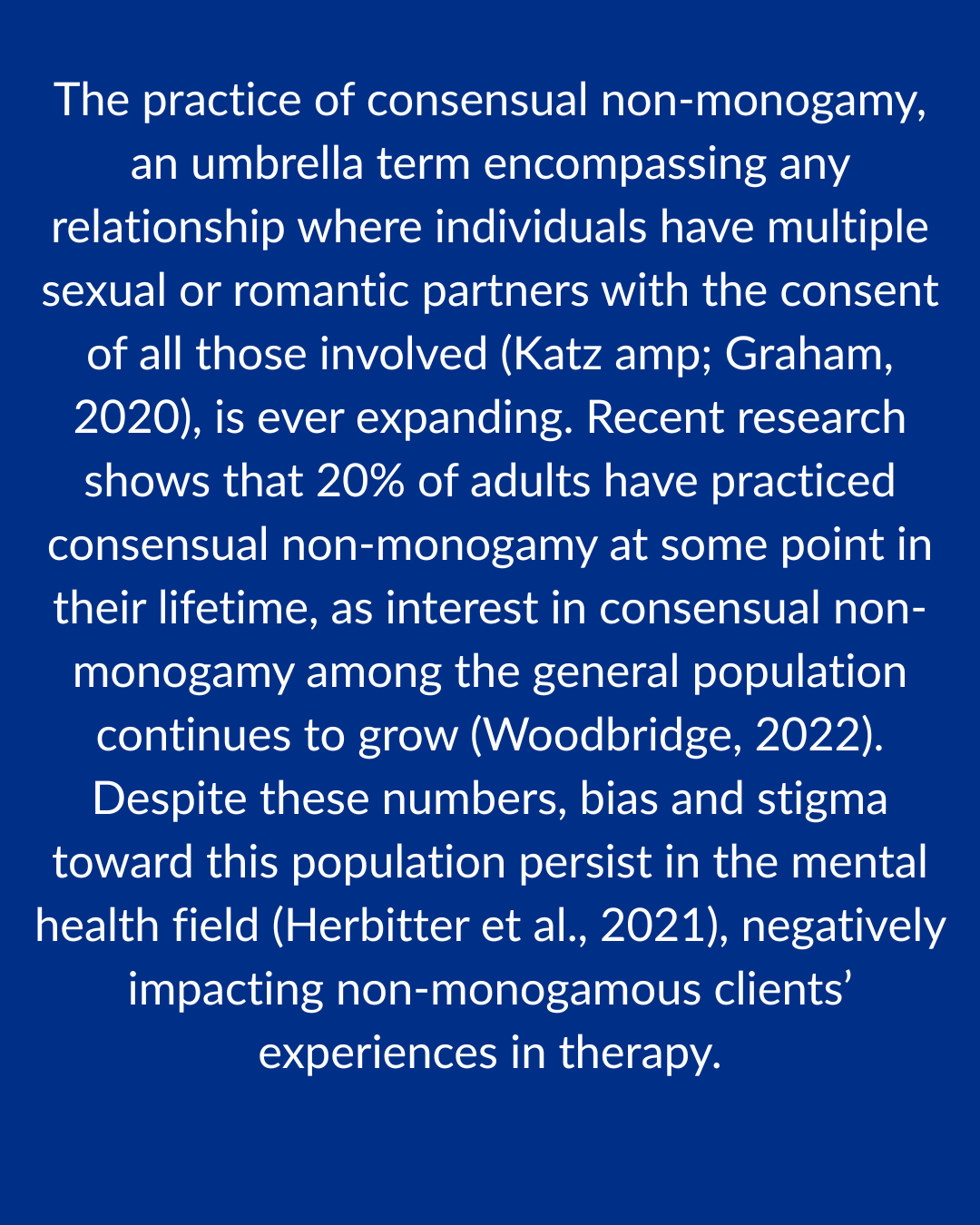
An official CEU training requires a list of references academically published within the last ten years. Unsurprisingly, one of the major themes arising among the articles I’ve reviewed is how experiences of bias from mental health providers negatively impacts the experiences of non-monogamous clients in therapy, in addition to their willingness to seek out services. This was unsurprising to me, given some of the personal experiences I’ve had with biased providers. One of the most atrocious examples occurred when I was struggling to find my own way as a newly single person navigating non-monogamy, kink and queerness.
In 2023, due to insurance reasons, my options for therapy were slim. After finishing my EMDR training and opening up Pandora’s box, my priority was to find a clinician trained in this modality. Additionally, I was looking for someone who was kink, LGBTQ+, and ENM affirming. Since the therapist listed himself as “affirming” of said identities, I thought it meant he’d be able to help me when it came to navigating issues specific to these parts of my identity. Unfortunately, he soon recommended that I attend Love and Sex Addicts Anonymous - a recommendation that caused a lot of personal confusion and ultimately, emotional harm.
There are many issues with this scenario. For one, as a trauma therapist, he should have been able to conceptualize how my history of sexual assault, sexual harassment and emotionally abusive relationships contributed to shame around my sexuality and relationship orientation. Not to mention, the impact of the systemic trauma those of us practicing non-monogamy face as a result of the mononormative world we live in. The shame I felt was something I discussed often, as it contributed to a large amount of confusion and distress in my day to day. As I struggled to decide how to move forward after the ending of my first non-monogamous relationship, I also struggled with the belief that there was something wrong with me, and that no one else would ever accept me for who I am. When this therapist suggested that I may be a love or sex addict - diagnoses not currently listed in the DSM-5 due to the lack of research proving their legitimacy - it only exacerbated the belief that something was wrong with me.
I’d also guess that whoever’s reading this right now is just as perplexed as I am that this recommendation might come from a therapist who advertises themself as kink- and ENM- affirming. That said, my therapist was a white, cis-gender gay male. As a member of the most privileged group of the LGBTQ+ community, it’s likely this therapist’s experience of kink and non-monogamy were vastly different than mine, and even more so with less privileged members of the community than myself. However, a large part of breaking down personal bias as a clinician is to take an honest look at how your own identity, privilege and power might impact your view of your clients. Unfortunately, many providers lack training and supervision which prioritizes this - resulting in a lack of understanding of their own personal bias, and a lack of exploration of the way stigma and systemic trauma harms clients.
For good reason, many people who experience clinician bias are hesitant to seek out a new provider and return to therapy in the future. As a therapist myself at the time, I remained motivated to do so because continuing weekly therapy was a priority to me. I knew that if I didn’t deal with my own issues, the risk of harming my clients would be much higher. When my workplace insurance policy kicked in, I was privileged enough to find an amazing, open-minded and affirming EMDR therapist - and I credit the work we did together as the reason why I had the confidence to start Freeform and be fully “out” about every part of my identity.
Although my personal experience contributes to my passion for educating counselors on affirming care for our community, it goes much further than that. Based on anecdotes I’ve heard from acquaintances and friends, I know I am not alone in this experience - and reading the available research further proves this. Now, I’d like to end this article with a question for my readers:
Thanks for reading Freeform Coaching for Conscious Non-Monogamy! This post is public so feel free to share it.
Original Post: Nicole Sonnefeldt

Scan to download
Comments
Join the conversation — create a free account to comment.
Join the conversationLoading comments…