MIND & BODY
Wanting Men After Trauma
A PTSD diagnosis, graduate school in gender-based violence, and still wanting men. One woman searches for a story that makes desire feel like courage, not.
A PTSD diagnosis, graduate school in gender-based violence, and still wanting men. One woman searches for a story that makes desire feel like courage, not.
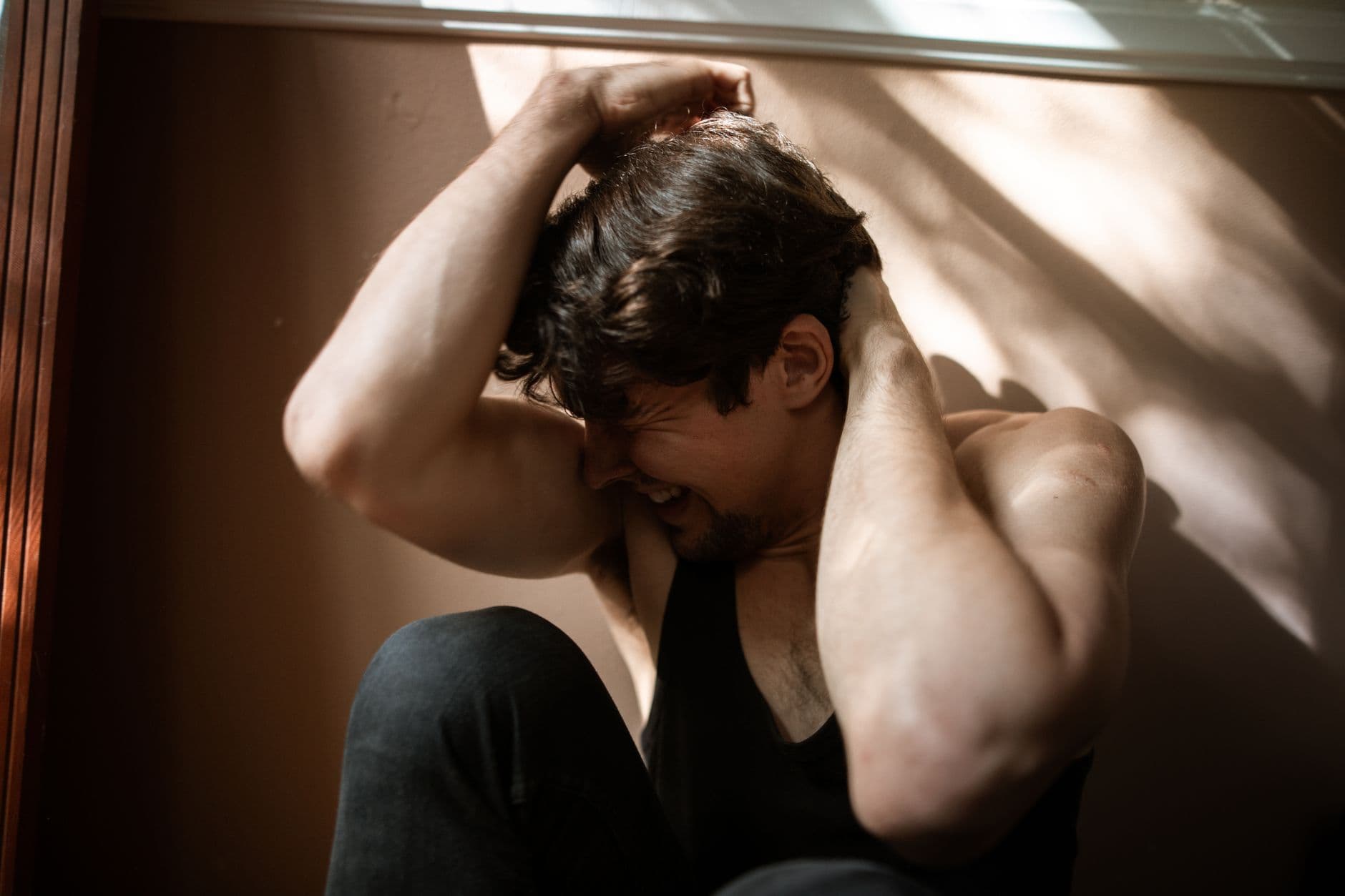
Photo by RDNE Stock project on Pexels
Like most women alive today, I live in a body shaped by sexual violence and patriarchal trauma. It is a body that has stared at the ceiling and cried while lying naked under a man. It is a body whose lips, at 29, kissed the hardwood of a fifth floor studio with no elevator because it was the first floor its feet ever touched that didn’t belong to anybody else.
I’d clawed my way out, through the maze of marital obligation and fear of single motherhood. And now I had a life that was my own—untethered to any man. I felt unstoppable.
Single motherhood was hard—I spent a lot of time wishing I had more help and feeling overwhelmed. The way my patience faltered in direct proportion to the quality of sleep I’d had the night before made me feel fragile and crushingly limited. But there was something more combustible, more existentially threatening brewing inside me than my occasional mom rage. Ever since weaning my youngest I’d noticed it. My eyes lingered a little too long on the principal’s open collar during an assembly. I counted the seconds that one dad at pick-up held my eye contact before I bashfully looked away. It was coming back—the irrational and dangerous longing for a man’s touch. Why!?
After everything I’d been through—including an actual PTSD diagnosis—why couldn’t I rid myself of the dangerous compulsion to want sex with men? I was studying gender-based violence in graduate school. I wrote my thesis on patriarchal coercive control as a tool for strengthening state power. How could my body, this traumatized body, still salivate at the sight of a beard? Wasn’t it supposed to be keeping the score?
I didn’t have a way to make sense of it. All I had was a constant influx of data, news, and lived experience showing me how dangerous men were. Even the “nice” ones. Even the “feminist” ones. The holy grail of protection and freedom would be swearing off men altogether. That was what I was absorbing from “men are trash” empowerment narratives—if I could repress my sexual desire for men I would finally be safe.
I didn’t have a story that framed my desire as anything but pathological.
When I started dipping my toes into dating again I told myself that I was going to do it in an empowered way. On my own terms. I was going to center my own pleasure—and I narrated that as a radical act of taking up space. But my faith in that story eroded quickly—it felt hollow. After orgasm, I still caught myself dodging impulses that might inadvertently place me between these men and their masculinity. My body still knew that was a dangerous place to be.
After a few more experiences of failing to make myself small enough to avoid patriarchal retaliation, I was back to believing that my sexual urges could kill me if I didn’t carefully monitor and contain them. The narrative road that always led me back to “sexual repression is the only way you will be safe” left me feeling cynical and unmoored.
At its core, trauma is an experience of narrative collapse. It comes from events that shatter our beliefs about the benevolence of the world, the meaningfulness of our lives, and our own self-worth. Recovery and realignment with purpose depend on integrating traumatic events into a view of the world that retains meaning. After sexual assault, survivors need a story to make sense of their experiences and their continued urges. I still didn’t have that. I had some tools to protect myself from men—my own bank account, location sharing with friends before dates—but no comforting story to explain why my body still wanted them.
In his 1973 book The Denial of Death, Ernest Becker argues that stories about our significance are the key way we cope with the uniquely human condition of being aware that we live in decaying bodies. The knowledge that we are fragile creatures who will die is too terrible to face directly, so cultures and individuals construct stories that transform our small, finite lives into something transcendent and therefore immortal. We matter because we are good mothers, or good radicals, or good writers—whatever story we are able to believe in. The more we believe that we matter, according to the tenets of the story in which we invest ourselves, the less we are plagued by fear, anxiety, depression and self-doubt.
Sex has always been one of the places where these stories are necessary. Because, as Becker writes, “sex is of the body, and the body is of death.” To mitigate the death anxiety that sex brings up, we imbue it with symbolic meaning. Sex is never just an act. It is always embedded within a story that tells us what the act means. It is an expression of love between two souls. It is a holy act whose holiness makes itself known through the creation of children. It is a radical reclamation of persecuted pleasure. It is a sign that other people value you. It is a political statement against repression.
I still didn’t have a good story I could believe. I still felt that wanting sex meant I was powerless—unable to protect myself from danger. It was the opposite of a death-transcending story. It was a story that painted me as just a creature, beholden to creaturely urges, and it was corrosive. I needed a way to explain this urge to myself that made me feel like more than just a body.
As bell hooks pointed out in her 2004 book The Will to Change,
Militant feminism gave women permission to unleash their rage and hatred at men but it did not allow us to talk about what it meant to love men in patriarchal culture, to know how we could express that love without fear of exploitation and oppression.
On my first date with my current partner, Don, we had a brush with death. While we were sitting by the East River, two people nearby were fighting and one of them pulled out a gun. Don and I had just met—I didn’t have any reason to trust him, and one giant one not to: he was a man. But when he put his steady hand on my shoulder and told me to just breathe and keep my eyes on him, my body felt calm. I watched him survey the scene and saw that behind his eyes a strategy for keeping us safe was forming. The fight nearby dissipated quickly, but my draw to be close to him didn’t.
A few weeks later, my dog died in my arms. Right before he took his last breath, he looked up at me with a face of pure fear. I imagined he was begging me to save him. But I was powerless—I couldn’t. When I told Don about it, he gave me a different story about that moment.
“I know you read his look as a plea,” he said, “and I can imagine that was a piece of it, but also, whatever pain or fear he had was lessened by looking at you in that moment. And if karma exists, I believe that showing up for someone to bear their fear as they let go is about the best thing anyone can do.”
Don introduced me to Becker’s ideas, and in particular, the power that co-creating shared narratives can have on our sense of self and well-being.
It can be easy to read Becker and come to the conclusion that because the stories we tell ourselves about the importance of our lives are only powerful if we have faith in them, that they are flimsy or not ultimately real.
But Don always emphasized Becker’s ultimate optimism. He’d often remind me of this passage:
When we talk about the need for illusion we are not being cynical. True, there is a great deal of falseness and self-deception in the cultural causa-sui project, but there is also the necessity of this project. Man needs a “second” world, a world of humanly created meaning, a new reality that he can live, dramatize, nourish himself in. “Illusion” means creative play at its highest level.
Don helped me see that together, we could create new stories about my life and the things I had experienced. Don offered me the story that maybe my willingness to continue to date men wasn’t stupid, but courageous. That by indulging in my “irrational” longing instead of succumbing to cynicism I was making the brave choice to have faith in my body.
Of course, my body wouldn’t have been able to believe this story if it didn’t also feel safe in his presence. But it did. It felt not only safe, but alive.
In Trauma and Recovery, Judith Herman emphasizes the importance of healing trauma in relationships.
The core experiences of psychological trauma are disempowerment and disconnection from others. Recovery, therefore, is based upon the empowerment of the survivor and the creation of new connections. Recovery can take place only within the context of relationships; it cannot occur in isolation.
My relationship with Don helped my mind and body feel aligned again. It gave me a story in which my desire wasn’t evidence of weakness or damage, but a form of intuition—something that could lead me toward connection instead of danger. My urges led me to him—he has the best beard—and he taught me how to tell new stories about myself and my body.
[

Don and I beneath the night sky—small, but connected to something larger than ourselves.
Healing from patriarchal trauma requires rebuilding meaning around the body. We can’t heal if we keep treating our bodies as sites of danger rather than sources of wisdom. Otherwise we wrest control of our bodies away from men only to impose the same domination on ourselves.
The narratives that restore meaning often sound grandiose, or naïve, to people who don’t share them. I know how the promise of heaven has always sounded to me. I imagine some people look at me trusting my body to be held by a man again and feel afraid—because you can never be sure. And they’re right. My safety is not guaranteed by anything besides my faith in the way my body feels around him. But even if it were, safety alone is a faulty substitute for meaning, and it is always temporary.
There is no one right story that allows us to reconnect with meaning. But I do believe we owe it to ourselves to find the story that allows us to feel alive in our bodies again. If we can surround ourselves with people willing to build meaning with us—not through stories of cynicism but transcendence—then we may end up with something deeper than short-term safety: a life wide enough to hold risk, and still choose aliveness. Without that, trauma strands us in a world where cynicism sounds like wisdom and withdrawal passes for security.
Original Post: Saga McFarland

Scan to download

Comments
Join the conversation — create a free account to comment.
Join the conversationLoading comments…