IDENTITY
Violent Nonviolent Communication
On Last Ditch, political infighting, and relational frameworks in community conflict.
On Last Ditch, political infighting, and relational frameworks in community conflict.
Meet me at the lesbian bar. Meet me at the covid conscious bar. Meet me at the covid conscious lesbian bar in Western Massachusetts.
One of my closest friends got her masters at UMass Amherst, and we spent a good amount of time together in Northampton and the surrounding areas sipping adaptogenic beverages served in compostable cups, deconstructing patriarchy and dabbling in discourse. “Discourse” is a term that generally refers to a system of thoughts or constructed ideas, and/or to the vernacular used within a specific field of study. It’s shared language, terminology that’s handed down, year over year as it evolves, across different (typically academic) spaces.
Being able to wield the appropriate vernacular in any arena gives you entry, creating an assumed trust that you know what you’re doing here and what you’re talking about relevant to the subject matter. Discourse, on the flip side of that, also operates as a mechanism of exclusion. If you don’t know the right code words you are not in the club. And this happens very often - in particular - in spaces that very noisily tout inclusive practices. It’s hard to over-emphasize how advanced the language and rules of engagement can be in communities like those in Western Massachusetts. With the highest lesbian population per capita in the US and the presence of several historically womens’ college campuses and student populations (that have expanded to include trans and nonbinary students too) Western Massachusetts is a special place. It can also be an echo chamber.
As I begin to unpack what it is I feel compelled to say about the Last Ditch situation, I’m noticing how anxious I feel. Confronting and discussing an event that “splintered the queer community” means getting into the fray. I can already imagine the discourse warriors coming for my comment section. Trolls have never bothered me. On the other hand, a highly therapized queer person with a staggering vocabulary and a sharpened skill for a takedown - one that looks generous and eloquent but is in fact eviscerating - is terrifying. And the fact that I am even finding this intimidating is illuminating.
I am the danger. I am that eloquent queer person who could write a Strongly Worded Letter that would make your mother, Karen, blush. But that doesn’t mean I can’t fear my own kind, as there are others far more skilled in these martial arts than I.
But I want to, need to, talk about how we’re so perfectionist and purist about our politics and discourse and languaging on the left that we have lost the plot. I want to talk about infighting. I want to talk about how community operates (and fails) in leftist and queer spaces. I want to talk about how political dynamics echo relational dynamics and that we need to work on the latter in order to get better at the former. Yes, us, We the Therapy People, need to get better at conflict resolution too.
Last thing before I plow ahead: I’m not going to offer practical advice about Last Ditch and its masking policies. I’m not going to pick a dog in this fight. That’s kind of my whole point in writing this. I think it’s tragic that it’s so challenging to cultivate safe spaces for immunocompromised people. I also think it’s tragic that we probably just lost one of only thirtysomething lesbian bars in the US. But I do not think I would be helping anyone by making masking policy suggestions for a bar I’ve never been to.
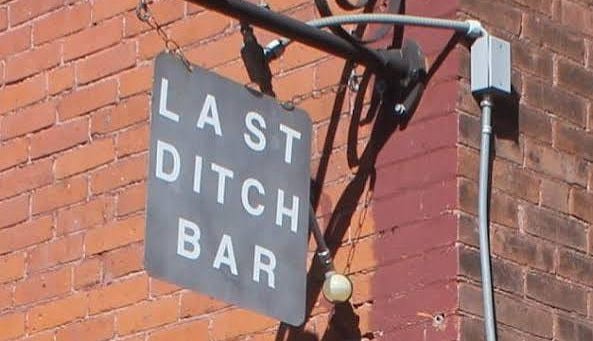
So let’s get into it. What happened. What happened to us? Who hurt us? (Spoiler: it all comes back to trauma.)
A covid conscious lesbian bar announced it would lift its mask mandate for one night a week. There was backlash and a three-hour accountability session. While many of us have read some particularly spicy one liners from the fallout, I want to look at the beginning of that struggle session. The podcast Blocked and Reported obtained audio of the bar’s accountability session, reporting that it opened with the primary mediator introducing themselves as she/they, a licensed therapist in the state of Massachusetts, and having experience in group work and mediation. Another volunteer mediator then read comments from the zoom chat:
“Question for the mediator who is a therapist, who are mandated reporters and work for the state. Are they informed on peer support and intersections of race and disability justice? What is their race? I can’t see them.”
Another person in the chat: “Also given professional credentials are being dropped, are we to understand we now have a professional relationship with this licensed therapist? Do we have confidentiality? Are we subject to mandated reporting or hospitalizations based on the content of our communication? Can we get the NPI of the therapist? It’s confusing and concerning profession and license was invoked in this context.”
“Amplifying what [person above] is saying, therapists are mandated reporters who answer to the state. This changes the dynamic of the discussion.”
Ah, I can almost smell the fresh, woodsy, muggy Western Mass air. I told you I could not overstate how complicated the dialogue and discourse in these spaces can be.
I used to think the engine underneath this kind of community implosion was something like moral perfectionism. The hope that if we just get the language exactly right, harm can’t happen anymore. I still think that’s part of it. But there’s something else here about the connection between and synonymous nature of purity and control.
The left has a well-documented appetite for purity testing. Fluency in communication skills, political correctness, and therapy speak can become its own hierarchy. Whoever’s done the most reading, whoever can cite the right framework fastest, whoever can leverage their vocabulary most convincingly under fire - “wins”.
I’ve watched people use the exact tools I teach in my own practice - tools meant to deescalate, to repair, to keep two people in a room together instead of driving them apart - deployed instead like weapons. A calm voice reciting your feelings back at you as a way of ending a conversation. Boundary-setting that extends well beyond the true definition of a boundary. So-called “boundaries” incorrectly defined and used as control over someone else, as punishment. Therapy speak as artillery, delivered with a measured tone that hides the anger behind what’s being said.
There is such a thing as pretty violent “nonviolent communication”.
A nervous system that has learned the world is dangerous goes looking for the threat before the threat can find it, and control becomes the regulation strategy. If I can name the harm first, define the terms, and set the rules of the room, then maybe I won’t be blindsided again. Go back and read those Zoom comments with that in mind. First the mediator’s race, then their license, and by the time someone is asking for their NPI number we’ve left the conversation entirely and entered a security screening. The interrogation in the above reads as indignant, as a bad faith opening to a three-hour conversation. But you can also read the fear under the procedure if you look for it.
In my work with couples, I’d call this a failed repair attempt. Repair is the move back toward the other person after a rupture, and the tools of repair exist to lower the temperature enough that two people can build mutual understanding. When those same tools are used to win a power struggle, to make sure the other person understands exactly how wrong they are, the repair attempt becomes its own rupture. And because it’s dressed up in the language of care, it’s harder to identify.
I see a version of this in all kinds of relationships all the time, usually when one person has done a lot more therapy - or watched more Instagram videos about therapy - than the other. The more fluent person starts to hold a kind of status in the relationship. An emotional intelligence credential. They have the words for what’s happening, which quietly gives them the authority to decide what’s happening. The other person, who may be every bit as hurt and may even be right, gets tangled up trying to express themselves in a language they only half speak, and loses the argument to grammar errors.
I don’t say any of this to be glib about what the vigilance is protecting against. A lot of the people fluent in this language learned it because they were very seriously harmed by people who didn’t have that language or understanding. Communities that skew queer and left often exist because mainstream institutions failed them first - failed to protect them, failed to believe them, failed to hold anyone accountable for anything. The hypervigilance isn’t irrational. It’s scar tissue that formed after injury.
Scar tissue forms fast and it forms tough, since the body’s first priority after an injury is closing the wound. What it gives up in the process is flexibility. It’s denser than the skin it replaces, it doesn’t stretch the same way, and if you’ve ever had surgery you know a scar can pull at everything around it for years.
An individual or a community that has been hurt badly enough heals the same way. The rules tighten and the language gets more and more precise, and all of it is protective.
Somewhere in the process of developing discourse and practices around repair and mediation post trauma, we agreed on an implicit rule: whoever experienced the harm gets to define the terms for repair. The logic makes sense, given how long the people doing the harm had always dictated those terms from positions of systemic power. The rule is designed to prevent further harm. But this new assumed structure turns the injured position into the most powerful seat in the room, and people will naturally clamber for that seat.
What gets lost in this mechanism is a very necessary element of repair work - that everyone involved owns a piece of it, including the person who got hurt. Which is complicated enough to explain to couples in conflict, and a deeply unpopular thing to say in any space where someone has been traumatized, retraumatized, and/or where identity is at play. You can be hurt by someone else and your feelings will still be yours to tend. Nobody else can be put in charge of them, and handing someone the controls to your pain is its own quiet arrangement of control.
This is where purity and control bleed into each other. Purity is the promise that if the space is clean enough, nobody gets hurt again. Control is how you keep it clean. Both are attempts to build a container where vigilance can finally rest. The cruel joke is that hyper vigilance never gets to rest there, because perfection is a standard nobody can meet, including the person enforcing it. So the enforcer needs more rules and more oversight, and the circle of people who can be trusted keeps shrinking until you find yourself three hours into a Zoom call interrogating someone who volunteered their time to help.
The way we do politics is downstream of the way we do relationships. Movements are made of people who have to stay in rooms together, often for years, often while disagreeing about things that feel existential. The skills that get a couple through a rupture are the same ones that hold a coalition together, and a lot of us - the most fluent very much included - learned them as vocabulary long before we ever learned them in our bodies. And our failure to tolerate and navigate conflict within our communities in indeed splintering them. It’s also prohibiting our political power and expansion, because it’s simply not reasonable for a degree from Smith College to be a prerequisite to participation in leftist politics.
Real repair is clumsy. It asks you to tolerate the other person getting it a little wrong and staying anyway. To say the imperfect thing and let someone say an imperfect thing back without reaching for a citation. It asks for enough regulation that you can hear a decision you strongly disagree with and still picture the person who made it as someone trying, maybe badly, to keep the lights on.
I want to offer additional resources on this, because applying relational frameworks in political and community spaces is deep and necessary and I’m only just scratching the surface here. Check out Mia Schacter (aka Consent Wizardry) for meaningful alternatives to cancel culture. And please go out and get your hands on Love in a F*cked Up World: How to Build Relationships, Hook Up, and Raise Hell Together by Dean Spade. It’s incredible work in precisely this arena.
And for deeper support from me, you can learn more about my services at intimacywithlaura.com
Original Post: Laura Ramadei

Scan to download
Comments
Join the conversation — create a free account to comment.
Join the conversationLoading comments…