
SELF CARE
The Difference Between Being Okay and Being a Yes
On nervous system regulation, accommodation, and finding out what you actually want in non-monogamy
On nervous system regulation, accommodation, and finding out what you actually want in non-monogamy
Happy fall equinox, my fellow relationship explorers! 🍂
Today we’re closing out our end-of-summer experiments in Fieldwork for the Heart, where I’ve been enjoying hearing from so many of you trying new relational experiments, and letting the results inform where you focus your awareness next.
If you’ve been participating in our little community experiment, I’d love to hear what you’ve learned as we close out this round of communal fieldwork. What surprised you? What are you carrying forward, and what do you want to practice next?
A reader emailed me recently after reading a line in my essay When the Tables Turn, where I was reflecting on how our ideas about being “the secure one” can change as our positions in non-monogamy shift:
“And sometimes what we’ve been calling security turns out to contain a surprising amount of accommodation, self-silencing, or getting very good at regulating ourselves back into a yes.”
They wanted to know more about that last part: How do we recognize when we’re regulating ourselves back into a yes, and what can we do about it?
Great question. I think this happens often when we start to believe that being good at non-monogamy means becoming comfortable with whatever our partners want, rather than taking the time to explore our own desires, needs, and limits.
And because supporting our partners’ autonomy often asks us to work through difficult feelings, it can be surprisingly easy to lose sight of that distinction.
So here goes.
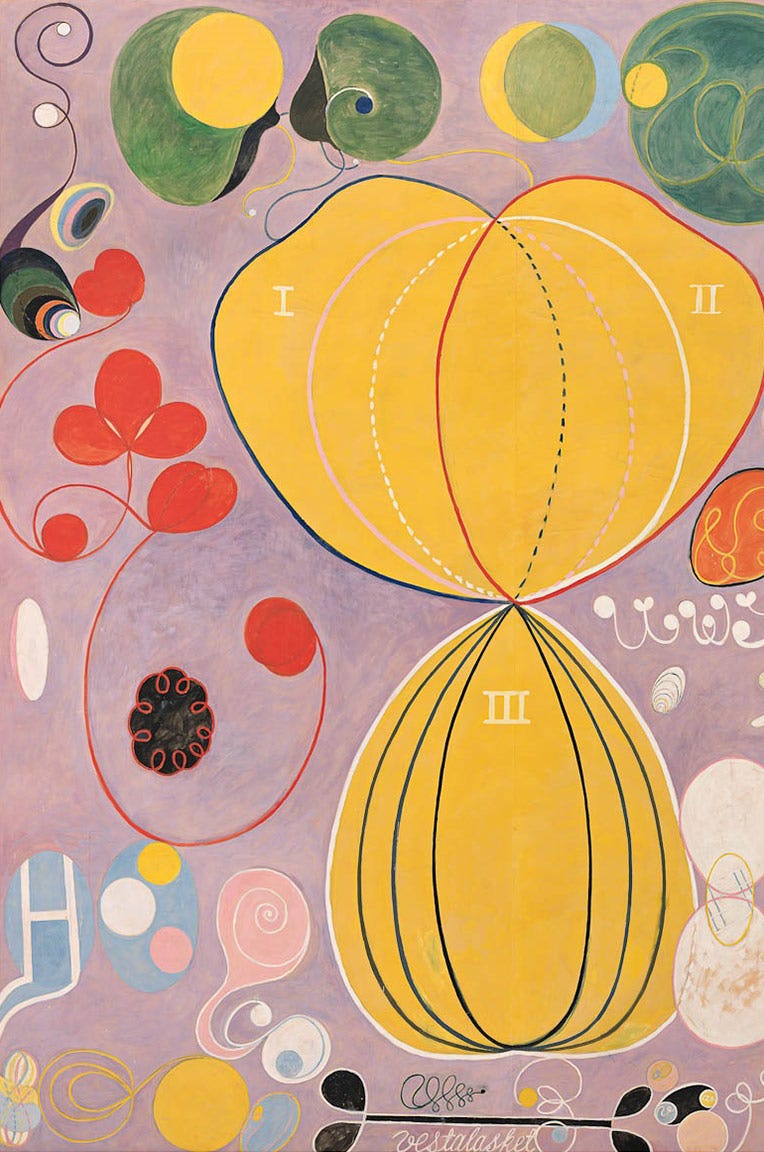
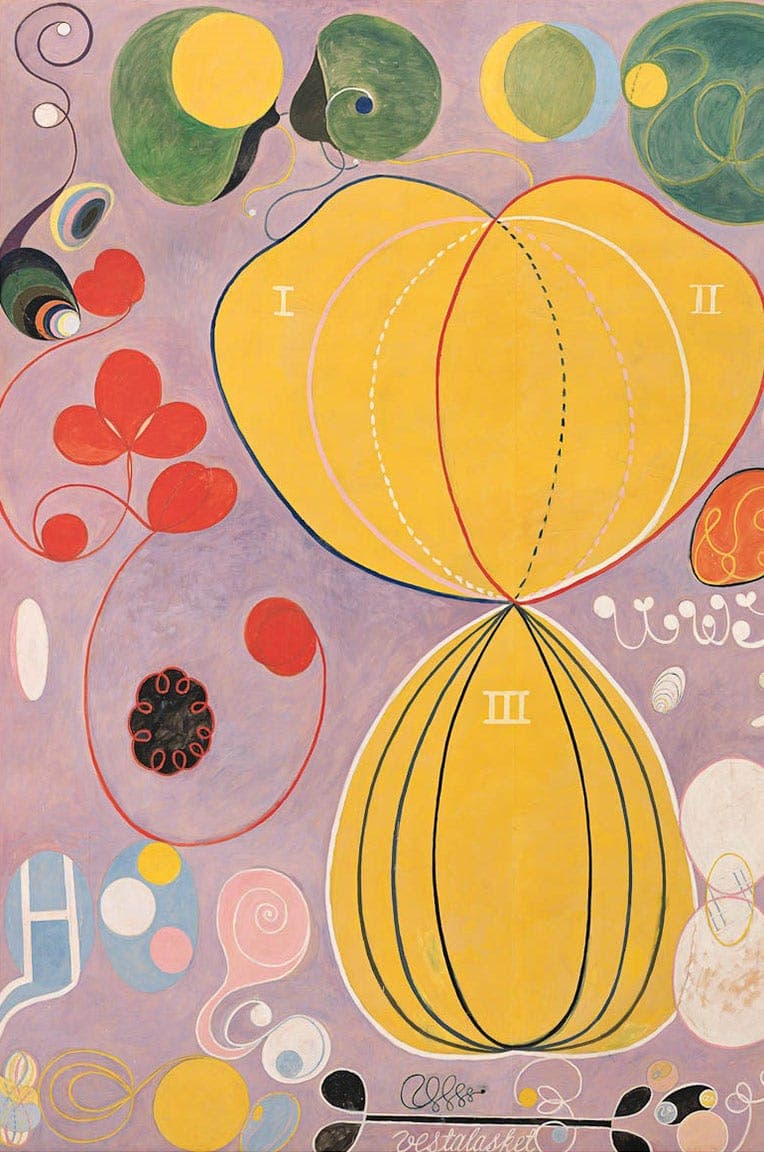
Hilma AF Klint, The Ten Largest, Group IV, No.7
Say you and one of your partners have a longstanding rhythm of spending weekends together as your dedicated quality time.
Recently, your partner has started dating someone new, and they share that they’d like to spend some weekends with this other person, too.
You’ve come to count on that time together, and the thought of changing that rhythm brings up some uncomfortable feelings.
But before you’ve had a chance to explore what those feelings might be telling you about your own desires and needs, you might already be asking yourself: How can I become okay with this?
Maybe you’re telling yourself that a good non-monogamous partner would support their partner’s desire for a more expansive and autonomous life.
So you do all of the things that you’ve learned to do to take care of yourself in these kinds of moments: You take a few deep breaths. Go for a walk. Remind yourself that your partner’s desire for someone else doesn’t diminish their love for you. Maybe you can notice the part of you that feels scared and offer it some reassurance and care.
Eventually, the intensity subsides and you feel calmer and more capable of holding the situation.
Okay, you think. I can handle this.
And maybe you can. But being able to handle something isn't the same as being a yes to it.
You might genuinely agree to make room on weekends for your partner’s growing connection, even if you’d personally prefer to spend every weekend together. Their happiness matters to you, and supporting something that brings them joy can be something you freely choose, even when it asks you to adjust to a new relationship rhythm.
Or perhaps you’re discovering that the kind of non-monogamous relationship your partner wants to build is different from the one you want.
You’ve spent time exploring how to become okay with what your partner wants. But have you also given yourself the same space to explore what you want, and decide what you’re willing to choose?
How do you recognize when your discomfort is something you want to work through, and when it’s telling you something important about what you want for yourself and your relationship(s)?
And what if some of what you’ve been calling security is actually your growing capacity to accommodate things you don’t really want?
Original Post: Aria Diana

Scan to download
Comments
Join the conversation — create a free account to comment.
Join the conversationLoading comments…