CULTURE & CRITIQUE
Coercion Culture & Silence
What Non-Monogamous Communities Need to Learn from the Epstein Files - How coercion culture, and silence leads to harm in sex positive environments.
What Non-Monogamous Communities Need to Learn from the Epstein Files - How coercion culture, and silence leads to harm in sex positive environments.

After the latest release of the Epstein files, it’s become impossible to look at the horrors that have been happening on a global level without seeing how the conditions which led to them are reflected in my own life and the communities I’m a part of. We are at a moment of global reckoning, and it’s urging us to recognize the ways we all aid and abet abuse - whether or not we are ready to admit it.
Something I taught each of my clients as a therapist that influences my approach as a coach today is that every relationship is a microcosm of society. Our relationships reflect our broader social structures, norms and power dynamics. As a result, whatever happens in the world at large and in daily life for my clients inevitably shows up in the therapy or coaching space. When the experience with the therapist or coach is positive, this ultimately benefits the client - once you’re able to form a secure attachment and reciprocal relationship with your therapist or coach, you can take that healing into the world and recreate it.
On a larger scale, our communities are microcosms of the systems which govern us. With all that’s been revealed about Epstein and his collaborators, we are waking up to the reality that the leaders who claim to protect women and children - through pro-life initiatives, bans on trans athletes in sports, and “anti-trafficking” laws (which have been proven harmful and ineffective) - are the very people engaging in the most heinous crimes against women and children.
So how is this reflected at a smaller scale, in our non-monogamous communities? While many leaders and organizers within non-monogamous communities operate under the guise of consent, femme empowerment, sexual freedom and safety for women, community, and collective healing - the same hypocrisy that we see globally, manifesting as power and control, exists within our communities too. Predatory behavior is protected through normalization, shame and even fear. And sometimes, we simply choose to look the other way or stay silent, because it’s easier to conform than it is to speak up. Now more than ever, we must look at the way the normalization of abuse towards women and children seeps into our community despite constant conversations about safety and consent.
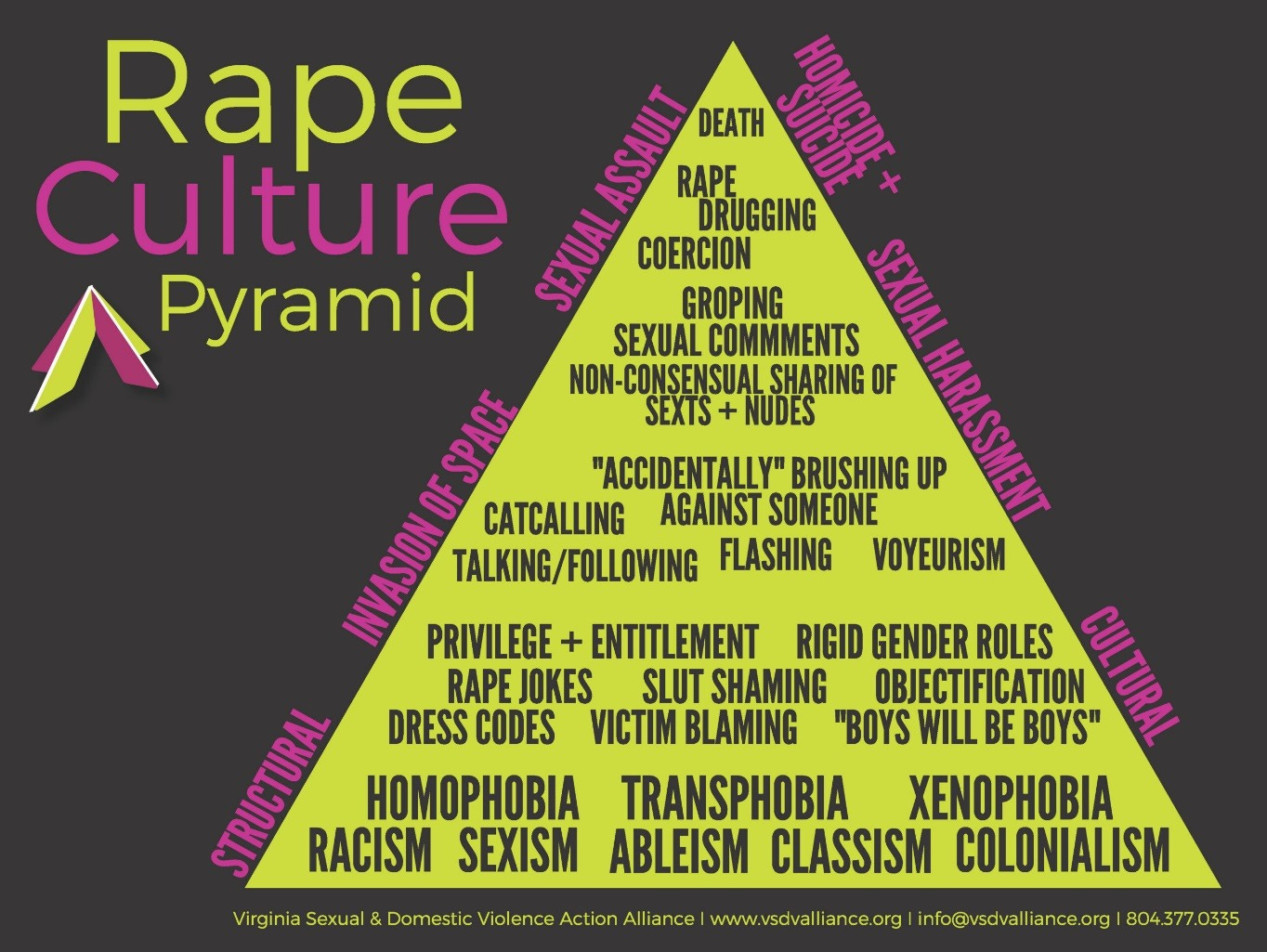
A visual representations of how the tolerance of attitudes and behaviors at the bottom supports and excuses behaviors at the top. (Source : https://mcasa.org/newsletters/article/prevention-corner-rape-culture-pyramid )
Most of us are taught to normalize coercion - the process of persuading someone to do something they don’t want to do - because it is at the core of our dating norms. It’s often normalized through common dating tropes such as “the chase”, calling some a “tease”, or “playing hard to get”. In the context of heterosexual relationships, we are often taught that “men love the chase” and as women, if a man continues to chase us despite our rejections - this is a good thing, because it means he must really want us. On the flip side, accusations of a woman being a “tease” might seem playful, but it is ultimately rooted in the patriarchal belief that women owe men access to their bodies.
In its more extreme manifestations, coercion can show up as a requirement to play at a party, with threats you won’t be invited back if you don’t participate in play. But because being in the lifestyle or identifying as ENM puts us in a minority community, one that is often looked at as taboo, we might overlook this problematic behavior because it is so difficult to find people who are like-minded. And if we have a lack of supportive others that understand our lifestyle, we lack confidantes who can help us discern what is problematic and what isn’t.
Coercion can also show up in subtle ways such as repeatedly asking someone to participate in something after they have said “no”, or weaponizing guilt or shame in response to rejection. This appears in statements like “everyone always rejects me” or “it’s okay, I know you don’t like me anyways”. Relationships with large age gaps can also fall into the category of coercion due to the inherent power dynamic - there’s a high likelihood to be a gap in education, experience, and income. Although the legal age of consent is between 16-18, depending on where you are in the United States, it must be acknowledged that our frontal lobes aren’t developed until our mid- to late- twenties, impacting our decision making and long term planning. So when one party is in their early 20’s and the other is significantly older, there is an actual gap in brain functioning that makes manipulation and coercion much easier. Sadly, we’ve been conditioned to normalize these relationships subliminally - as we’ve learned about the way Epstein and his co-conspirators systematically desensitized us to pedophilia culture through the entertainment, fashion and beauty industries.
If you are wondering why there hasn’t been any accountability for the rich and famous Americans in the files - ask yourself, why would there be? Our President was elected for his first term despite being recorded saying he grabs women “by the p*ssy”. Survivors stay silent because it has been demonstrated time and time again that we won’t be believed, and that the general public and justice system prioritizes physical evidence over recounts of personal experiences.
This post is free to read, so feel free to share - spreading awareness is the first step toward positive change in our community.
Those who point out injustices are often labeled as “dramatic” “sensitive” or even “crazy”. Abusers are masters at creating narratives that work in their defense. We see this in the way people who spoke out against the Epstein empire were made to seem mentally ill or called conspiracy theorists are now being proven right. If people chose to believe women and victims instead of dismissing them, we wouldn’t be where we are today.
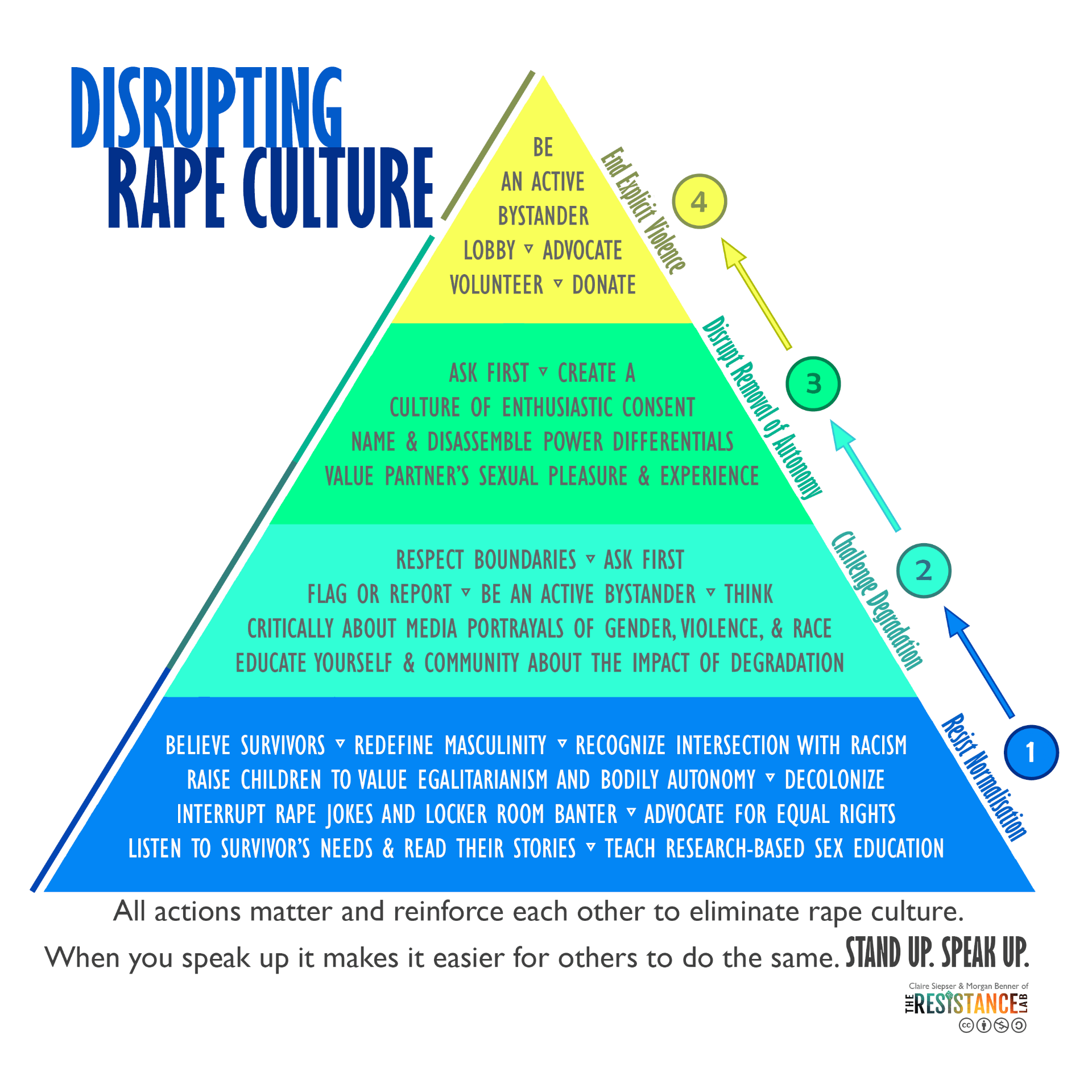
The antidote to the rape culture pyramid - how you are start to dismantle rape and coercion culture today. (Source: https://wordpress.lehigh.edu/theresistance/2021/05/10/disrupting-rape-culture ).
You might be thinking to yourself , with all this focus on consent, there’s no way coercion exists in non-monogamous communities. But our communities are microcosms of the world at large. Our focus on “evidence” over someone’s words has gotten us into a position where something as ambiguous as coercion feels hopeless to speak up against. The vague nature of coercion means that the perpetrator can always claim they meant otherwise - and unfortunately, we have been taught to prioritize intent and evidence over someone’s lived experience and the actual harm they’ve suffered.
In order to change the coercion culture within our own communities, we NEED to get more comfortable with being uncomfortable. Epstein and his co-conspirators got away with their atrocities because those around them remained silent. People remain silent for many reasons, including money, power, fame, status, and comfort. It’s true that ignorance is bliss- it’s much easier to continue living our lives pretending we don’t see what is happening right in front of us, or even convince ourselves that it isn’t happening because it is so normalized. Whether or not we want to admit it , we all benefit from staying silent about coercion. We want to be included, liked, invited to the parties, and feel like we’re a part of a community. At the very least, we don’t want to have to feel the rage, disappointment, and grief that comes along with seeing the truth. But now that the veil has been lifted - is it really worth compromising safety, healing and justice, for our own personal comfort?
Original Post: Nicole Sonnefeldt

Scan to download
Comments
Join the conversation — create a free account to comment.
Join the conversationLoading comments…