RELATIONSHIPS
Got Jealousy? Here's How to Cultivate Compersion in Any Relationship
Compersion is the joy we feel when our partners find happiness with others. Learn the research-backed ways to cultivate this powerful emotion.
Compersion is the joy we feel when our partners find happiness with others. Learn the research-backed ways to cultivate this powerful emotion.
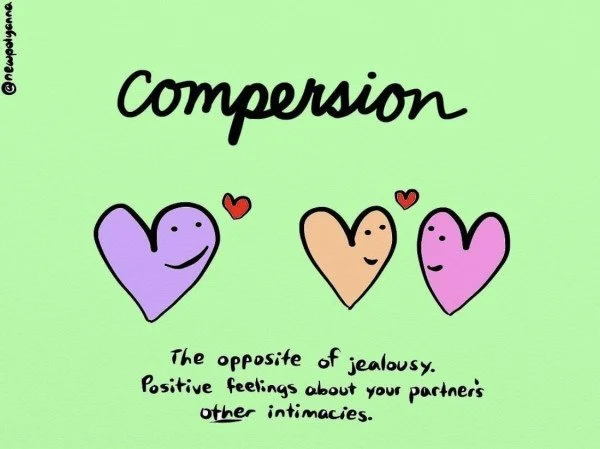
Compersion describes experiencing joy when intimate partners find happiness through other relationships. It is the direct antonym of jealousy--though both emotions can coexist.
If you practice ethical non-monogamy, you've likely heard of compersion. But this powerful emotion isn't limited to polyamorous relationships. It can transform how you experience love in any relationship structure.
The concept of compersion draws from Buddhist teachings on mudita (sympathetic joy), considered one of four enlightened states. This ancient tradition frames rejoicing in others' happiness as spiritually transformative.
The idea is simple but radical: when someone we love experiences joy--even joy that comes from a source other than us--we can choose to participate in that joy rather than feel threatened by it.
In qualitative studies with 17 initial participants--later expanded to 44--two key catalysts for compersion were identified:
Individual Factors: Self-esteem, autonomy, and proactive jealousy management enable compersion development. People who have a secure sense of self are more able to celebrate their partner's happiness without feeling diminished by it.
Relational Factors: Trust, communication, and emotional inclusion strengthen our capacity for empathic joy. When we feel secure in our connection, our partner's other sources of happiness feel less threatening.
This framework applies far beyond polyamorous relationships. When partners feel excluded from each other's growth--whether career advancement, deepening friendships, or personal development--reframing jealousy as a diagnostic tool helps identify unmet needs rather than justifying control.
"More for you is more for me" represents the team mentality underlying compersion, contrasting individualistic zero-sum thinking. When your partner gets a promotion, makes a new friend, or discovers a new passion, their expansion can become your joy rather than your threat.
The path from jealousy to compersion isn't linear, and it's okay for both emotions to coexist. What matters is the direction you're moving.
Struggling with jealousy in your relationship? Consider working with an ENM-aware therapist or coach who specializes in helping people develop healthier emotional patterns.

Scan to download
Comments
Join the conversation — create a free account to comment.
Join the conversationLoading comments…