CULTURE & CRITIQUE
Why is Visibility Important?
Celebrating Week of Visibility for Non-Monogamy
Celebrating Week of Visibility for Non-Monogamy
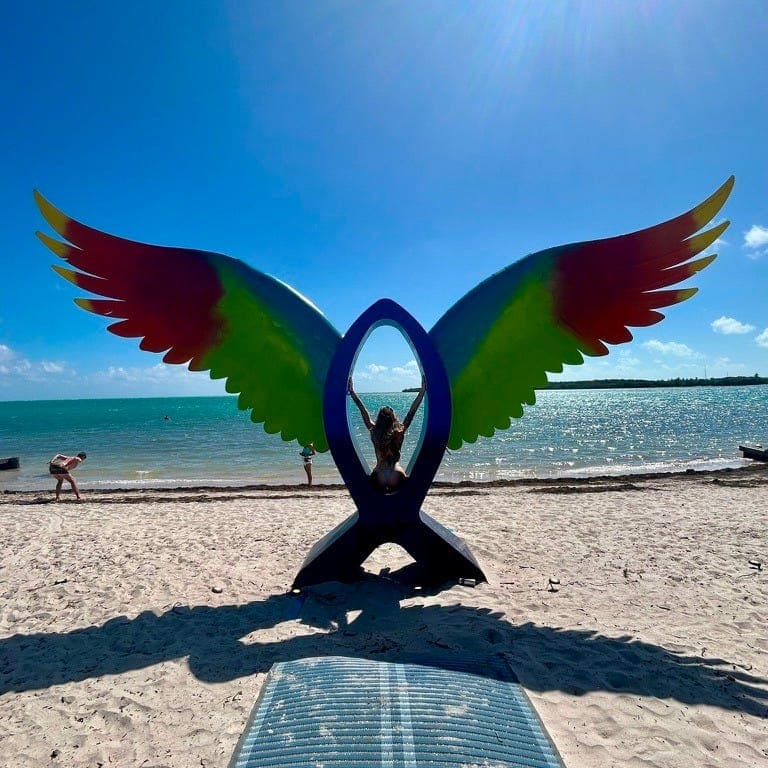
Happy Week of Visibility for Non-Monogamy!
This week originally began as a Day of Visibility for Non-Monogamy in 2023 - so it’s a relatively new campaign created by OPEN. As you’ve probably already assumed, the cause behind this week - to de-stigmatize and normalize non-monogamous relationships - is near and dear to my heart. It’s not just because of my work as an alternative relationship coach and my own identity as a polyamorous person. It’s also because of how becoming visible in this part of my identity has impacted me.

Visibility is the state of being seen. The opposite of visibility is not just to be unseen - it’s also to be concealed, or hidden. From an evolutionary psychology and emotion-focused perspective, hiding is what we do when we feel shame. Shame is arguably one of the most dangerous emotions that can be placed upon us. Shame has been used for centuries as a means to control - most notably by political, educational and religious systems. Because feelings of shame cause us to hide, the impact contributes to isolating ourselves from others who are also being shamed, others who we could otherwise be in community with. Shame, much like fear, works as a means to systematically divide and conquer.
I spent the majority of my life feeling ashamed about my discomfort with monogamy, questioning what the hell was wrong with me. When I was 22, I read “Sex at Dawn”, and my experience was finally validated. But with a lack of resources, support and community, I wasn’t able to actually explore the relationships I wanted. Once I was finally with a partner who supported my exploration of ENM, some of the shame started to melt away in finding someone who held similar views on monogamy as me. Sadly, my partner’s shame led them to ask me to keep these parts of our relationship under wraps. As a result, I lacked other supportive people in my life practicing ENM aside from my partner. When I confided in those who I thought were my friends, I was met with judgment and criticism. I’ve heard all of the typical stereotypes most people in the community have, but the most egregious one, said by my long term “best friend” was - “You’re not bisexual or poly, you’re just a sex addict”. It became clear that I had no one to talk to about the unique challenges non-monogamy brought up, because my vanilla friends would blame my choice to be non-monogamous for any problems, often saying “if you give ‘em an inch, they’ll take a mile”. I continued to be met with shame. So I struggled to deal with it on my own - navigating a not-so-healthy non-monogamous relationship in isolation.
Finding my community changed everything for me. The difficulty is that in order to find community and connection, you have to be visible. If you continue to live this part of your life in hiding, the shame and isolation will only continue to build. I had to take the risk of visibility in order to get myself out of the shame spiral, and into healthy connection with others who not only support me, but understand me. It’s true that many of us don’t have the privilege to be “out” about our non-monogamous identities. For many people, especially those who don’t have support systems or live in intensely conservative areas, it can even be dangerous. I’ve met people who fear losing their jobs, their friends and family - all because they are ethically non-monogamous - despite the prevalence of UNETHICAL non-monogamy in “traditional” marriages. And the process of coming out about being ENM can be quite difficult, even when that’s not the case.
That said, hosting an event for Week of Visibility is not just a business venture - it’s deeply personal. If I hadn’t made myself visible, I would have continued to live in confusion, shame, and isolation. I went from a shell of a person, attempting to fit into the mold that society had created for me, to embracing all the parts of myself which make it impossible to fit into that mold. The community I’ve found from being visible is what ultimately inspired me to reject the traditional path of a counselor and create Freeform.
Creating Freeform was another big decision point for how visible I was going to be. When I made the decision to start this business, I knew I had decided to be “out” to EVERYONE about my life and my relationships. I understood this would be a huge personal risk, that putting myself out there would open me up to more judgment and criticism. However, I’ve been privileged to be received with much more positivity than negativity. Visibility has brought me closer to that authentic connection I needed, while repelling those who want to inflict shame upon me. Visibility has also been a huge responsibility - it’s forced me to practice what I preach - to care for my own mental health and be intentional in my relationship with myself and with others. Ultimately, being seen has pushed me into a more authentic, free, and shameless version of myself. All I can hope for is that, with time, the world will be able to receive others in our community who aren’t as privileged as me the same way.
Thanks for reading Freeform Coaching for Conscious Non-Monogamy! This post is public so feel free to share it <3
Original Post: Nicole Sonnefeldt

Scan to download
Comments
Join the conversation — create a free account to comment.
Join the conversationLoading comments…