JEALOUSY & COMPERSION
Why Does My Partner’s Date Make Me Spiral, Even When I Trust Them?
Trust and jealousy are not opposites — you can trust your partner completely and still feel your stomach drop the moment they walk out the door for a date. That
Trust and jealousy are not opposites — you can trust your partner completely and still feel your stomach drop the moment they walk out the door for a date. That
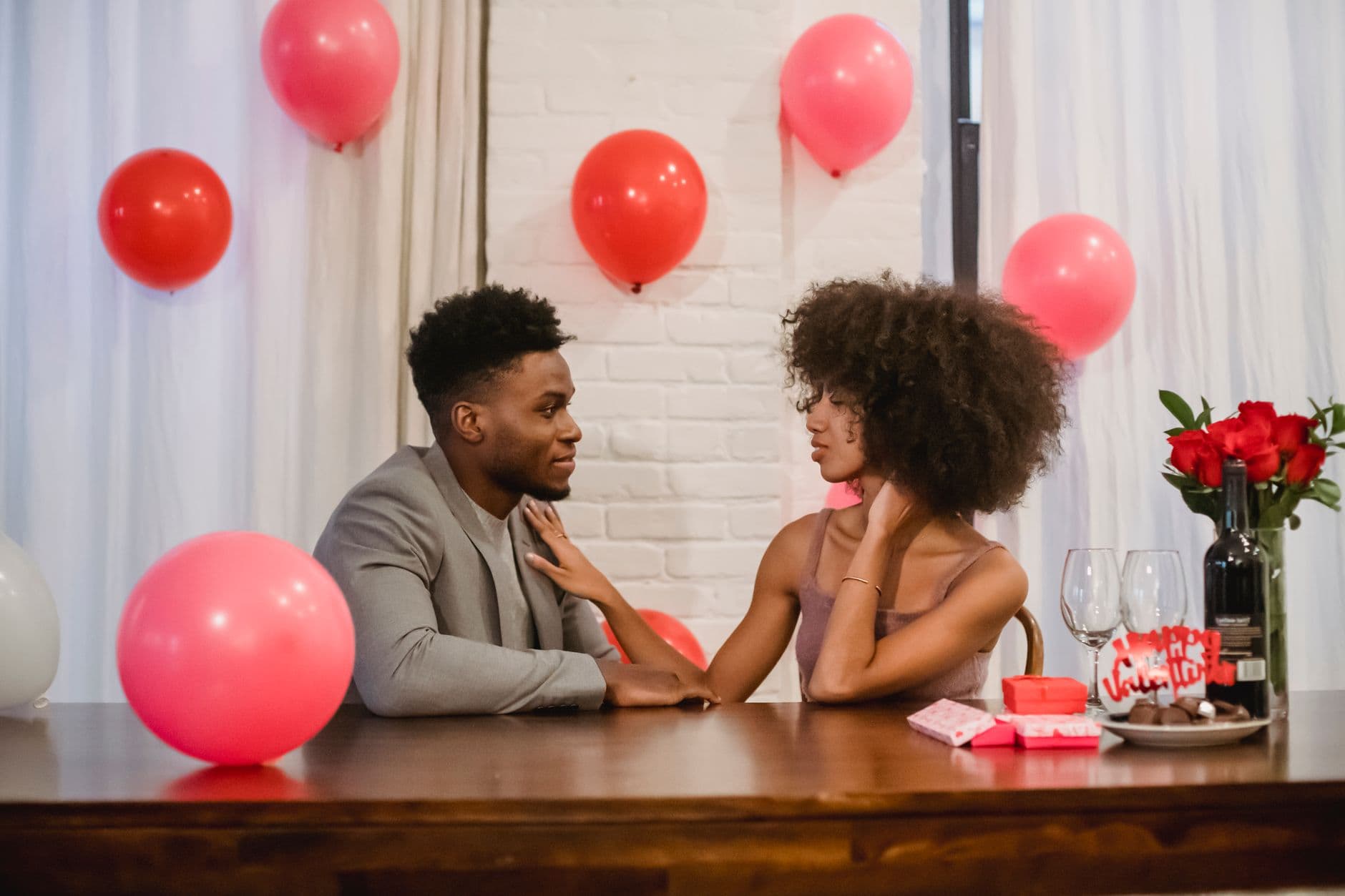
Photo by Andres Ayrton on Pexels
Chaneé Jackson Kendall, guest on this episode of Loving Without Boundaries
Trust and jealousy are not opposites — you can trust your partner completely and still feel your stomach drop the moment they walk out the door for a date. That spiral isn’t proof the trust is fake, and it isn’t proof something is wrong with you. It’s your nervous system reacting to an old fear — abandonment, not-enoughness, the idea that you’re replaceable — that has nothing to do with what’s actually happening in front of you right now. The trust is real. The spiral is old. Both things are true at the same time.
I’ve watched this exact pattern show up in almost every client I’ve worked with, no matter how solid the relationship actually is. And I heard it described perfectly in a conversation I had with Chanée Jackson Kendall — polyamorous educator, activist, and co-founder of Black Poly Pride — who told me about the first time her husband stayed overnight with their girlfriend, and what she did with the spiral that showed up even though she had no real reason to doubt him.
Chanée Jackson Kendall is a Black polyamorous vlogger, activist, and event planner passionate about normalizing polyamory as a relationship choice. She’s an admin of Black and Poly and Young Black and Poly, and at the time of this conversation, she and co-founder Cherie Calico Roman were planning the inaugural Black Poly Pride in Dallas, Texas.
In this episode, Chanée shares her own path to ethical non-monogamy — coming out as bisexual to the man who’s now her husband, discovering she and her husband had unintentionally formed a triad, and building the open polycule she lives in today. Partway through the conversation, she and Kitty talk directly about jealousy: what it actually reveals, and the two-part mental checklist Chanée now uses to talk herself down.
Coming up on today’s show, Chanée Jackson Kendall is a Black polyamorous vlogger, activist and event planner. She’s passionate about normalizing polyamory as a relationship choice.
As an admin of Black and Poly and Young Black and Poly. She volunteers a lot of her time to polyamorous education, outreach and activism.
Together with co founder and Cherie Calico Roman, she is planning the inaugural Black Poly Pride, a celebration of the Black Polyamorous love style which will take place in Dallas, Texas July 11th through the 14th. Welcome to Loving Without Boundaries where we hear inspiring stories, share actionable advice and talk about the challenges and the joys of of ethical, non monogamy and polyamory.
I’m your host Kitty Chambliss. Coming up after the break, my conversation with Chanée Jackson Kendall.
Welcome back to Loving Without Boundaries where I am joined with Chanée Jackson Kendall and I am so excited to be here and to learn about you. So I’ve shared with everyone your bio but I’d love it if you could tell us about yourself in your own words for a few minutes.
Okay, well I am a pint sized dynamo.
Nice.
I am so I’m a lot in a little package. I am black, I am polyamorous. I’m extremely proud of both of those identities.
I’m queer, I’m a mom, a small business owner, and I’m passionate about polyamorous education and the normalization of polyamory as a valid relationship choice. And not just something that we leave monogamy and decide to be non monogamous, but that it can be a choice that we make, like as a beginning relationship choice.
So I spend a lot of my time and energy communicating about polyamory, teaching about polyamory, and just really wanting to show that young black polyamorous people are we’re here and we’re living and we’re loving and that there’s a lot more of us than you think.
Awesome. I’m excited about that. It sounds hopeful and amazing. And I’m pretty short too. I’m curious, when you say pint sized, do you mind if I ask how tall you are?
I am 4′ 11″.
You are smaller than me, but not by much. I’m 5′ 1″.
See? See? So you understand the pint sized dynamo aspect.
I love that you started out with a pint sized dynamo. That is excellent. I may steal that phrase cause that’s pretty fun.
Hey, I think there should be like a whole click of us. It’s like a new hashtag.
Nice.
I love that. Yeah. When people meet me, they’re always like, I expected you to be so much taller. And I’m like, yeah, I have a tall personality, but I don’t know, God, like he sorted me out on the height part and gave me a little extra personality instead of height.
That is so funny. People have said that to me as well, and I’m sure it’s partly the personality, but also when I had a day job because I’m a small business owner entrepreneur as well, I was the boss.
And so I would buy like 4 inch heels and big shoes so that I could at least try and look eye to eye with people that I was in charge of.
I definitely understand that like when I am like all dressed up, you’re always gonna catch me in like 5 inch heels or something like that. But now that I have a four year old that I run behind all the time.
Yeah, like sometimes you’ll catch me in flats a lot more. When people see me in mommy mode, they’re like, oh my goodness, I had no idea you were so tall short.
And I’m like, that’s because when you met me, I had on five inch heels. But you know, here I am.
That’s awesome. I love that. Well, I’d love to learn more about you, starting with your Background, so.
So I love how proud you are of your identities especially, well, all of it really queer, polyamorous, person of color. But I would love to know, if we went back into a time machine, was there a light bulb moment for you of when you realized that just, you know, the normal what’s accepted, the kind of traditional, monogamous, heteronormative type of being was not gonna work out for you and that you.
You were meant for something different?
Well, I’ll definitely say that I never, as long as I identified with my sexuality, I’ve never thought I was straight. So I don’t have this big, like, coming out situation because I never thought that I only liked men.
So I’ve been bisexual as long as I knew what sex was. I always knew that for me, I was not, if not equally, but I was both attracted to men and women.
And actually for most of my younger life, up until I was about 21, I was more attracted to women, and my primary attraction was to women. And then I fell in love with a man in college and I married that man, and we’re still married today.
Oh, wow.
So my light bulb moment as far as ethical non monogamy was probably when I came out to him as bisexual. And it was one of those situations where he told me, he was like, I know, I was just waiting on you to tell me.
And so I knew it was a crisis of conscience for me when I realized I was in love with him and wanted. I wanted a life with him. Right.
I wanted to be his wife, and I wanted to get married and have babies. But I also didn’t see myself committing to just him for the rest of my life.
So it was really like, how do I. What do I do with this? You know, I do love this man, but I very much believe that people change throughout your life.
And I didn’t want the person that I am today to be making a forever decision for Chanée in 20, 30 years. So I wanted.
And we needed that freedom to have additional partners because there were parts of ourselves that we may not have even parts of ourselves we might not even know yet. And so that conversation that he and I started very early in our relationship about a decade ago now, but early in our relationship really kind of set that foundation for my life.
And I have built my adult life as an ethically non monogamous person. So a lot of the issues that some people have opening up and changing their life, I don’t have those because my life was very much built on the foundation of ethical Non monogamy.
If I had to go back in time and pick out a light bulb moment, I think it would honestly be I woke up and realized that he and I were in a triad. Oh, wow. It was so we were really very much had an open relationship for a couple of years.
We were in a long distance situation. And then, you know, we both enjoyed, you know, sexual situations with other people and sometimes together.
And I think I woke up one day and realized that what had started off as like a sexual relationship had really evolved into us having a girlfriend. She hadn’t been home in a couple of weeks, and I was like, wait, we’re in a relationship?
And so it was really quite that simple for me. The pieces kind of fell together at that point and I was like, not only am I in a relationship, I’m happy in a relationship.
And so that relationship lasted for a couple of years and, you know, it was. And it morphed into. After we, you know, left a romantic situation, it morphed into an amazing friendship.
And it was just really, that was my moment of realizing, this is who I am. This is where I’m happy. I’m happy having multiple partners in an open, ethical fashion.
And so at that point, I started seeking community and people like me. Like, I can’t be the only one that feels like this, right?
So, you know, I view non monogamy as kind of a spectrum as far as your comfort level. So since I was already on the non monogamous spectrum, it wasn’t hard to find my tribe and to find the polyamorous community.
And I’ve kind of just been happy and at home ever since.
That sounds beautiful. It’s one of those. I always love asking that question because everybody’s story is so different and yours just sounds like such a happy, beautiful and natural and just started so early on for you.
So it’s nice to hear a story like that, right?
I mean, everyone has their horror stories, right? We had our, like, jealousy of eating me alive moments. Of course, we. Everyone, I think, has those.
But I will say, from the stories that I’ve heard, our journey to polyamory has definitely been a lot less bumpy than a lot that I’ve heard Now.
When you kind of came out to your husband, well, your now husband is bisexual. Were you married at the time or was that earlier on in your relationship?
No, that was earlier on in our relationship. So we have kind of. Our relationship is split in half. There is five years where we were together and unmarried, and then we just celebrated last week Our five year wedding anniversary.
So that was kind of in the first two years of our relationship where I shared with him that I was bisexual, but when we got married, we were polyamorous. When we got married and our partners were there at our wedding, they, you know, the.
My light bulb girlfriend actually stood beside me on my wedding day as a bridesmaid.
Wow.
So we had that foundation before we took polyamorous vows. We vowed to one another to always have more love, not less.
And we very intentionally deleted the forsaking all others. So it was a very intentional building of a polyamorous marriage on our part.
That’s really cool. I did the same thing. I don’t know if you know that, but we wrote our own vows and intentionally, I always say, left out the forsaking all others.
That’s neat that you did that as well. Very cool. No one noticed that at the wedding.
No, no one. No one noticed it at mine either.
Yeah. And later I had a success where somebody, you know, accused me of, you know, lying to the people that were at the wedding.
I’m like, hey, you just weren’t paying attention. That’s not on me. That’s on you.
Right? Absolutely. If you missed it, that was your pain.
Yeah, exactly. And actually that person wasn’t even there. So I’m like, what do you care? You weren’t even invited.
But, but it’s funny the way people will find all kinds of ways to find fault, you know, and put.
And really put their opinions and vows on you. Like, why is it your. Am I still married? I’m still married. Like.
Yeah, exactly. Exactly. We’re okay with it. You’re the one with the issue, so. But, you know, that’s why partly we’re both on this podcast together, right?
Is we’re both trying to normalize that this is simply a choice, you know, we all should have the choice of how to run our own lives.
Right. And I think that monogamy is. It’s normalized, much like heterosexuality as the default. And so I. I find myself, I stand, I think, because non monogamy has become so much more right now.
It’s like a thing that is being discussed more. Right. And I stand in a very important place in history, I think, in relation to my queerness and also in relation to my non monogamy, that I’m in a transitional generation where I remember when we had to talk about all of this behind closed doors.
This was not something that anyone was open about. Right. But I’m also bridging the gap for my child and future children.
Children who are openly raised by non monogamous queer households where for them, my desire for my children is that they will grow up knowing they have a choice and that their families will be widely accepted. So that’s where I stand in history and that’s my intention to do what I can to do my part to normalize the choices that we’ve made for our life and for our children lives.
Beautiful. Well, that is, in my opinion, a very noble goal and I appreciate you doing that work, including reaching out to me to come on the podcast.
Absolutely.
So what were you say is one or two of the most challenging things that you have experienced in your consensual non monogamy journey and how did you overcome those?
I would say the first thing is I really, I spent much of my. The first half of my life, I would say, caring a lot about what other people thought of me and being a really good.
Worrying about being objectively good. Right. So I was raised very religiously by. I mean, I have amazing parents and an amazing family that I’m still very close to, but I was raised very religiously.
And so my very identity, you know, everything about my identity goes against who they say I’m supposed to be. So that was like my biggest. That was, that was the first challenge.
Right.
The first hurdle was accepting myself even when they didn’t, and deciding that it was okay to be me and I had to live my life for me and not for people. And I don’t mean this to say to be crass at all, but the whole job, I think when I became a mother, it became clearer to me that my job was to raise my child to be an adult.
And so my relationship with my own parents, I realized that they raised me to be an adult and that I was really doing myself a disservice trying to pretend to be who they wanted me to be. So I overcame that, that idea that I needed to be whoever I needed to keep this facade up for my parents and my family.
So I just. I decided to just be me. Unapologetically. Chanée. Beautiful. I took like a whole year and decided to just be open and honest about who I was intentionally.
And I think the second challenge is releasing that spirit of ownership of people. I think society tells us that love is exclusive, right. So you have to fight. Even.
Even though I wanted to love more than one, I had to fight this idea that. That seeing my partners engage with people besides me doesn’t indicate any lack on my part. Right.
So I Think it’s when, especially when you’re beginning your non monogamous journey, I think it’s natural to say, you know, who are. Why do you want this person? What is it that I don’t have? Why are you seeking them?
And so that was kind of. That was hard for me. Every time my husband or my wife or my girlfriend would interact with someone else, I would say, well, what are they giving you that I’m not?
Right? And so that will. It was a hard kind of shift for me. And then, you know, you work or you do that self talk and you do the hard emotional work.
And then kind of one day I realized I had gotten away from that and I could step back and say, I see what this other person brings to your life, and I appreciate that. I like that you’re having these experiences that you’re not having with me.
I like that y’ all can go do that thing that I don’t like to do, like that. That was a big hurdle for me, releasing that spirit.
And I make a big distinction between ownership and possessiveness. Right? Because a lot of people say that you have to be non possessive in order to be successfully non monogamous.
I don’t believe that’s true. I think there’s a big. A big differentiation between ownership and possession. Right.
Ownership means ownership for me is an exclusive thing. Possessiveness is that mine. And so what I tell people all the time is, my husband is my husband. He.
I love him, I protect him, I care about him. I don’t want any harm to come to him. I love my wife. I don’t want any harm to come to them.
But because we embrace polyamory and that’s the way we live our life, them being mine doesn’t mean they can’t also be yours. And so that’s kind of my, like the way I look, because I am very protective of everyone that I love.
And it’s not just from a romantic standpoint, but, you know, you hurt my friend, we’re gonna fight. So I had to reconcile that aspect of my personality, being very protective of those I love, while also learning to be respectful of the choices that they made for themselves.
Right. I respect your relationship. I respect your autonomy to engage in whatever relationship you. You want. But I also know that I’m gonna have feelings about that relationship.
And so it was a difficult journey for me learning how to manage my feelings about my partner’s relationships.
Beautiful, that. Really great sharing there. And I love the distinctions that you made about how you view ownership versus possessiveness And I really loved how you said, you know, that’s mine, but it can be yours too.
That’s awesome.
Right? It’s very much like, you know, it’s because I think sometimes people saying, oh, I’m not possessive, or, you know, nobody.
I don’t have that sense of protection. Sometimes I think that can be dangerous in that no one feels protected.
And that’s a very important feeling for me. I want to feel like the people that I love and engage with, I want to feel like they will protect me if I need it or in a situation where I need to be stood up for.
Right. I don’t. I don’t like. Part of the reason why I live the way that I do is because I don’t like that idea that every woman or man is for themselves.
Right. I very much seek community, and I. And I value being part of community and family.
Yeah. And I definitely identify with that as well. Even, like. Even as far back as, like, high school and college.
I remember early on in my dating.
Life, not to go into too much of a story, but I basically was with a guy who didn’t stand up for me in a really not nice way. And I felt so hurt and traumatized by that.
And it was something that I just really learned from in the sense of, you know. Yeah. Like, my people, like my chosen family, like, we need to have each other’s back, you know?
And when I. You know, when. Even early on when that didn’t happen, I was just like, this is not right.
This does not feel good, you know, And I want to have people’s backs, you know, that I really care about.
Right.
Yeah, I totally get that. So you mentioned that you’ve had moments where you really experienced, I think you said, eating you up alive, jealousy.
Can you tell me a little bit how you learn to work through those moments?
Well, first of all, I think I remember that the person that I’m having the jealous feelings about. Right. That they love me. Right.
You have to remember that people engage with you in a relationship because they love you, so they’re not out here making decisions with an intention to hurt you. That’s the first part for me. Remember that the people I love are not trying to hurt me.
Mm.
So it’s kind of like one of, you know, the four agreements not to take anything personally.
Yes.
Remember that people. People are moving, doing things that make them happy. Right. And so if something that my partner wants or needs is making me unhappy, I ask.
I try to ask myself, are they doing anything objectively Wrong. Right. Is this a us problem or is this a me problem?
And so often, well, I guess it’s probably about 50, 50, because I think oftentimes jealousy alerts us to a lack within our own relationships. Right.
So I’ve learned to kind of step back from my jealousy, allow myself to feel it, but step back and say, is this jealousy? Is this displaying. Is this a lack in my relationship?
Am I jealous that they’re having an overnight because we haven’t had that time together recently? Am I jealous that they’re going to the museum because we never go on dates like that?
So you can ask, what is this showing me? Right. And that works for me a lot. And sometimes if. When. When you ask.
When I ask myself that question and I realize that it’s not about lack, I can really easily dismiss it in those situations because I know it’s just kind of like. I think it’s, you know, your monogamous programming can sometimes just, like, leap back up at you.
And so if it’s not about a lack, I really just. And this is kind of. This is something that I say in my young, black and poly group very often, it’s kind of our tagline.
And I say, I get. You need to get you some business. And so what that means is if you spend too much time thinking about what your partner is doing, you.
You are showing that you don’t have enough of your own life, right? So if you. If you’re too busy minding somebody else’s business, you must not have any business.
That’s awesome. I love the way you said that.
You need to go get you some business. So that. So there’s two options with jealousy. There’s either something that I need to fix in my romantic relationship with the person, and I can address that, but not within the context of you do this with them and you don’t do this with me.
You can simply say, hey, I would like to do this together more often, or, hey, I noticed that we’ve slapped on our communication. Can we. I suggest we do this, this and this to try to reconnect. Right.
So approach it from, what does this. What does my relationship need? So keep your eyes. If I had to be succinct, my two tips for jealousy would be, one, keep your eyes on your own paper, and two, get you some business.
That is awesome.
I love it. If you can figure out how to keep your eyes on your own paper, I. E. Take care of your own relationship.
And two, get you some business. If you’re just. If you’re if every time your partner goes on a date, you’re at home pining away about what they might be doing, go on a damn date.
Like, mind your business.
That is awesome. You are fun. I like you. Thank you.
But no, that, that. And I. And I talk to myself. That voice that I talk to other people in and that I educate about polyamory in, that is really just my inner voice giving myself tough love.
Right?
I have had to talk myself down so many times. I can remember my husband being on a business trip and him going to visit.
It was not too far from where our mutual girlfriend lived at the time. And so it was their first time, like, having it overnight without me.
Now, she and I had had many and of he and I traveled the world together. Right? So there’s really genuinely no reason for me to be jealous. Right. And I behaved so poorly. Right?
I behaved so poorly. It’s probably my, like, worst polyamorous act out ever. And that’s the point at which I realized if you weren’t at home, if you were out minding your business, you wouldn’t be feeling this way.
That was. That’s when I realized, like, I just need. That’s why I think it’s important to, like, know yourself, right?
So if you know that you have a propensity for jealousy, you need to be somewhere else doing something else so that you can focus on your own life while your partners are focusing on their own lives.
Really great one. I really appreciate you just being real and talking about how, you know, you, you even acted out and you had to learn, you know, these, this, the advice and the, you know, the sage wisdom doesn’t come by accident.
It comes by the hard work and having those hugely difficult moments. And I love how you said, you know, you just talked yourself off the ledge.
You kind of coached yourself. But yeah, but then that gives you the ability to help your fellow man or woman or, you know, whatever gender you choose.
Right? I know I have definitely had several, you know, late night conversations with, with friends online where I’ve just definitely, like, talked them off the ledge.
Like, hey, I’ve been here before. I know that. Like, it’s definitely been some 2am messenger conversations where they’re like, hey, my partner is spending the night out for the first time.
How do I get through this? And I’m like, hey, I. I know how to do this. I’ve done this before. I came out on the other side. There was a lot of cognac involved. But, you know, we got through it.
We got through it.
That’s awesome. Good for you. Well, that was some really great sharing and I, I appreciate you imparting your wisdom with our listeners.
Thank you.
So where would you say you would describe yourself now on your journey?
I am, I think I’m very settled in my polyamory as far as what I want for my life and what my love style looks like. So I am part of an open polycule.
My husband and my wife and I all live together with our son and the other member of our polycool, who’s my wife and I’s girlfriend, who is also a mother to my son, lives really close by and so we see her almost every day. So I want, we are planning more children and we all date outside of our polycule as well.
No one has any other partners at the moment. But you know, that could change. So that’s. We’re all still open to dating and love and kind of relating in an egalitarian way with whoever we may fall in love with in the future.
So I have a kind of a curious technical question, so to speak. So I, I’m kind of assuming you’re.
Legally married to your husband, is that right?
Yes, that’s correct. And legally married to my husband.
Okay. And did you have, since you mentioned your wife, did you have a commitment ceremony to kind of of celebrate that union?
We haven’t yet, but we are planning one.
Oh, that is so cool. How neat. Is your husband gonna give you away? Yes, Quote unquote.
At my wedding to him, my best friend gave me away. And so I will probably have both of them walk me down the aisle.
So awesome. So awesome. I love it. So what would you say is one of the most rewarding aspect of living a consensually non monogamous life and just kind of owning who you are.
To be honest, the gray and non romantic platonic relationships that I, that I have welcomed into my life are probably the biggest treats you. There’s two things. So the friendships and situationships, right.
Have been a real joy for me because we are non monogamous. I can meet people and allow them to come into my life as they may, right.
I don’t have to define my relationship with people at first meet, right. And so I get to enjoy a really wide spectrum of relationships.
I have a best friend who I’m madly in love with, right. But he is, he’s gay. And our love for one another is deep and intense, but it’s platonic.
And I have friendships that are sometimes sexual and sometimes romantic and those add so much to my life. And I’ve also just had a whole bunch of really amazing friends who we’ve supported each other through things and we’ve grown together.
And I really, when I turn around and look at who’s there for me in my life, they’re the people who stick around and who are there for me. So that’s been an amazing treat for me.
And the other thing is a really deep awareness of who I am as a person. Ethical non monogamy makes you do a lot of important self work.
There’s so much that you have to do just to know, to get to know who you are and to work on yourself. And I have fallen, I think I feel like each year I fall more and more in love with myself as a result of me loving other people openly.
I have to first really have that deep, intense love for me. And so those have been outside of anything I think romantic love could bring.
Those have been the biggest takeaways for me.
Wow, you just sound so cool and like you have such an amazing life. I want to hang out with you anytime.
Anytime.
That sounds amazing. Just out of curiously, because I was just thinking of it. Are you going to Atlanta Poly weekend this year? Since you’re right there?
Yes. I actually am going to have a community table at Atlanta Poly weekend that’s going. We’re going to be talking about the event that I’m currently planning at my community table and I’ll be popping in and out throughout the weekend.
Oh, that is so cool. I will not be there this year. I was there last year. But maybe, maybe our paths will cross either at another event or next year if I go next year.
Absolutely, absolutely.
So I would love to hear more about your work. I believe you have an event coming up. I believe you said in July, right?
I do. So I have a little background first. I first started kind of getting the bug for polyamorous education maybe two or three years ago when I realized that there were a dearth of black and POC and queer voices on the non monogamous scene.
It was a lot of. And the research, I know you’re probably familiar with Elisabeth Sheff’s research.
The research bears out that the majority of people who talk who are openly non monogamous and polyamorous are upper class heterosexual white people. And the reason for that is because they don’t have to.
They don’t have concerns about how being openly polyamorous will affect their livelihood. And so because I don’t have to worry about that and I know that there’s inherent privilege in that.
Right. And so I’m always questioning how can I use my privilege for good, right? So the financial privilege I have of my family not depending on my income and also not working for not working anywhere where me being polyamorous is of a part problem, I’m completely out at work and in my business.
So I said, how can I use that for good? What can I do? And so I started. My first step was I don’t see any people of color.
I don’t see any black people talking about polyamory. So, well, let me do it. Let me talk about it. Let me go to conferences. Let me add my voice.
And so Frolicon, in 2018, I did a class called where are all the black people? And it was about inclusion of black people in non monogamous and kinky spaces. Right.
That was very important to me because Atlanta is very heavily African American, and yet even in the polyamorous and kinky scenes and in Atlanta, you don’t see a lot of people who look like me. Why is that? It’s not that they’re not out here. It’s that they’re not being included in the spaces.
Right? So inclusion was my first step. Right. And then I realized that was 2018. 2018 was about me trying to be included. 2019.
This year, it’s been more of an epiphany for me that maybe instead of asking for a seat at the table, maybe I just need to build my own damn table. So that’s what I have done. My co founder and I. My co founder is Cherie Calico Roman.
And we have an event that’s called Black Poly Pride. And the intention of the event is to celebrate black polyamorous voices, to talk about issues that we have as black polyamorous people, and to enjoy, to both educate and have fun.
Right? So I think that the polyamorous community as a whole, we either have parties or we have conferences.
And so my goal was to have a party conference because I think that it’s important. Like, as we’re doing all this.
This heavy emotional lifting that non monogamy often asks for, I need that decompression. I need to party it off. Like, that’s what I do.
I say, you know, we do all this heavy lifting in our relationships, but I have to play. Play as hard as I work. So we are ga. And so this event is not just to be clear.
I want to make sure I always say it. It’s not just for black people. It’s for black people, people of color and anyone who understands why this event is necessary.
So if you, if you, if you have to question, oh, why, why do you know, why do we need this kind of event? Then it’s not for you.
But if you understand marginalized, the need to celebrate marginalized voices, then you’re welcome. And so it’s going to be in Dallas, Texas, July 11th through the 14th.
That’s a Thursday evening through Sunday brunch. And I am working, I’m lining up speakers and workshops and we have some social events planned.
So I’m really, really excited about it and I’m looking forward to it. I have an amazing team of people that are working with me. My co founder, Cherie Calico Roman.
I have Sharita McClellan who is local to Dallas. I’m working with Ruby Bowie Johnson, who is the founder of Poly Dallas Millennium.
So we have kind of, we have a pretty big team of people who are working on making Black Poly Pride. Amazing.
Awesome. Well, congratulations. I’m so excited for you and I think it’s certainly very timely since Poly Dallas Millennium isn’t going on this year.
So thank you for creating the event for, I’m sure, all the hard work that you’ve put in. And I’m glad to hear that Ruby Johnson is part of the event as well. So that’s really incredible.
Absolutely. She is amazing and I’m excited to make this for the inaugural year this year. And my intention, I’m putting it out into the universe.
My intention is that this event will travel and that will hold it in a different city each year. So currently I’m looking at Atlanta and D.C. for next year, so we’ll see what happens.
So you’re looking at where for next year?
I’m looking at either Atlanta or D.C.
Okay, well, I’m right in D.C. so keep me posted.
I definitely will. Definitely.
That’s awesome. All right, well, before we. Is there anything else you’d like to share before we go into the lightning round?
No, I’m ready. Let’s go.
All right, let’s do it. So, lightning round. So what would you say is either maybe the best thing that you’ve done for yourself on your consensual, non monogamous journey or the best advice that you’ve ever received?
Whichever. Whichever resonates more for you?
Okay. I think the best thing that I’ve ever done for myself is get myself some business. No, like really. And it’s not.
When I say get myself some business, I’m not Just saying, like, go date someone else because your partner is dating. It’s really important to, to define yourself as an adult human outside of your partnerships.
So like, what are your hobbies? What do you do? What do you stand for? What are you passionate about? Like, you need to be able to define yourself for yourself.
And so I really focus on being able to say who I am without mentioning my relationship to other people in the world at all. So that, that sense, that intense sense of self have been extremely helpful to me in wanting to intentionally partner with other people.
Awesome. I love that. And very in line with everything we talked about. And I just love hearing you say that because it cracks me up.
What would you say is a tip that you would share with somebody who is. Maybe they’re either confused or they’re living in their own bubble of traditional heteronormative monogamy and they’re, they’re trying to step out into, into a different world.
What advice would you have for them?
Two things I would say. One, do your research. Do your research. There are lots of books, podcasts like this one. There are blogs, there are vlogs.
There is everything out there to try and help you. But everyone is out here saying, Chanée did that so you don’t have to do that.
Kitty did that so you don’t have to do that. There are, there’s so much research that you can take advantage of so that you can avoid common pitfalls.
So one, do your research. And two, go to therapy. Go to therapy. Mental health is so important and so it’s important to be on top of your own mental health as a non-monogamous person.
Because I think it’s important to know that when you’re involved with more than one person, your mental health is going to have an effect on more than one person. So that ripple effect is important.
So if you’re at the beginning of your ethical, non monogamous journey, do some mental health check ins before you entangle yourself with other people.
Beautiful. Really awesome advice. Thank you for sharing that. How about what book, movie or resource could you recommend that helped you along your journey that you’d like to share with our listeners?
Book movie resource. I would say that there are a lot of, I would involve to tell people to get involved in online non monogamous communities.
Obviously I’m one of the admins for black and poly and there’s also, there’s all kinds of help like groups. There’s, you know, there’s your group.
There’s lots of groups all over Facebook and all over the Internet as a whole that can help you and give you. If you don’t know anybody who is openly non monogamous or you don’t feel comfortable talking to them, strangers on the Internet can actually be very helpful.
Yes, that’s true.
So you know, they’re only strangers until you introduce yourself.
So that’s nice.
Yeah. So, you know, take advantage of the fact that there are real people out there who for the most part are willing, if you approach it with it respectfully and with an open mind.
Excuse me, they’re willing to talk to you. So I would say to get involved and like, don’t just be in your own bubble trying to do polyamory your way.
Polyamory and other types of ethical non monogamy. We do have community norms and standards and there are things that are okay and not okay.
And it behooves newbies to learn the culture before you try and like set out seeking.
Awesome. I love it. Great advice, Great advice. And Black and Poly is an amazing community. And I just want to say, since you are one of the admins, that I really appreciate being welcomed in that community, even to the point.
Point that I think at some point I shared one of my podcasts, which was not with a person of color, and somebody was like, who’s this? Why are they sharing this?
And somebody jumped in, they’re like, oh, you know, she has a podcast and she is, you know, people of, you know, of color and other people. And you know, she’s, she’s good people. And that was really cool.
Right now we’re a community. We believe in, you know, it’s. And that’s the important part. That’s important. It was likely someone who’s new, right.
Who doesn’t know who you are, who doesn’t know about your work. So that kind of leads back to like, know your audience, learn the culture, figure out who’s who.
That’s important.
Well, thank you. And it’s. But it made me feel really good because I still sometimes feel not like a newbie.
But I mean, you know, we’re learning. We’re all learning every day. This is still a newer thing, you know, and that’s why people like you and I are doing the work that we do.
And, and you know, there’s people like Cunning Minx who has, you know, over 400 episodes out there. There, like many, many people know who Poly Weekly and Cunning Minx is.
And my podcast has only been out there for it, astonishingly is going to be four years this summer. And, but it’s still just very humbling to me to know that it is making a difference.
And so, you know, I love that you reached out to me and wanted to come on. So you’re helping weave the story out there for other people. Really important.
Absolutely. I’m glad to, to be here with you.
Awesome. And then my last question is for fun, is there a particular song or music that really moves you or inspires you?
Okay. I have to be honest and be true to who I am. So I am a native Atlantan and nothing gets me going like trap music.
So you put on some ti, you put on some Shawty Lo, you put on anything with a beat and there I am. So, like, honestly, I honestly clean my house to like TI’s first two albums.
So when you see me in party mode, you’ll see me with cognac in my glass and trap music and the speakers.
Awesome. That’s excellent. Well, thank you so much for coming on. Where can everybody find you and your work and learn more about your event?
Well, you can visit our website at www.blackpolypride.com. you can find me on Twitter thereal Chanée, you can find my Facebook page at Chanée Jackson Kendall, and you can also look up Black Poly Pride on Facebook.
So we are where I’m out there. We’re out there and I’m looking forward, I’m looking forward to meeting more of your audience at Black Poly Pride.
Yay. That’s awesome. Well, thank you so much for your time on, coming on and sharing all of your amazing wisdom and hard earned advice.
You are just, you really are a pint sized dynamo. So I appreciate you very much.
Thank you. I appreciate it.
Thanks for tuning in to today’s show. If you like what you heard, are struggling with some aspect of your relationships and you’re interested in seeing if you’re a fit to work with me as your relationship coach.
Here’s what I invite you to do next. Head over to lovingwithoutboundaries.com apply, that’s lovingwithoutboundaries.com apply and book a call to speak with me.
I’ll get on the phone with you for about 45 minutes and we’ll get you crystal clear on three things. Number one, exactly what’s not working well in your relationships right now.
Now number two, ideally, where you’d like to be and what might be getting in the way. Number three, the exact strategy to get you there, helping to close that gap.
Remember, creating healthy, open relationships does not typically happen by itself. Many often need expert guidance to make it happen.
We’ve helped clients all over the world feel safe, happy and secure in open relationships while not losing their mind or their cherished partners. To see if we can help you do the same, head over to lovingwithoutboundaries.com apply.
I’m Kitty Chambliss, and let’s talk soon.
You don’t have to white-knuckle your way through this alone. I wrote the Jealousy Survival Guide for exactly this moment. You’re not the only one who’s ever spiraled over nothing rational — Chanée wasn’t either, and she’s built a whole life and a public platform since that night. There’s a path through it.
**

**

KITTY CHAMBLISS, Master Coach (ICF-Certified), CPC
Relationship Coach | Speaker | Educator | Trauma-Informed
Author of “Jealousy Survival Guide: How to feel safe, happy, and secure in an open relationship”
Original Post: Kitty

Scan to download
Comments
Join the conversation — create a free account to comment.
Join the conversationLoading comments…