MIND & BODY
Finding the Balance Between “Me” and “We”
A Necessity for Transitioning to Non-Monogamy
A Necessity for Transitioning to Non-Monogamy
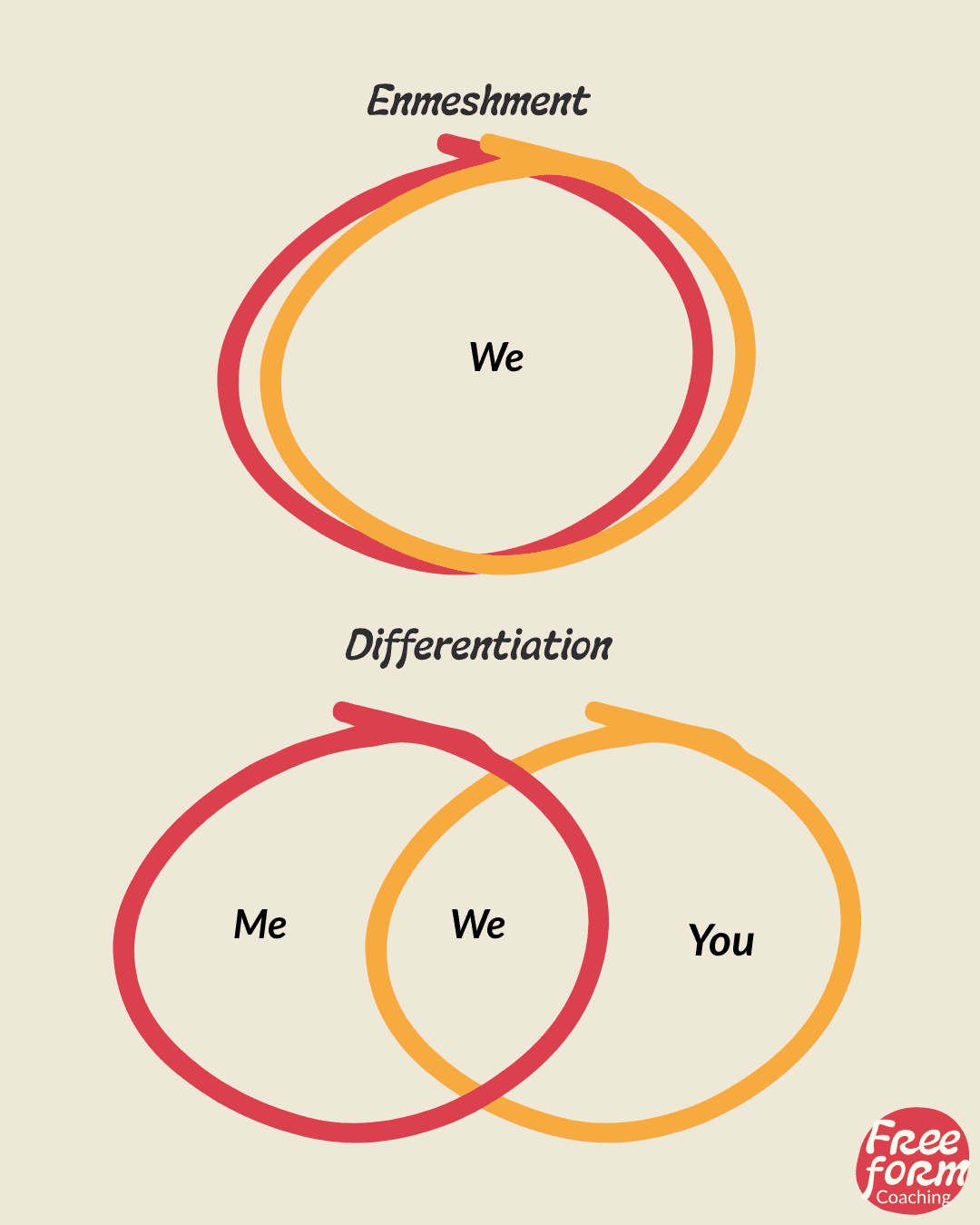
I’ve always enjoyed working with more than one person as a therapist and coach because it requires a conceptualization of clients from a systems perspective. This means studying and identifying the patterns of interaction between multiple people, as opposed to focusing on what’s happening solely at an individual level. This is why I enjoyed my work with monogamous couples for as long as I did - because no matter the content of their argument, my job was to help them identify and disrupt the underlying pattern of interaction between them. Now that I’ve transitioned to focusing my work on couples exploring non-monogamy, I’ve realized that their most common challenge is the same one my monogamous couples faced - the process of differentiation.
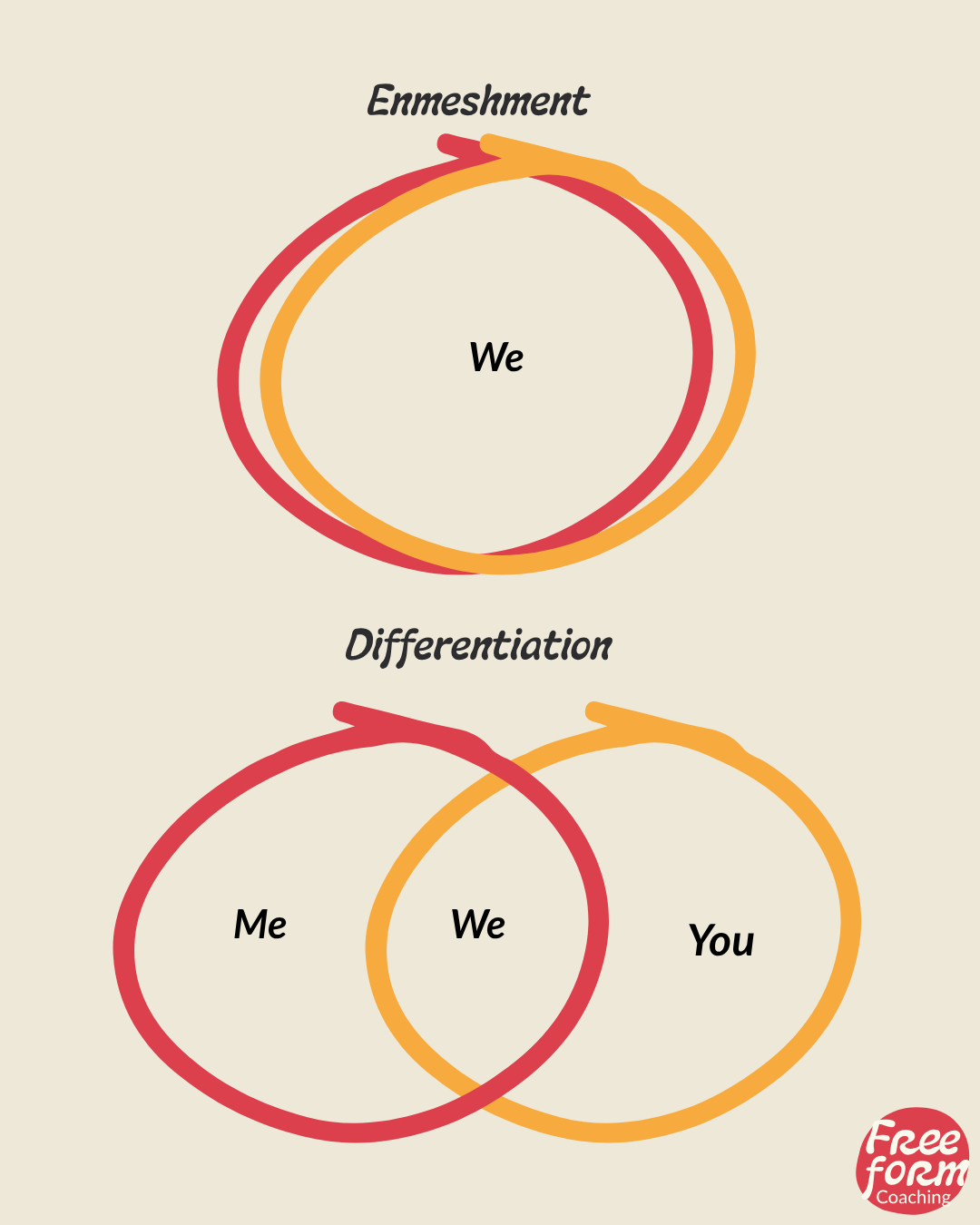
Enmeshment describes a relational dynamic where two people have blurred personal and emotional boundaries. Our culture encourages enmeshment in couples. When this happens your identity is completely associated with your partner and you’ve lost your sense of self outside of the relationship. You take on their emotions as if your own, struggle to maintain boundaries, and may have very little privacy or very few hobbies or friendships that aren’t shared with your partner. Some signs of enmeshment are difficulty with independent self-soothing, discomfort with disagreements in your relationship, trouble making decisions on your own, and feelings of guilt when setting boundaries - whether self-imposed, or imposed by a partner that has trouble accepting your boundaries. It’s also normal to become more enmeshed the longer you are in a relationship with someone. The more entangled you become socially and financially, you might begin to spend more time together than alone, which isn’t inherently a bad thing. The trouble comes when you begin to do this to the detriment of your own wants and needs, eventually getting to a point where you rarely spend time without your partner at all.
Differentiation is the process of coming out of enmeshment toward a more interdependent and healthier partnership. This means a partnership where you’re in touch with yourself and your needs, while also feeling closely connected to your partners. If you are differentiated in your relationship, you can balance intimate connection while maintaining an authentic and independent sense of self. If you’re at all familiar with attachment styles, you may notice this sounds very similar to the way “secure attachment” is often described. Although secure attachment isn’t necessary for differentiation, the work that it takes to achieve both is practically the same. Just like you can change a relationship pattern from being overly enmeshed to differentiated, you can also change your attachment style from “insecure” to “secure”.
Original Post: Nicole Sonnefeldt

Scan to download
Comments
Join the conversation — create a free account to comment.
Join the conversationLoading comments…