CULTURE & CRITIQUE
Dear Reader: Please, Stop Using AI for Relationship Advice.
If you follow me at all, I doubt the title of this article will surprise you.
If you follow me at all, I doubt the title of this article will surprise you.
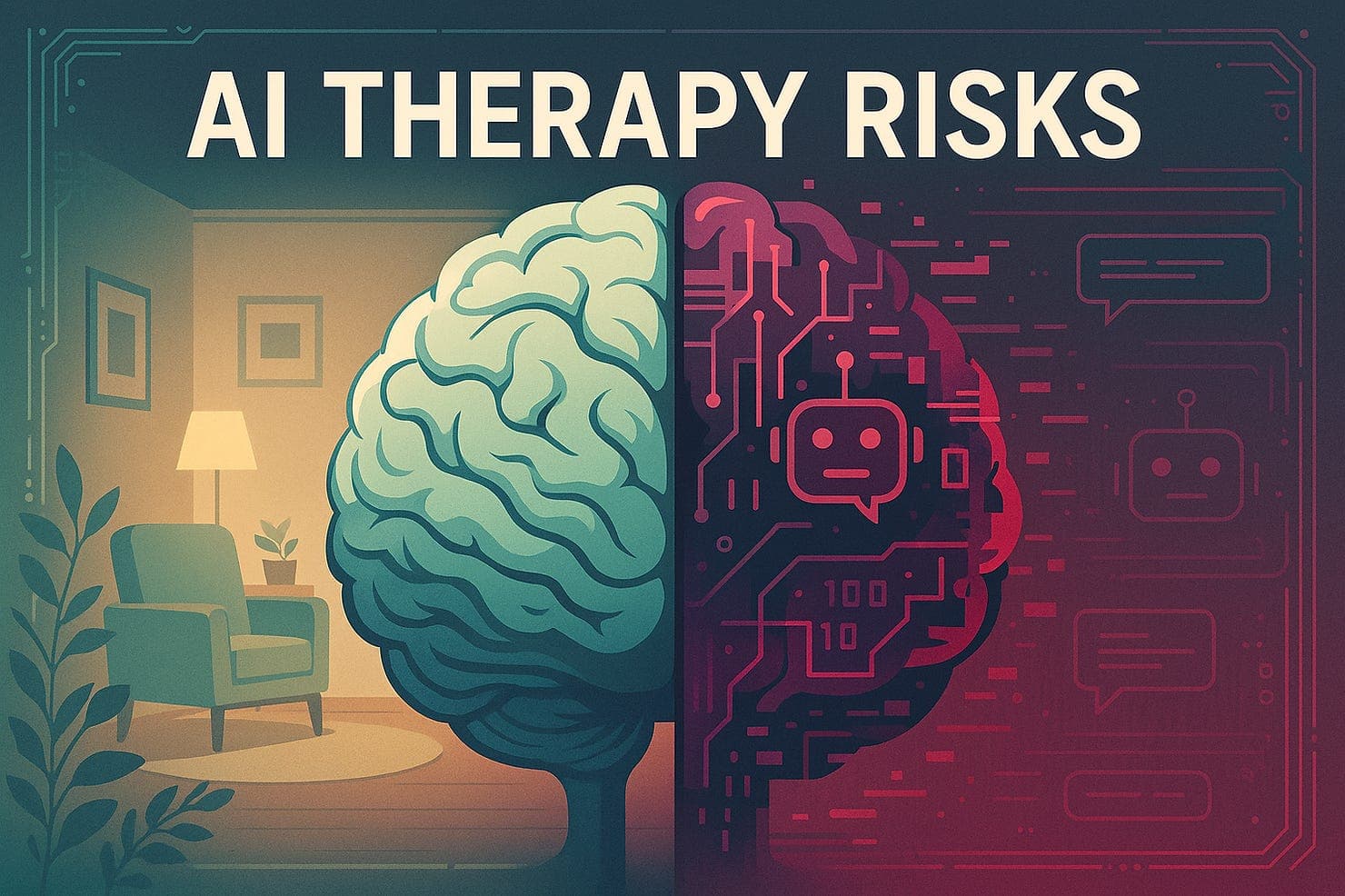
If you follow me at all, I doubt the title of this article will surprise you. I am constantly reposting content about the dangers of AI on my personal social media, and periodically on my business accounts when it feels relevant to my area of expertise. And back in November when I was still working as a therapist, I made a brief reel discussing some of those dangers after a client told me they used AI to help them figure out what they were “feeling”, rather than using the skills we were working on to identify their emotions themself. Unfortunately, despite all of the damage AI is doing to our economy, our environment and our mental health - this issue continues to be relevant.
I’ll start by saying that I understand the temptation to use AI in place of a therapist or coach. The cost of living is incredibly high, so why would you pass up the ability to get “help” for free? Plus, we’re all so busy - so it certainly feels easier to just ask Claude or Chat GPT for the answers instead of having to take time out of our schedules to read a book or talk to a professional.
But I put “help” in parentheses because I think it’s debatable how helpful using AI in this way actually is. Plus, AI wants you to keep using it - so it’s going to tell you what you want to hear.
This is especially problematic when it comes to relationships, as it quickly becomes an echo chamber that validates you more often than not, depriving you of opportunities for learning and growth. After all, the number one intention of these companies is to make money - so AI is designed to collect all the information about yourself that you give it, and integrate that information in order to tell you what you want to hear so you keep coming back.
Even if you attempt to tell AI the most unbiased version of your life story, it’s only useful for what’s called a “top down” approach. “Top down” refers to therapeutic skills and coping techniques that use a cognitive approach, generally based on the theory that if you change the way you think, you can change how you feel and behave. And yes - this works for some people some of the time. But for many of us, especially those who have experienced any sort of systemic or relational trauma, this doesn’t work. This is because thinking about your feelings disconnects you from them - quickly turning self analysis into a form of emotional avoidance. Unfortunately, feelings aren’t actually processed through rationalization and distancing because we need to feel them to heal them. The necessary changes required to overcome patterns that negatively impact our relationships take place in our nervous systems themselves, not just in our heads. So when we get in our heads we disconnect from our bodily experience, creating the opposite outcome from the one we’re usually seeking.
When this self analysis and overthinking happens, especially about our pasts - much like in “exposure therapy” - we might even dissociate. Unfortunately, this is even worse for our health and our relationships. The problem is that AI can’t tell if you’re disconnected or dissociated. It’s not picking up on your facial cues, body language or vocal tones, like a human who is trained to treat these symptoms is able to do with accuracy. For this reason, there’s a high likelihood that using AI for relationship advice or therapy may retraumatize you. And that’s only the least of what could happen - in 2025 there were multiple reported cases of both AI induced psychosis and suicide as a result of users consultling AI chat bots about their mental health issues.
The dangers of AI, however, reach far beyond that of our mental and relational health. Surveillance in the United States is at an all time high, while we live under a government that openly targets anyone who speaks against it as “domestic terrorists”. So let me reiterate that AI collects all of the information you give it about yourself. With this in mind, I think we should all be concerned about how freely we give our private information to companies like OpenAI and Anthropic. Because these corporations aren’t beholden to HIPAA like those working in health care are, and their sole goal is to make a profit. In fact, they’re currently fighting for contracts with the pentagon - so what would stop them from sharing our information with said government if it’s willing to pay them for it?
If you’re a part of any population the government has been open about targeting - a migrant, a person of color, a part of the LGBTQIA community, a SWer or even parts of other communities that challenge the puritanical status quo (i.e., swinging, kink, ENM or poly) - I highly recommend you do not share that information with AI for your own protection. While working in private practice, we were meticulous about the way we wrote our clinical notes to protect any identifying information about our clients that might make them lose their healthcare coverage or become a target of our current administration. This is because mental health care workers are beholden to a code of ethics that requires them to prevent as much harm as possible towards their clients. While mental health workers try to act ethically and protect their clients from our government, leaders in AI are working with our government and pushing back on legislation that could put protections for users in place. Yet so many of us are giving up personal and potentially risky information to our corporatocracy for free.
But what about when AI IS a valuable and accurate resource? When this is true, it’s simply a collection of resources which already exist and are already accessible. All of the information it compiles is stolen from real humans - authors, creators and professionals - with little credit and no pay. So instead of using AI, I encourage you to find those resources on your own. Not only does this translate to supporting the original creators of these resources, it also is an important and necessary exercise to keep your brain functioning properly.
AI makes our lives easier so we don’t have to think. The problem is that when we stop thinking, we actually start to lose that skill. Research shows that we can prevent cognitive decline by continuing to challenge our brains, so I predict that regularly using AI in place of creativity and critical thought will likely lead to cognitive decline. I honestly can’t believe that I feel like I need to convince people how important reading and critical thinking are. But with the way I see people using AI for any and everything, it feels necessary to stress the importance of these skills. It’s SO IMPORTANT, that we can all do our own research, read about a topic ourselves and make sense of it on our own, while also determining whether or not the resources we are using are valid - rather than blindly accepting the information, like I see people do with AI all of the time. Now, more than ever, since all of our major media outlets have turned into propaganda machines, we cannot risk losing our critical thinking skills.
In conclusion - If your AI notetaker has ever asked to be present in a meeting with me and you wonder why I always reject it, it comes down to my values - both personally and professionally.
I created Freeform because I believe in the healing power of connection. This type of connection requires presence, patience, awareness, curiosity and critical thinking. And the more we use AI, the less we need to use these necessary skills or embody these important qualities. Since it’s not my area of expertise, I won’t get into the ways AI is damaging our environment and our economy, and the dangers this poses for all of our physical safety and financial stability. But I will mention that healing through healthy connection isn’t possible if our basic needs aren’t met, and AI threatens the existence of our basic resources everyday. So I hope the information I’ve provided about AI’s impact on our relational and cognitive health builds enough of a case for you to consider thinking twice about how you use AI, and maybe even return to using yourself and others as resources instead, like we used to back in the good ol’ days.
Thanks for reading Freeform Coaching for Conscious Non-Monogamy! This post is public, so we appreciate you sharing it.
Original Post: Nicole Sonnefeldt

Scan to download
Comments
Join the conversation — create a free account to comment.
Join the conversationLoading comments…