QUEER & IDENTITY
Bisexual Visibility Month
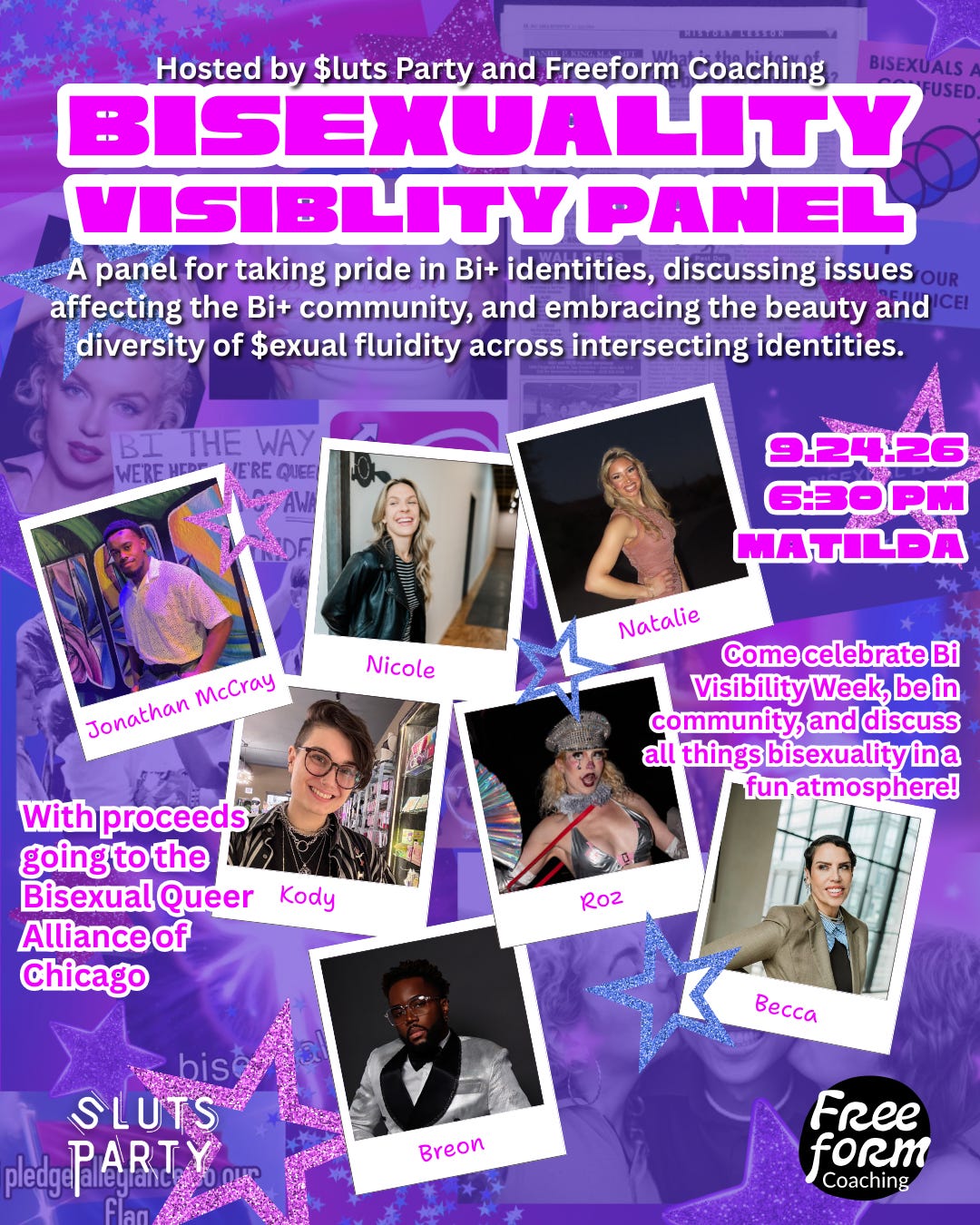
September is Bisexual Visibility Month, and I’m thrilled to announce I’ll be hosting another panel in Chicago - but this time, we’re making it unapologetically
September is Bisexual Visibility Month, and I’m thrilled to announce I’ll be hosting another panel in Chicago - but this time, we’re making it unapologetically
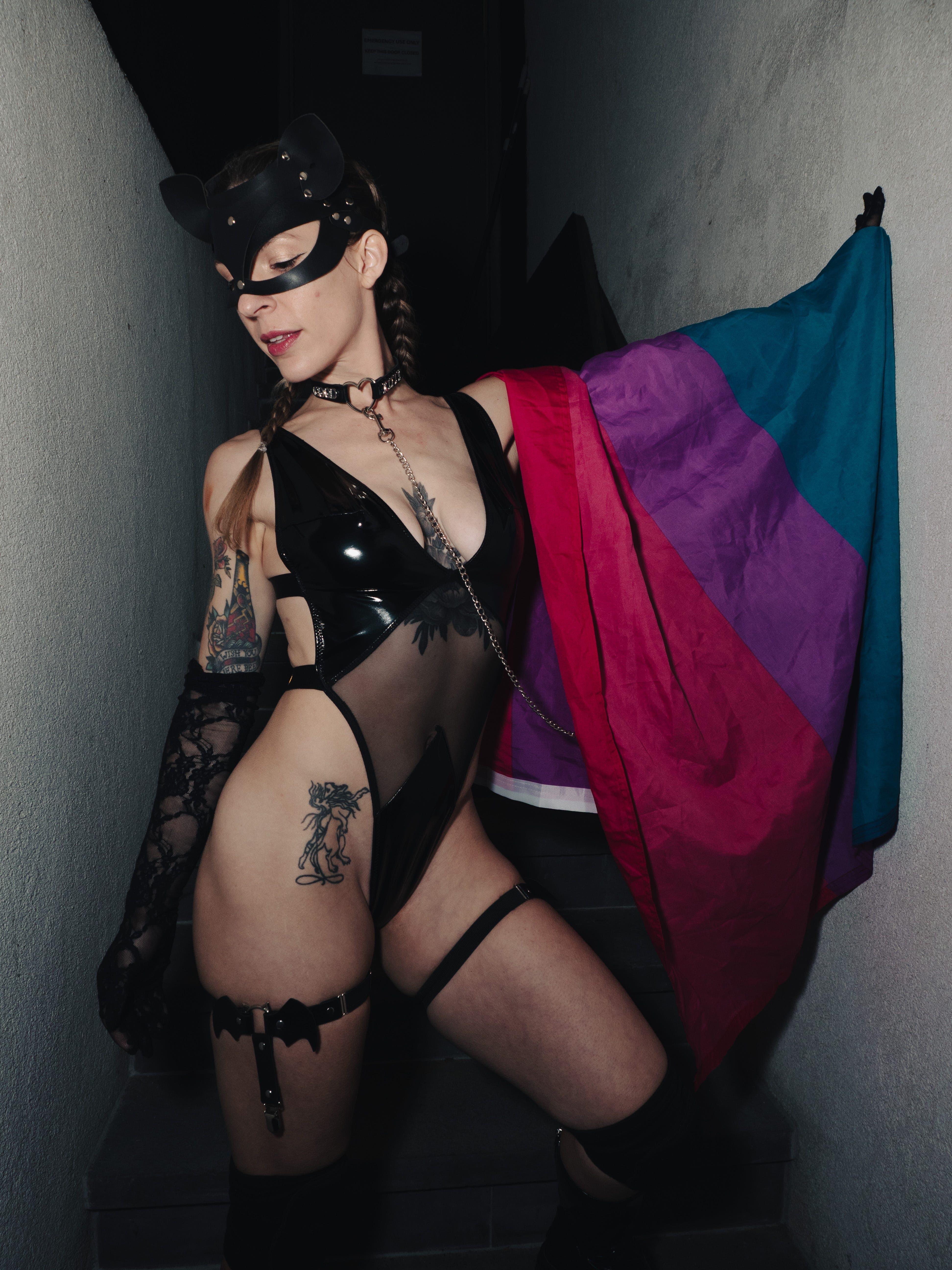
September is Bisexual Visibility Month, and I’m thrilled to announce I’ll be hosting another panel in Chicago - but this time, we’re making it unapologetically bisexual.
This event is in collaboration with my friends at Slut’s Party Chicago, the first party I’ve ever seen that’s curated specifically for the Bi+ community. The community they’ve created is one that’s been absolutely pivotal for my personal growth and healing in countless ways. Performing at their events has reconnected me with my lifelong love of dance, while giving me the confidence to fully and publicly own my sexuality - something that I rarely did prior to being a part of the Slut’s community. Exacerbated by the fact that I didn’t have a community of other bisexuals to connect with, most of my life until my 30’s was spent grappling with internalized biphobia.
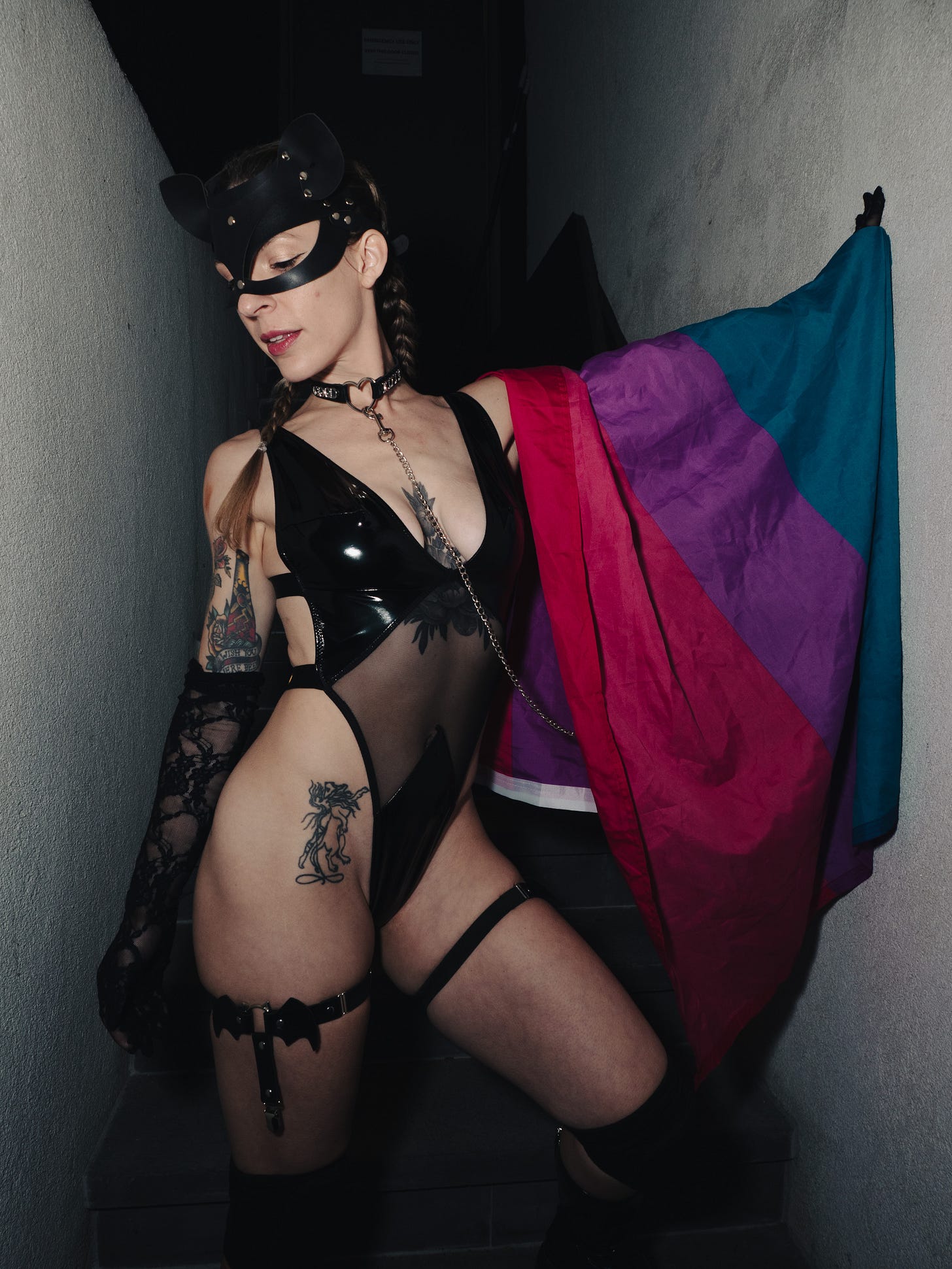
When I first considered that I may be bisexual, I quickly suppressed the thought because of the stigma bisexual people face. I remember hearing the typical tropes about bisexual women from a young age: that we’re promiscuous and can’t be trusted, that we’re actually lesbians who are afraid to “fully” come out, or that we’re actually straight and only claim to be bisexual for male attention. Since I was slut shamed before I even became sexually active, I suppressed the idea that I might be bisexual out of the fear about how others would perceive me. As a teenager, I thought, “the last thing I need is another reason for people to call me a whore”.
As I became older and continued to only date men, anytime I questioned my sexuality, I experienced an overwhelming sense of imposter syndrome. Whenever someone I knew came out as anything other than straight in adulthood, it seemed like my friends (at the time) used the person’s lack of same sex relationships to invalidate the person’s sexual orientation all together. I internalized this, too, and felt like my lack of experience was a reflection of my sexuality itself. Anytime I opened up my dating apps to match with women, I was aware of how lesbians often view bisexual women, too. Most women didn’t want to be my “first” or an “experiment”, because they assumed I’d end up dating a man anyway. I quickly closed myself off to dating women again, because I too questioned if I was actually bisexual, or just looking to use someone for an experiment.
Unfortunately, harmful rhetoric about the Bi+ community continues to be pervasive among both straight and gay people, most recently demonstrated by an explosion of discourse about bisexuality on social media. While the world continues to argue about our very existence, bisexual people continue to be the largest population within the LGBTQ community. Visibility is a huge issue for our community because the world assumes our sexuality based on who we’re sleeping with, making representation feel impossible if you only have one partner. I personally hope for a future where we no longer assume heterosexuality as default and instead assume all people are bisexual until they come out otherwise.
If you’d like to attend the Bisexual Visibility Panel and Fundraiser for Bisexual Queer Alliance Chicago, tickets can be purchased on Eventbrite here. If you can’t make it and would still like to donate, click this link.
Thanks for reading Freeform Coaching for Conscious Non-Monogamy! This post is public so feel free to share it.
Original Post: Nicole Sonnefeldt

Scan to download
Comments
Join the conversation — create a free account to comment.
Join the conversationLoading comments…