MIND & BODY
5 Things I Learned By Decentering Romance
How an intentional year without dating changed my life - for the better.
How an intentional year without dating changed my life - for the better.

Photo by Kuba Macioszek on Pexels
I’m aware that the idea of a relationship coach avoiding romance and dating might seem a little ironic, and possibly even hypocritical. And if you understand polyamory as a relationship choice rather than an orientation, it may be confusing to hear a person who identifies as poly (me) say that I spent an entire year not dating or pursuing romance on purpose. But the intentional decision to decenter romantic relationships was rooted in my clinical understanding of relationships, and what it takes to maintain healthy ones.
I’ll start by setting the scene - My entire adult romantic life has been a repetition of the same pattern. Last spring, it became devastatingly clear to me that although I’ve been the victim of narcissistic abuse many times, I needed to take responsibility for my part in the repetition of this dynamic. And as a therapist who specialized in working with survivors of narcissistic abuse by happenstance (because the universe brings you the clients you need), I knew that if I continued to date without working through whatever it was that kept me repeating the same pattern, I would never be able to change it.
Many people oversimplify abusive relationships by blaming the victim and wondering “why don’t they just leave?”. But it’s not that simple to leave - because being attracted to inconsistent and abusive partners is just like being addicted to a drug. The intermittent reinforcement - the randomized receipt of positive and negative attention from the abusive partner - creates a reward-seeking loop. It’s the same mechanism that keeps us scrolling through social media even when it makes us feel worse, or continue playing a slot machine despite losing hundreds of dollars. In other words, when the majority of the relationship is unpredictable, it makes the dopamine hit of the small, infrequent positive moments, significantly higher. This makes stopping the behavior - in this instance, continued connection seeking with inconsistent partners - much more difficult than if it were consistent. And the only effective way to stop the addiction is to cut it off from the source, essentially starving your nervous system from these intermittent “rewards”.
That knowledge is what led me intentionally to de-center dating and romance completely in my life for an entire year. I deleted my dating apps. I said yes to every single thing I was invited to and packed my schedule with social time focused on my friendships. I structured my life so that even if I was romantically interested in someone, it would be impossible for me to pursue the relationship based on lack of free time alone. And without focusing on romantic love for the first time in my life, I learned more about love and relationships than ever before. So here are some of the most important things I learned.
Even when I was a kid, I never wanted to get married or have kids. Instead, my dream was to live alone, pursue my creative passions, have a successful career, an active social life, and travel the world. But as I grew into my late 20’s and became surrounded by people my age coupling up and getting married, I began to feel an undeniable pressure that made me question that dream. And when all of my friends were monogamous and prioritized dating, being single felt lonely. I found myself dating because it felt like that’s what I was supposed to do. Losing touch with that younger part of myself kept me invested in unhealthy relationships as my partners dangled the promise of a traditional future - one that I never even wanted - in front of me like a carrot to a horse.
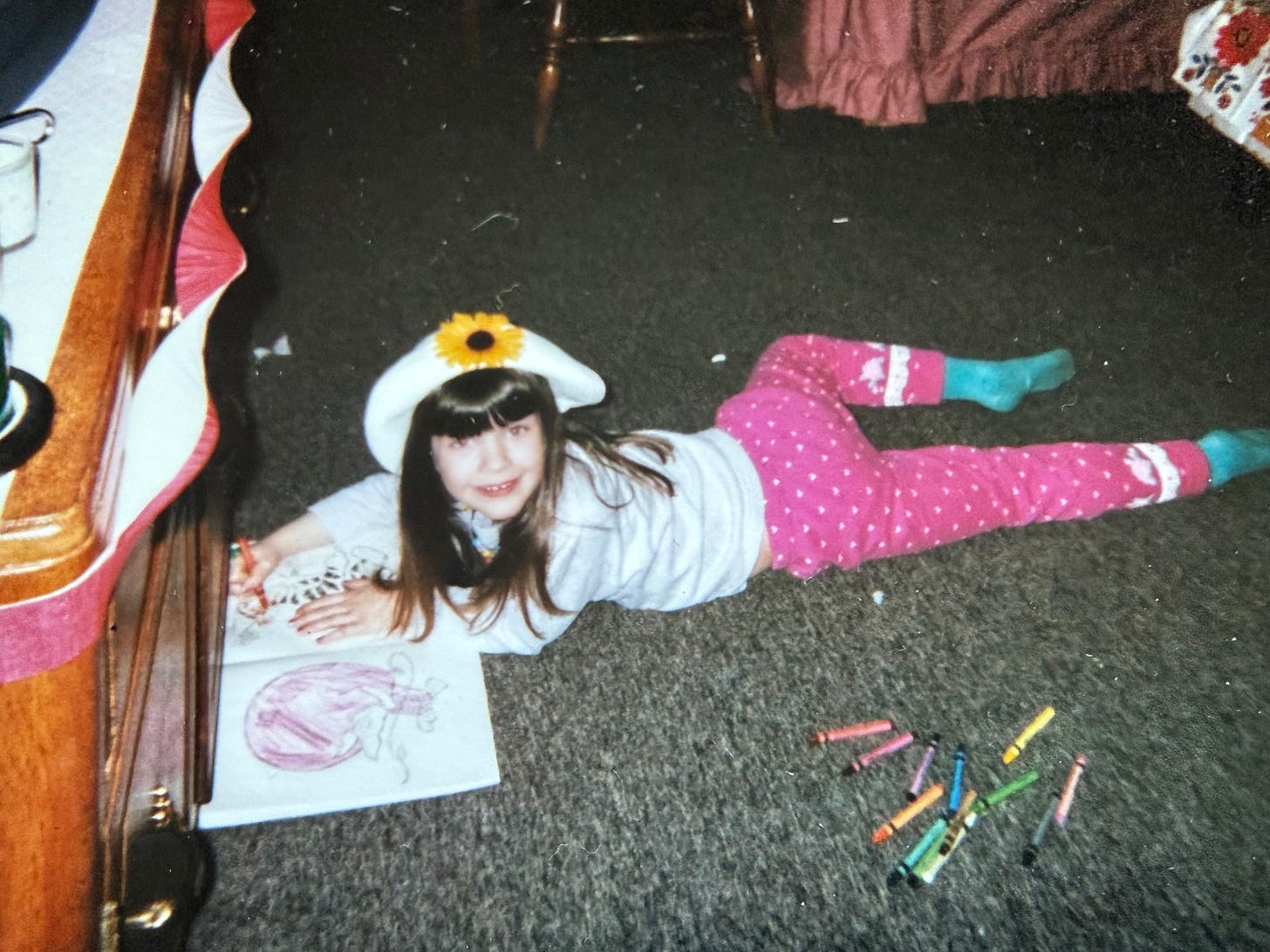
Last May, I wasn’t yet conscious of what an act of rebellion my endeavor to stay single would be. I quickly noticed how frequently the question “Are you seeing anyone?” was one of the first ones friends and family asked me when catching up. And when your response is “No”, people pity you. They say “It’s okay, the right person will come along one day.” Because our culture expects women to prioritize dating men, along with the pursuit of marriage and children - above their hobbies, careers and friendships. As a result, those who are single and childless by choice are told “you’ll change your mind one day”, or even chastised and called selfish.
Even some of my non-monogamous friends seemed confused that I wasn’t dating, despite the fact that they were all in non-traditional relationships themselves. The friends who were confused, however, were either coupled up or trying to be. It makes sense though, because everything in our world is built for couples - not just through religion and culture, but even through our legal structures, like the tax breaks married people and people with children receive, despite the fact that choosing to be unpartnered is a much heavier financial burden. But as I’ve seen in myself, my friends and my clients - prioritizing being in a relationship, as opposed to being in the right relationship, rarely leads to a positive outcome.
As a therapist, I worked with many clients who desperately tried to make their relationships “work” despite their efforts to improve the relationship being one-sided. Many times, they no longer even shared the same values or future goals with their partners, and very often they were victims of emotional abuse. And like my past self, they were usually focused on their partner’s potential rather than the person who they were actually in a relationship with in the present. Many of us function this way because we’re taught that love means staying when things get hard and showing unconditional empathy and forgiveness for our partners when they mess up. It’s true that we must be able to move through challenges with our partners effectively and we can’t just cut them off after one mistake - but empathy and forgiveness without boundaries is dangerous. Unconditional love is not the same as unconditional tolerance.
The reality is that continuing to forgive a repeated pattern of behavior without boundaries does everyone involved a disservice. First, we’re doing our partners a disservice because we are in a relationship with them based on _potentia_l rather than what they can actually give us. We’re staying in the relationship with a glorified version of the person - not the person themselves. And while we continue to focus on the best in others, we often excuse their behavior or even deny it all together, leading to a lack of any necessary accountability. But we must see those that we love for who they are and hold them accountable so they can do better - for themselves and for others.
It can be really difficult to find a balance between empathy and accountability, especially when we know the ins and outs of the person’s past trauma and current stressors. But as I always told my clients - these things may be an explanation, but they’re not an excuse. Whatever their circumstance may be, if you communicate a need or boundary to another adult more than once and they continue to ignore it, that person is making a choice. And by continuing to show unconditional empathy and forgiveness by sticking around, you’re communicating to them that they can continue to disregard your needs. Because if there aren’t going to be real consequences for their behavior, why would they have any reason to change?
Sometimes we get stuck on a relationship’s potential because we remember how good it felt in the beginning. Maybe there was an instant “spark” or that feeling of “butterflies” that convinced us this connection was somehow “meant to be”. We’re often taught that that feeling of “butterflies” is synonymous with love - but somatic psychology tells us that “butterflies” may actually be a signal that something is wrong. The trouble is that anxiety and excitement feel really similar, so if you’re someone who repeatedly enters intimate relationships with unsafe partners, it’s hard to tell the difference. Over time, you become conditioned to interpret your dysregulated nervous system as something positive, so much so that repeating this pattern becomes totally unconscious. But what we’re taught about love makes this discernment difficult.
If you think about popular love songs or romance in movies and on television - the person who is depicted as “in love” is usually experiencing out of control, obsessive thoughts about the other person, unable to think about anything else. Yes - “butterflies” accompanied by feelings of joy can be a sign of something positive. But when they’re accompanied by obsessive thinking and rumination, this is a sign you’re experiencing anxiety, and your nervous system’s “fight or flight” response might even be activated. Unfortunately, our standard narratives about love perpetuate a misunderstanding of what healthy love actually looks and feels like.
As the year went on, I realized my problem wasn’t just a romantic one. About six months into my year without romance, I started to notice the same unhealthy dynamic in my work relationships and friendships. I learned that “love bombing” and “trauma bonding” can happen in any relationship. And if you’re someone who’s intelligent, kind and empathetic, it’s likely that you’ll attract people who want to take advantage of these qualities in every facet of your life. Apparently this is a neurodivergent thing - but I find it physically impossible to be fake or dishonest, so I always assumed everyone else felt this way. Facing the reality that most people actually don’t function like this was devastating. I began to grieve my old beliefs - I believed that because my intentions were always genuine, so were everyone else’s. I believed that like me, other people always mean what they say.
As I grieved, I began to track the similarities between my past colleagues, friends and lovers. Nine months in, I could confidently articulate all of the red flags and manipulation tactics I often fell for in relationships, and identify what it felt like in my body to interact with unsafe people. I finally started to trust myself and feel confident that I could notice these feelings with new connections and protect myself in the future. But when my therapist asked me how I could tell I was safe with someone, I had no idea how to answer. I realized that in the context of romantic relationships, this was something I never felt before. So I looked to my closest, most trusted friendships to determine what safety feels like.
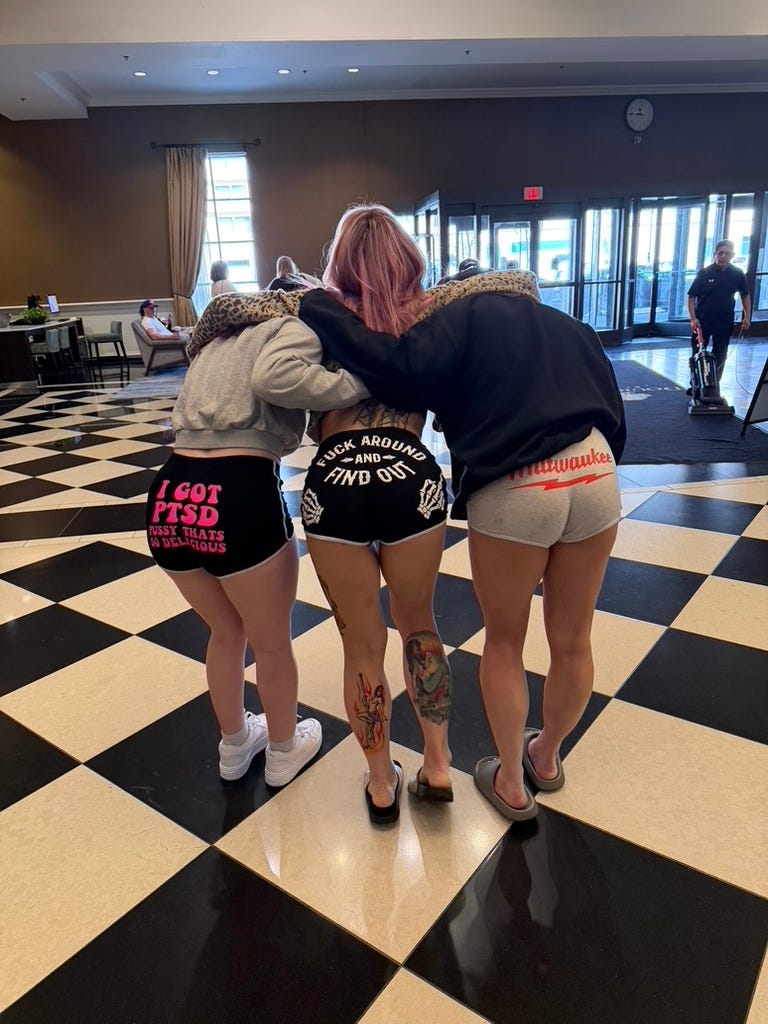
Although I had decentered romance in the traditional sense, the nature of many of my friendships meant I could still receive the type of emotional support and physical affection often reserved for romantic relationships. This is because the friends I am referring to are all non-monogamous in some form. Ethical non-monogamy allows us flexibility in the ways we relate, counter to what’s often deemed “appropriate” in the context of traditional relationship structures. This gives us freedom to let our relationships be what they are, instead of having to fit them in strictly defined boxes or follow socially prescribed rules. So I found that safety feels like freedom - freedom to be honest without retaliation, to be vulnerable without being exploited, and to be my most genuine, unmasked self while feeling supported - whether support means cheering me on or calling me out on my bullshit.
As my year without romance came to a close, I felt like a completely different person. I’ve reconnected with the younger parts of myself and the dreams I had for my future. I no longer feel desperate for connection or fear being alone. As a result, I no longer people-please or struggle to communicate my needs, opinions or capacity. I have much stronger emotional and energetic boundaries, which has been absolutely pivotal in my ability to run my own business.
I’ve learned to use the energy I previously put in relationships - analyzing those who were close to me as a means to empathize with them, while attempting to teach them how to treat me - into my coaching business. And because my business is a true reflection of my identity, it’s increased my confidence in the parts of myself that others historically rejected. This security has helped me move through life with much more confidence and discernment. It’s also forced me to practice what I preach, which isn’t always easy.
I often hear critics of those who practice ethical non-monogamy say that we do it because we can’t be alone with ourselves. We’re just looking for a new warm body to satisfy our endless need for external validation. I’ve also heard criticism that polyamory makes people prioritize romantic relationships - so much so, that they don’t have any friendships. There are unfortunately many people who operate this way in our community. As a solo polyamorist, however, I’ve found the opposite to be true.
Of course, it’s taken me years of work to be able to handle solo polyamory emotionally. Without the traditional milestones and social constructs of the relationship escalator, it can be difficult to feel secure in relationships. I used to question if anyone would even want to be in a serious relationship with me, if I had no desire to escalate to cohabitation or marriage. But now, that’s not even a question I ask. Because my history has shown me that being rejected or abandoned by others isn’t nearly as painful as abandoning myself. Self-abandonment is much more lonely than being single. So I’ve committed to never self-abandoning again, because when I’m true to myself, being alone is actually really nice.
Thanks for reading Freeform Coaching for Conscious Non-Monogamy! This is a free read, so please share if it resonated with you <3
Original Post: Nicole Sonnefeldt

Scan to download
Comments
Join the conversation — create a free account to comment.
Join the conversationLoading comments…