GUIDES
What Is a Nymph? The Mythology Behind the Nymph App
From Greek mythology to a psychiatric weapon to a dating app - the full story of the word 'nymph', what it really means, and why reclaiming it matters.
From Greek mythology to a psychiatric weapon to a dating app - the full story of the word 'nymph', what it really means, and why reclaiming it matters.
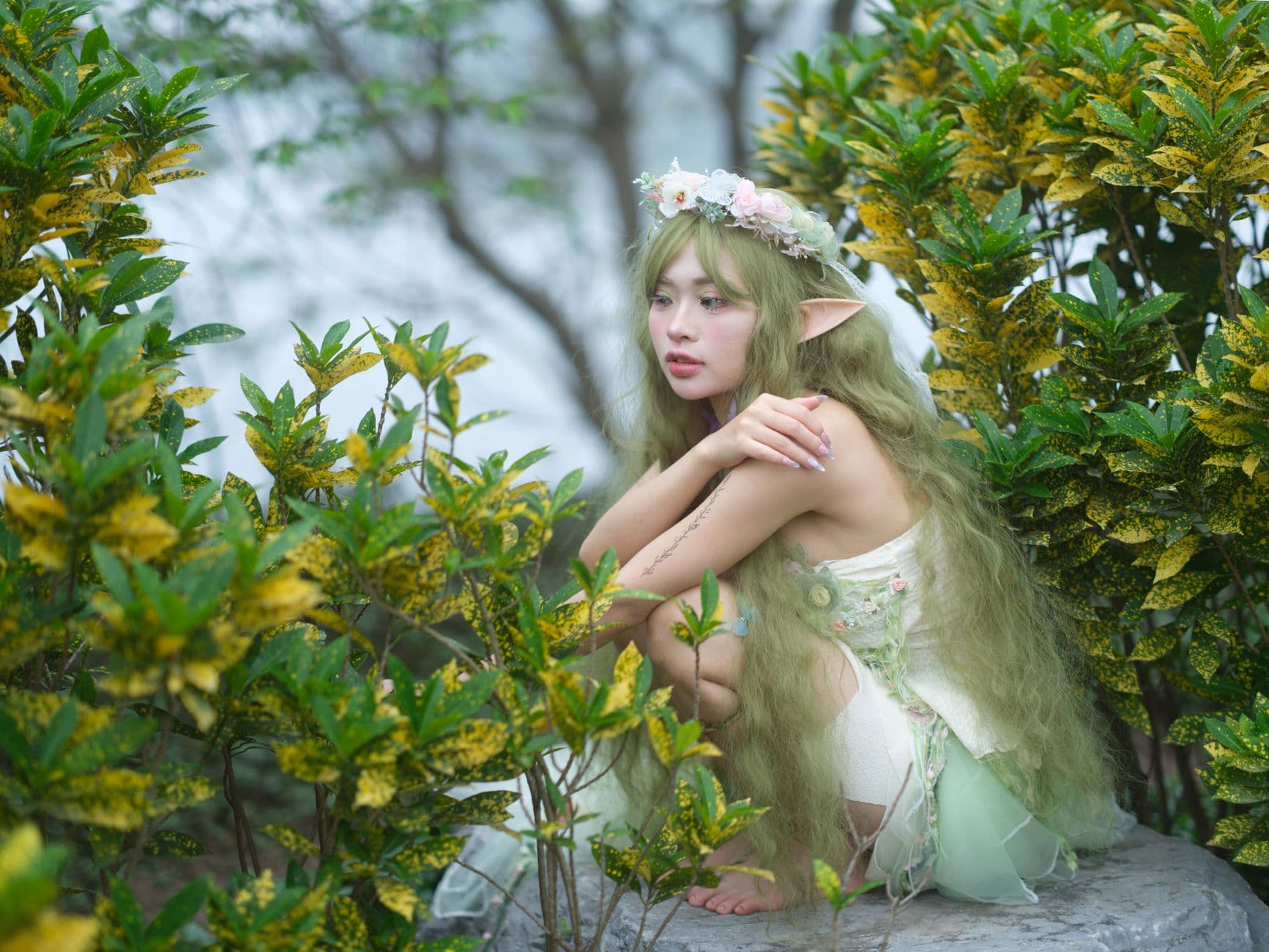
The word nymph has been doing quiet work for a very long time. It shows up in Greek and Roman mythology, in poetry, in biology (it's a stage of insect metamorphosis, which honestly tracks), and now - on your phone, in the App Store, as a dating app for people who like their connections a little less conventional.
So what does nymph meaning actually mean? And why did a company building a space for ethical non-monogamy reach back 3,000 years for its name?
Let's start at the beginning.
In ancient Greek religion and literature, a nymph (nymphe, νύμφη) was a minor divine spirit - not quite a goddess, but not a mortal either. Something in between. They were the soul of a place: a waterfall, a grove of oak trees, a particular stretch of coastline. Where a god ruled over an entire domain, a nymph was a domain. She didn't govern the forest from above; she was woven into it.
The Greeks imagined nymphs as young women - beautiful, free-moving, perpetually associated with nature in its most vibrant, alive state. They appeared in myths as companions to the Olympians (Artemis ran with a retinue of nymphs), as love interests for gods and heroes, and as forces of transformation. The nymph Calypso kept Odysseus on her island for seven years. Echo, cursed to repeat the words of others, was a nymph before she became a sound. Arethusa fled a pursuing river god by transforming into a freshwater spring.
They were, in other words, never quite still. Always in motion, always half-somewhere-else.
Rome adopted the nymph wholesale. The Latin word nympha carried the same meanings: divine, nature-bound, somewhere between human and immortal. Roman nymphs populated fountains and baths, forests and fields. Their mythology was less dramatic than the Greeks' - fewer transformations, more ambient presence - but the feeling was the same: a nymph is the spirit a place has when it's most fully alive.
The Roman word also gave us nuptiae - nuptials, a wedding. The root connection runs through the idea of a veiled bride, of someone crossing a threshold from one state to another. Which, come to think of it, is not a bad metaphor for what non-monogamy can feel like.
The Greeks were thorough. They didn't just have "nature spirits" - they taxonomised them:
What strikes me about this taxonomy is that it maps perfectly onto different relationship styles. The Naiad who knows things. The Dryad who is deeply, specifically attached to this place, this person. The Nereid who shows up for the hard moments. The Oread who is free and almost impossible to tame. If you've ever tried to categorise the people in your polycule, the Greeks got there first.
Strip away the mythology and you're left with a cluster of qualities that nymphs consistently embody across ancient literature:
Freedom. Nymphs aren't bound by the rules that govern gods or mortals. They roam. They choose. When a nymph appears in a myth, she rarely stays where she's put.
Naturalness. Not performance, not artifice - something more like a living alignment with your actual self. A nymph is what she is without apology.
Sensuality. Ancient writers were not subtle about this. Nymphs represent desire in its most embodied, physical form - not shame-laden, not transactional, just present.
Plurality. Nymphs were never singular. They ran in groups, they overlapped with each other's domains, they appeared in constellations rather than alone. There's something almost structurally non-monogamous about the whole category.
Transformation. The nymphs who appear most memorably in mythology are the ones who change - who flee and become rivers, or grieve and become trees, or love and become stars. They're not static beings. They move through states.
All of which is to say: if you were looking for a mythological figure that captures something about freedom, sensuality, plurality, and the refusal to be defined by a single story - you'd end up at the nymph.
Here's where the story takes a darker turn - and why it matters.
For most of Western history, the word nymph kept its mythological connotations: free, wild, nature-bound, embodied. But in the 18th century, medical men - and they were almost exclusively men - invented a new word: nymphomania.
The diagnosis was laid out by the French physician Bienville in a 1771 treatise, La Nymphomanie, translated into English as Nymphomania in 1775, and it spread through European medicine and psychiatry over the century that followed. It described, in the clinical language of the time, "excessive" female sexual desire. Women who wanted sex too often, or with too many people, or on their own terms, could be classified as nymphomaniacs and institutionalised. The treatment options were, by any measure, horrific. The criteria for diagnosis were, by any honest measure, female autonomy.
The nymph - the free-moving, place-rooted, plural being from Greek mythology - had been captured and medicalised. Her defining quality (desire without apology) had been reclassified as pathology. The very word that once described something embodied and alive became the name of a condition to be cured.
This wasn't a fringe phenomenon. Nymphomania sat alongside hysteria, neurasthenia, and erotomania as part of a broader project of using medicine to enforce a very particular vision of how women were supposed to want. It was used to justify the forced institutionalisation of women who were "too" sexual, too independent, too unwilling to confine their desire to one man.
The clinical diagnosis eventually fell out of use. The word didn't. Nymphomaniac became a slur - a way of shaming women for the same behaviour that in men was considered unremarkable or even admirable. A way of pathologising desire that dared to exist outside the approved container.
Which brings us to why reclaiming it feels important.
Here's the brand section, and I'll be honest with you: it's not complicated.
When the people behind this app were deciding what to call a dating platform designed for people who are exploring ethical non-monogamy - people who are navigating open relationships, polyamory, kink, and all the in-between spaces that don't have clean names yet - they kept coming back to this image of the nymph.
Not the clichéd "sexy forest spirit" version (though, honestly, fair enough). The deeper version: a being who is of a place, who moves freely through it, who belongs to no one but is fully present with many. A being associated with the parts of nature that feel most alive - water, trees, mountains, the sea.
The name is also, explicitly, a reclamation.
The word "nymph" was taken from mythology and turned into a diagnosis - a way of pathologising women's desire, of making wanting into something shameful and medicalisable. The Nymph app is a deliberate step back toward the original meaning: desire as something embodied and natural, not something that needs to be treated or contained. The nymph before she was captured. Free-moving, plural, unapologetically alive.
The name felt right because it holds multiple things at once: ancient and digital, mythological and modern, singular (there's one app) and plural (it's for people whose relationships are, by definition, more than one thing at a time). And because the original nymphs - the Greek ones, not the psychiatric invention - were never the problem. They were just themselves, fully.
Also: nymphs have historically been left out of the main story. They're the side characters in someone else's epic. Part of what this app is trying to do is give people whose relationships don't fit the main narrative a place that's actually for them. That felt like a nymph thing to do.
If you're curious about what the app actually offers, there's a full breakdown in the Nymph app guide. And if you're still working out what kind of non-monogamy (if any) fits your life, the apps and communities guide is a good place to orient yourself - or, if you already know you're polyamorous, compare Nymph with the other poly dating apps.
In Greek and Roman mythology, a nymph is a minor divine spirit associated with a specific natural place - a river, spring, tree, mountain, or stretch of sea. Nymphs were imagined as young women, neither fully mortal nor fully divine, who embodied the living quality of their home environment. They appear throughout ancient literature as companions to the gods, love interests in myths, and occasional agents of transformation.
The Greek nymphe (νύμφη) means "bride" or "young woman of marriageable age," but carried the additional sense of a nature spirit or semi-divine being. In English, "nymph" most commonly refers either to these mythological figures or (in biology) to the immature stage of certain insects - a larval form that's not yet what it will become, still in the middle of becoming. Both meanings have an interesting resonance with how identity and relationship styles tend to feel in practice: somewhere between what you were and what you're becoming.
Nymph is a dating app designed for people exploring ethical non-monogamy - including open relationships, polyamory, relationship anarchy, and kink. It's built with the assumption that not everyone is looking for a single forever-partner, and that desire and connection come in more forms than mainstream apps tend to accommodate. You can read a detailed breakdown in the full Nymph app guide.
The word "nymphomania" entered European medicine with the French physician Bienville's 1771 treatise La Nymphomanie (in English from 1775), and 18th- and 19th-century doctors used it to pathologise "excessive" female sexual desire. It has no connection to the original mythological meaning of "nymph" - it was a medical term used primarily to institutionalise and control women who expressed sexual agency outside of socially approved norms. The clinical diagnosis has been discredited and abandoned. The slur persisted. The Nymph app takes the original word back.
The name comes from Greek and Roman mythology - nymphs being spirits associated with freedom, nature, sensuality, and plurality. The founders wanted a name that held those qualities: something that felt ancient and alive, that gestured toward a kind of connection that's embodied rather than transactional, and that acknowledged the plural nature of how many people actually want to love and be loved. The nymph, who has never belonged to a single story, felt like the right mascot for an app that's trying to make space for more than one.
Ready to go deeper? Here's where to start:

Scan to download
Comments
Join the conversation — create a free account to comment.
Join the conversationLoading comments…