JEALOUSY & COMPERSION
When the Tables Turn
What non-monogamy teaches us when we find ourselves on the other side of desire, jealousy, and uncertainty
What non-monogamy teaches us when we find ourselves on the other side of desire, jealousy, and uncertainty
The woman sitting across from me LOVED the freedom of non-monogamy when she was the only one planning fun dates.
But now that her partner was ready to start dating, too… Not so much.
She was genuinely surprised by how hard this whole open relationship thing was that she had pushed so hard for in the first place.
As her anchor partner got excited about someone new for the first time, she could feel her own attachment system lighting up with jolts of jealousy and fear. And she was deeply frustrated that she was now the one who needed all of the reassurance that, quite frankly, she had gotten pretty tired of offering.
Her partner had struggled a lot with insecurity and comparison after the handful of dates she had gone on over the last year, and at the beginning, calmly offering soothing reassurance he needed was actually pretty easy for her. She was deeply committed to him and knew that her interest in other people didn’t diminish that pre-existing love. At some point she started getting frustrated and losing patience with his melt downs, because she just wanted him to believe her when she said that her own feelings for him hadn’t changed, even with the sparkly presence of someone new.
But now the relational positions were shifting, and, somewhat to her horror, she was watching him get giddy about a new connection in her own life. She had been waiting for this day, thinking it would be a relief for her, but she was now dismayed to discover how uncomfortable and vulnerable it felt to need extra care from her partner.
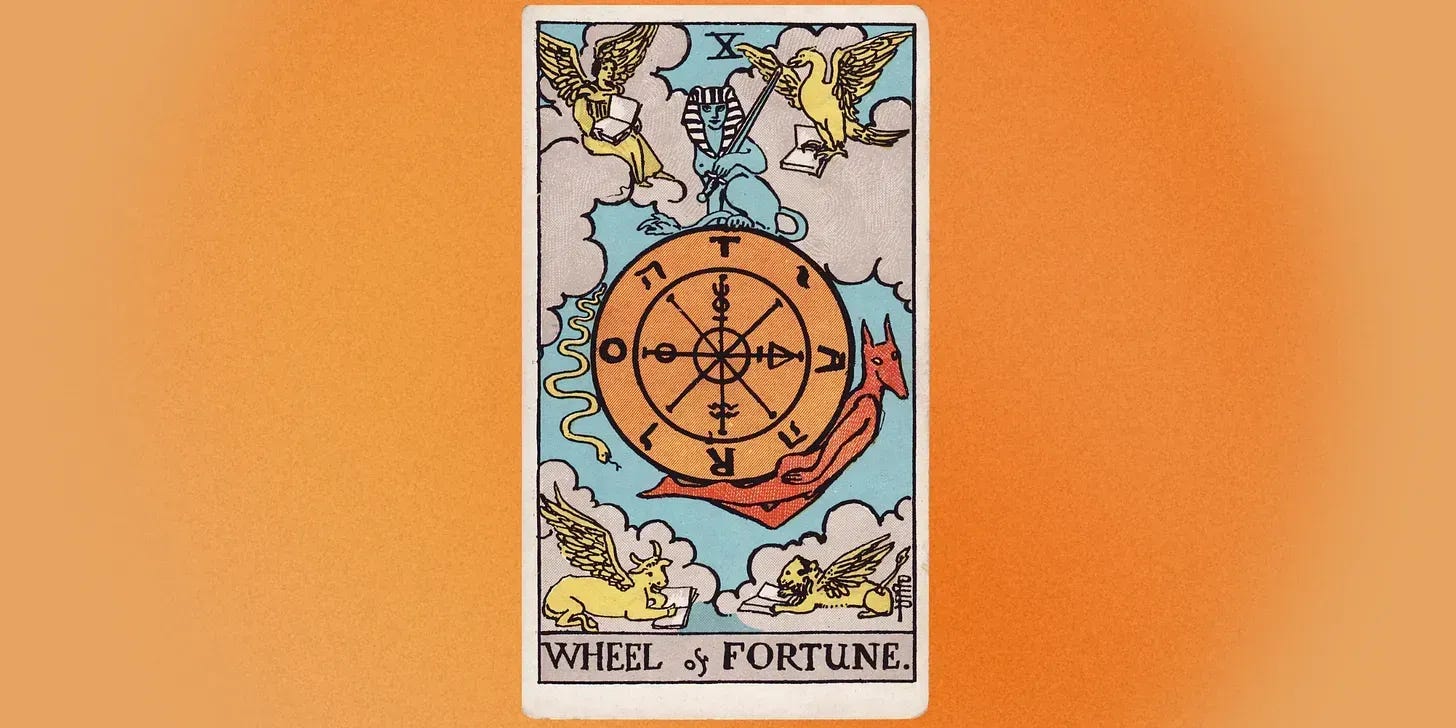
Illustration by Pamela Colman Smith, Wheel of Fortune, Rider–Waite–Smith tarot deck, 1909
I’ve been on both sides of this experience many times, though I’m probably more familiar with needing reassurance than offering it.
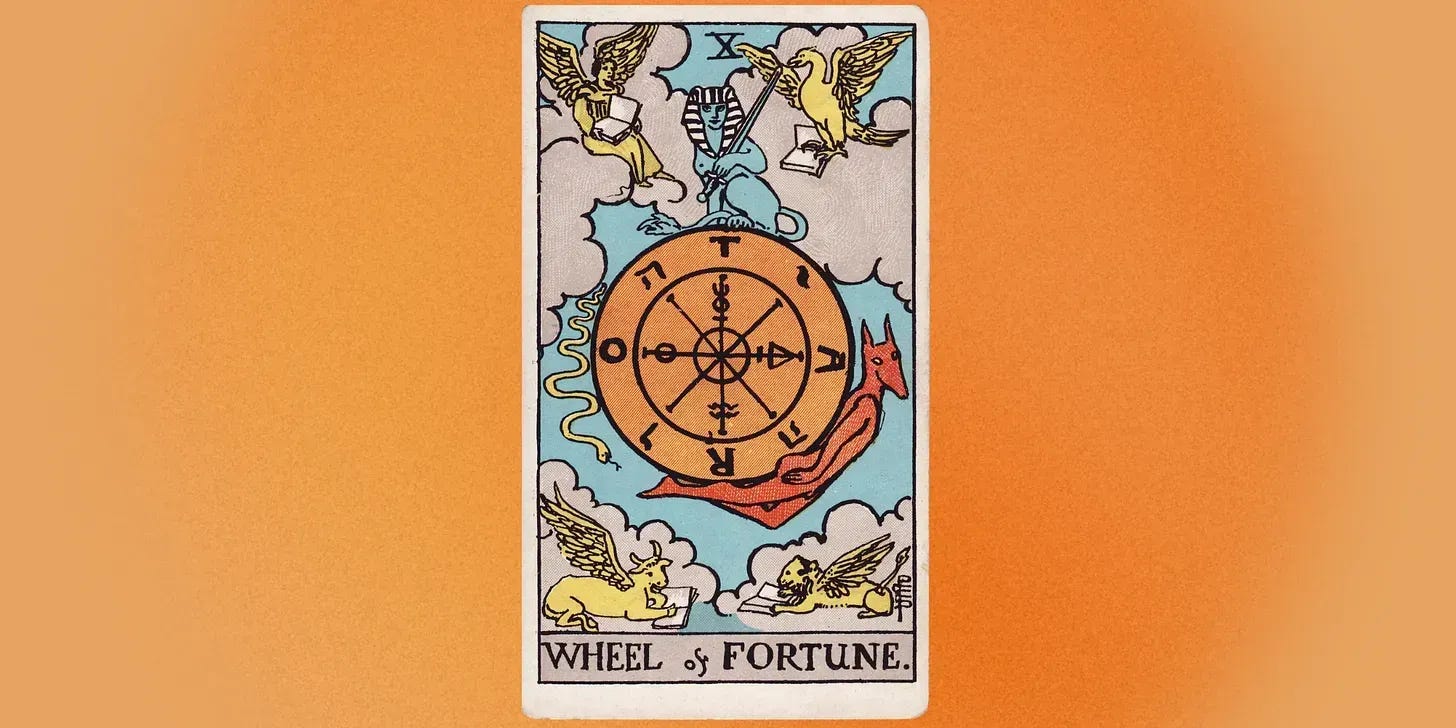
As I think about the way these positions shift, the image I keep thinking of is the Wheel of Fortune tarot card which represents the impermanence of life cycles, the way factors outside our control can change things, and the karmic idea that what goes around comes around.
No position is fixed forever and change is inevitable, which is why I’m wary of letting relational patterns harden into more permanent identities. Whenever I hear someone say, “I’m a jealous person,” I remind them that jealousy is a feeling, and it’s one that will pass, even when it’s a frequent visitor. The same goes for being “the secure one.” Sometimes these labels simply describe who we’ve been in a particular relationship under a particular set of conditions.
And sometimes what we’ve been calling security turns out to contain a surprising amount of accommodation, self-silencing, or getting very good at regulating ourselves back into a yes.
And it can be very disorienting when those conditions change and we suddenly don’t recognize ourselves. The person who thought jealousy just wasn’t really their thing is checking their phone and wanting reassurance. Someone who spent years wondering whether non-monogamy was worth all this difficulty is walking around feeling the glow of a new crush, suddenly aware of the benefits of non-monogamy beyond the sheer terror they’d endured.
Hopefully when the wheel turns, and turn it will… we won’t dwell too long in our moments of “finally! now you know how it feels” schadenfreude. Because when our positions within non-monogamy shift, we sometimes get access to fear, desire, or a need for reassurance that was much harder to understand from the other side.
But there’s another trap here, too: assuming that because we’ve finally occupied a similar position, we now understand what our partner is going through.
We might both have experiences of being jealous and dysregulated that can look quite similar from the outside, while inside, our nervous systems are preparing for completely different catastrophes.
Original Post: Aria Diana

Scan to download
Comments
Join the conversation — create a free account to comment.
Join the conversationLoading comments…