FEATURED
We Can't Build Nourishing Non-Monogamy in Isolation
On loneliness, belonging, and why our relationships need wider webs of care
On loneliness, belonging, and why our relationships need wider webs of care
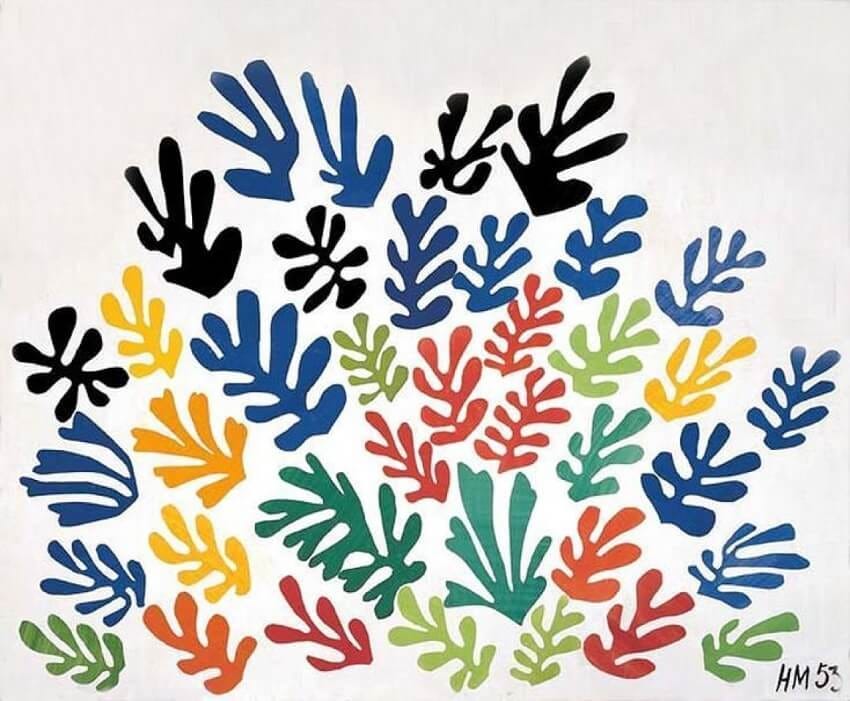
We talk a lot about jealousy and attachment insecurity in non-monogamy. But I think we need to talk more about loneliness.
Because when our romantic partners are our primary sources of connection, care, and belonging, what happens when they turn their attention toward someone else? How much more threatening might that separateness feel when we don’t have our own nourishing friendships? People to eat with, dance with, laugh with, and enjoy life alongside?
I’ve been thinking about this a lot lately.
Maybe it’s the way darkness has started creeping in before 5 PM, or the cold November rain that makes staying home with tea under a blanket feel infinitely more appealing than venturing out to socialize. There’s something about this time of year that makes it especially easy to retreat into our own little worlds.
But loneliness is hardly a seasonal phenomenon.
According to the American Psychological Association’s 2025 Stress in America report, “loneliness may have become a defining feature of life in America,” with more than half of U.S. adults reporting they feel isolated, left out, and lacking companionship often or some of the time.
Nearly 70% say they needed more emotional support than they received in the previous year! Seventy percent! That is a huge number.
Meanwhile, the 2025 World Happiness Report found that roughly one in four Americans ate all their meals alone on a given day in 2023, a 53% increase from two decades earlier.
These statistics describe different dimensions of disconnection, but together they raise some important questions about how we’re living.
We have more ways to communicate than ever before, and we can maintain relationships across continents, find people who understand our identities and experiences, and participate in communities that might otherwise be inaccessible to us.
And yet, so many of us are hungry for more meaningful connection.
The beauty of non-monogamy is that it invites us to question assumptions about how we structure our relationships. When we move away from monogamy, the nuclear family, and the relationship escalator as our default scripts, we can begin imagining a world where intimacy, care, and belonging are cultivated across a wider network of relationships, friendships, and chosen family.
But the more people I meet who are practicing non-monogamy, the more I notice a disconnect between our beautiful, sometimes utopian visions for how we want to live and the reality of trying to build those lives.
I want to be clear that I don’t see this as a personal failure. We’re trying to cultivate expansive relationship ecosystems under the weight of capitalism, and that can be incredibly difficult when we spend the majority of our waking hours working, commuting, caring for children, or simply trying to keep up with the demands of everyday life.
By the time we have a little breathing room, we may barely have the energy to nurture the relationships we already have, much less dream up and build new ways of relating and belonging.
And this creates a real tension for those of us practicing non-monogamy, because by the time we have space to tend to the emotional complexities of our relationships, we may already be stretched pretty thin.
We’re trying to navigate uncertainty, work through jealousy, honor our partners’ autonomy, and build relationships outside the familiar scripts, often without the wider networks of connection and care that might help sustain us.
And even when we do manage to make time for community, we can find ourselves surrounded by people and still feeling lonely.
We might attend parties, participate in group chats, or go to community events without ever feeling comfortable enough to let our guard down and be fully ourselves.
Because having people around us doesn’t necessarily mean we feel connected to them.
So what actually helps us experience a sense of belonging?
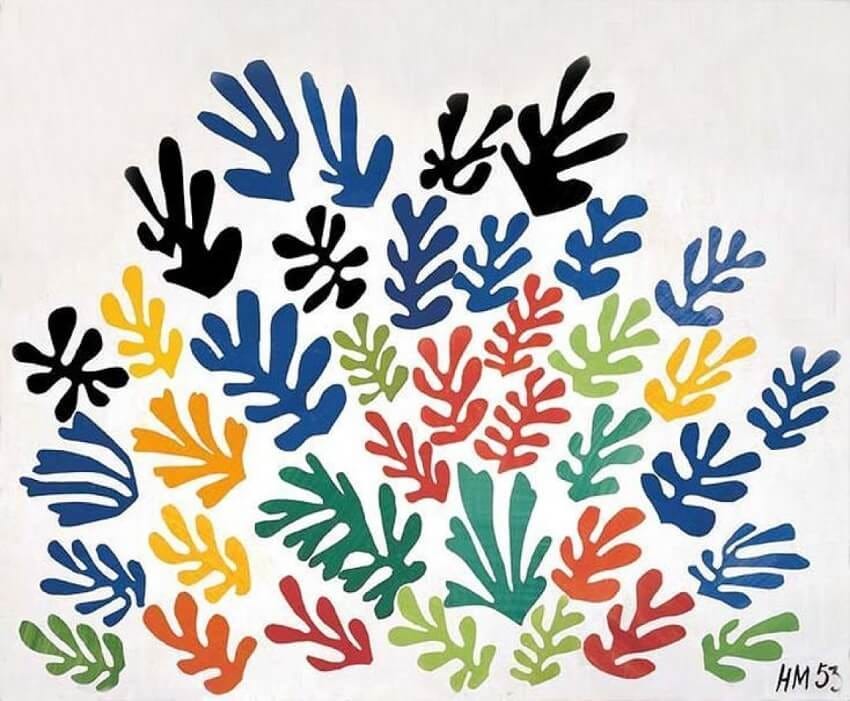
Henri Matisse, The Sheaf (La Gerbe), 1953
Last week, I hosted an online Resourced Relating Practice Lab. We spent 90 minutes exploring Self-energy and our protective parts, practicing somatic awareness, and getting curious about what happens inside us when our partners’ autonomy feels threatening.
We practiced noticing the sensations in our bodies, listening to the parts of us that feel afraid, and meeting those experiences with curiosity and compassion rather than immediately reacting to them.
And then we practiced being witnessed.
We gathered in smaller groups, where people had the opportunity to speak vulnerably about their experiences while others practiced listening with care, without trying to fix, reassure, or offer advice.
At the end of our time together, I asked everyone how they were feeling.
And what stood out was how many comments in the chat mentioned feeling less lonely.
Others expressed gratitude for being in a room with people who understood the particular complexities of non-monogamous relating. And when our 90 minutes were up, people wanted to keep talking. They wanted more time to connect and continue the conversations we’d begun.
I watched as a flurry of phone numbers were exchanged in the chat, which made me so happy.
I love creating spaces where we can be honest about our experiences and feel held by others who get it.
But we hadn’t necessarily gathered to work directly on loneliness.
We’d spent the evening practicing attunement. Learning to listen to ourselves with greater compassion, making space for the parts of us that feel frightened or disconnected, and allowing ourselves to be seen by others.
And perhaps, in doing so, we’d also been practicing belonging.
After working with hundreds of individuals and couples navigating non-monogamy over the past few years, I’ve become increasingly convinced that we need to look beyond individual attachment wounds and relationship insecurities to understand the challenges so many of us are experiencing.
It’s easy to interpret our distress exclusively through the lens of jealousy, attachment insecurity, or our individual psychological histories, without also considering the social conditions in which our relationships exist.
Of course, attachment wounds matter. Our nervous systems carry histories of connection, separation, abandonment, and care.
But our present-day circumstances matter, too.
We’re living within social structures shaped by colonization and capitalism that have disrupted extended kinship networks, separated communities from ancestral lands, and changed how we relate to the living world around us. Our sense of belonging is shaped by so much more than our romantic relationships, including our connections to community, place, and the ecosystems that sustain us.
If we’re exhausted, isolated, and struggling to find meaningful connection outside our romantic relationships, of course the uncertainty and separateness that come with non-monogamy might feel more threatening.
And there’s another dimension to this. When we don’t have nourishing friendships or a wider community to lean on, it’s easy for a new romantic connection to become the center of our social and emotional world.
We might find ourselves looking to that person to meet nearly all our needs for companionship, intimacy, emotional support, and belonging. That’s an enormous amount of pressure to place on any one relationship, especially when we’re trying to cultivate multiple relationships that have room to grow and evolve.
And when we treat every difficult feeling as something to resolve through individual healing or another conversation with our partner, we risk overlooking the wider conditions that might be making these experiences harder to navigate.
Sometimes what we’re experiencing is a very understandable response to having too little support.
I think this is one of the limitations of approaching non-monogamy primarily as a collection of individual relational skills.
We can learn what supports our nervous system resilience, understand our attachment patterns, communicate our needs, and become more differentiated. Important stuff, no doubt.
But we also need actual relationships and communities in which to experience connection, care, and belonging.
And building those relationships requires time, access, energy, and other people who are willing and able to show up.
There’s something powerful about sitting with another person who is genuinely curious about your experience and isn’t waiting for their turn to speak or trying to solve your problem.
Instead, they’re present with you as you find the words for something tender or uncertain.
And there’s something equally powerful about learning to offer that kind of presence and validation to someone else, too.
These are relational skills we can cultivate through practice: attunement, compassionate listening, vulnerability, and emotional presence.
They’re part of how we create relationships where people feel supported enough to bring more of themselves into connection.
When we experience attunement from another person, that connection can also support nervous system regulation. Sometimes another person’s warm presence, curiosity, or compassionate attention helps us feel more grounded.
And my guess is that some of the loneliness people described at the end of our gathering had softened because, for a little while, they didn’t have to hold their experiences alone.
They were surrounded by people who understood, people who were willing to listen and who reminded them, through their presence and attention, that they belonged.
I wonder how different our relationships might feel if this kind of care and connection were a regular part of our lives, something we could count on in our friendships, chosen families, and communities, rather than something we had to seek out when we were already struggling.
And how much more capacity might we have to navigate the emotional complexities of non-monogamy if our cups were being filled regularly through relationships and experiences outside of romance?
Of course, knowing we need more community doesn’t necessarily make it easy to build.
In fact, I think loneliness can sometimes make reaching for connection feel even more vulnerable.
If we’ve spent a long time feeling like we don’t quite belong, or carrying the belief that we’re somehow unlovable or not good enough, putting ourselves in unfamiliar social situations can bring those old wounds right to the surface.
From a parts-work perspective, we might have a younger, more vulnerable part of us that carries those painful beliefs. And we might have protective parts that have learned to keep us away from situations where we could experience rejection again.
Maybe a part of us decides it’s safer not to initiate plans. Or convinces us that everyone already has their people, and there’s no room for us.
Maybe we sign up for a gathering and then find a dozen perfectly reasonable excuses not to go.
These parts are trying to protect us from something that once felt tender, embarrassing, or overwhelming.
And we can meet them with compassion.
We can also get curious about what they might need to feel supported enough to try something different.
We can honor our own pace with vulnerability, gently creating opportunities for connection one small experiment at a time.
If you’ve been longing for more connection, I’d love to invite you to experiment with a little vulnerability this week.
Don’t worry, I’m not going to ask you to reveal your deepest insecurities to a room full of strangers!
Instead, think about someone you’d like to feel a little more connected to.
Maybe it’s a friend you haven’t seen in a while. Someone you’ve met recently and would like to know better. Or someone you already feel close to, but wish you could be a little more honest with.
What’s one small thing you could do to let yourself be a little more seen?
Maybe you tell someone you’ve been missing them.
Maybe you invite someone to spend time together instead of waiting for them to initiate.
Maybe you let a friend know you’re having a hard week, even though a part of you would rather insist that everything’s fine.
Or maybe you tell someone how much you appreciate having them in your life.
Before you reach out, take a moment to check in with your body.
What happens when you imagine making that invitation or saying those words?
Do you feel excitement? Warmth? A little flutter of nervousness?
Does a protective part show up with a convincing list of reasons why this is a terrible idea?
See if you can meet whatever arises with a little curiosity.
What am I afraid might happen if I let myself be seen?
What might help me feel supported enough to take this small risk?
And then, if it feels within your capacity, give it a try.
Notice what happens afterward, too. Whether the person responds enthusiastically, needs to reschedule, or doesn’t respond the way you’d hoped, see if you can offer yourself some kindness.
The practice is in allowing ourselves to reach for connection, without knowing exactly how we’ll be received.
And every time we do, we have an opportunity to build a little more trust in our capacity to navigate the vulnerability of being human together.
If you try this little vulnerability practice, come tell us how it went in our community chat! What did you notice as you reached toward someone? Did any protective parts show up along the way?
And if you have resistance to this practice, you’re welcome to come share what’s making that feel difficult, too. Maybe we can offer one another a little encouragement along the way.
As I continue exploring what it takes to cultivate nourishing non-monogamy, I’m increasingly interested in creating spaces where we can practice building communities of care.
Maybe it’s the Taurus sun & moon in me, but I want to exist in soft, cozy spaces where we can slow down, connect with ourselves, practice being vulnerable with others, and begin building the kinds of communities that sustain us beyond any single romantic relationship.
If you’d like to practice some of this alongside other non-monogamous humans, I have two invitations for you:
December 8, 2026 | Online Resourced Relating Practice Lab
We’ll gather with other kindhearted humans for an evening of connection, compassionate listening, vulnerability, and attunement.
Through guided practices and smaller-group conversations, we’ll explore what belonging feels like in our bodies, what gets in the way of reaching for connection, and what becomes possible when we allow ourselves to be seen and witnessed.
Join us for the December 8 Practice Lab →
Tuesdays, January 12 – February 9, 2027 | 5:00–6:30 PM Pacific | Online
For those longing for a more sustained experience of connection and community, I’m now accepting applications for the January cohort of Resourced Relating!
Over five weeks, we’ll gather with the same group of people for somatic practice, parts work exploration, differentiation, compassionate witnessing, and relational connection.
We’ll have opportunities to get to know one another, explore what comes up in our relationships, and practice new ways of relating together.
Learn more and apply for the January cohort →
The more I support people in navigating the complexities of non-monogamy, the more convinced I become that our capacity to sustain relationships that hold both freedom and connection is deeply intertwined with the wider communities of care we cultivate around us.
And whether we find that connection in a practice circle, around a dinner table, on a walk with a friend, or through a small moment of leaning into vulnerability with someone we care about, I hope we can keep finding ways to reach toward one another.
Original Post: Aria Diana

Scan to download
Comments
Join the conversation — create a free account to comment.
Join the conversationLoading comments…