MIND & BODY
Don't Let Your Protectors Make Your Biggest Relationship Decisions
The difference between reacting from protection and choosing from Self
The difference between reacting from protection and choosing from Self
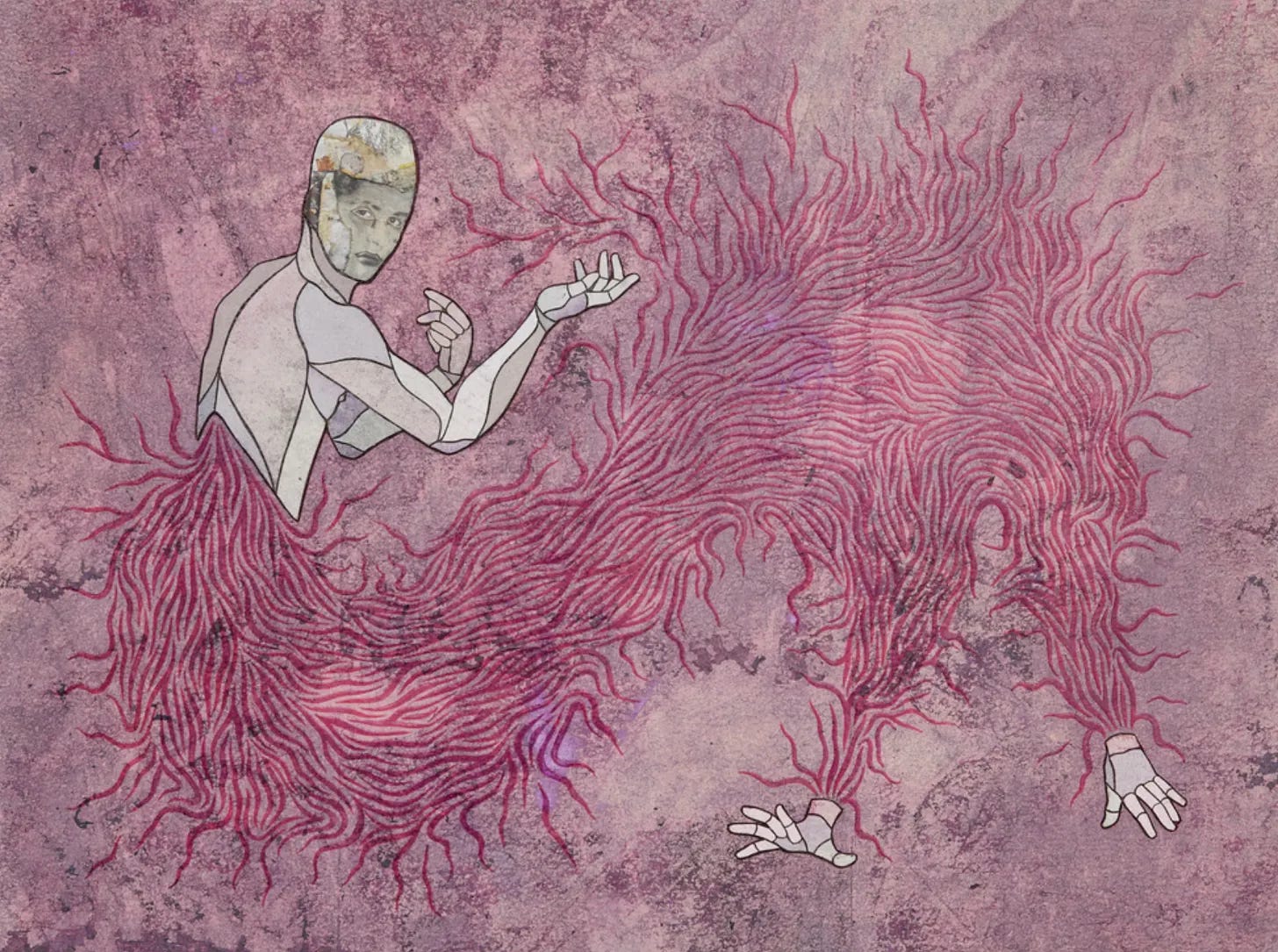
His partner just left for a date, and in the last ten minutes he’s picked up his phone three times. A part of him wants to get a little more reassurance or connection before his partner goes offline and the uncertainty begins.
He’s convinced that if he sends a text, his partner will realize how much he’s hurting and they’ll cancel their date and come back and save him from this feeling that he’s about to get left behind.
Another proud, capable part of him prevents him from hitting send on a message. It feels too vulnerable. Don’t be needy, this part says. Play it cool.
But now that he’s home alone, the urgent part gets louder, and he feels a pressing sense that something needs to be resolved immediately. Which is one of the things about emotional flooding… it makes us feel certain that we know exactly what’s happening and what we need to do about it to make the feelings go away.
I know there have been moments in my own relationships when a part of me has been absolutely certain that if I could just change this one thing, I'd finally feel okay.
Sometimes that fear can get so big that waiting any longer feels almost impossible. We want relief and we want it now.
It can be really hard in the moment to separate what we actually need from the thing we’ve decided will finally make us feel better. We can get attached to the reassurance or the agreement that we think is going to make the feeling go away. But usually what we really need is to know: I still matter to you.
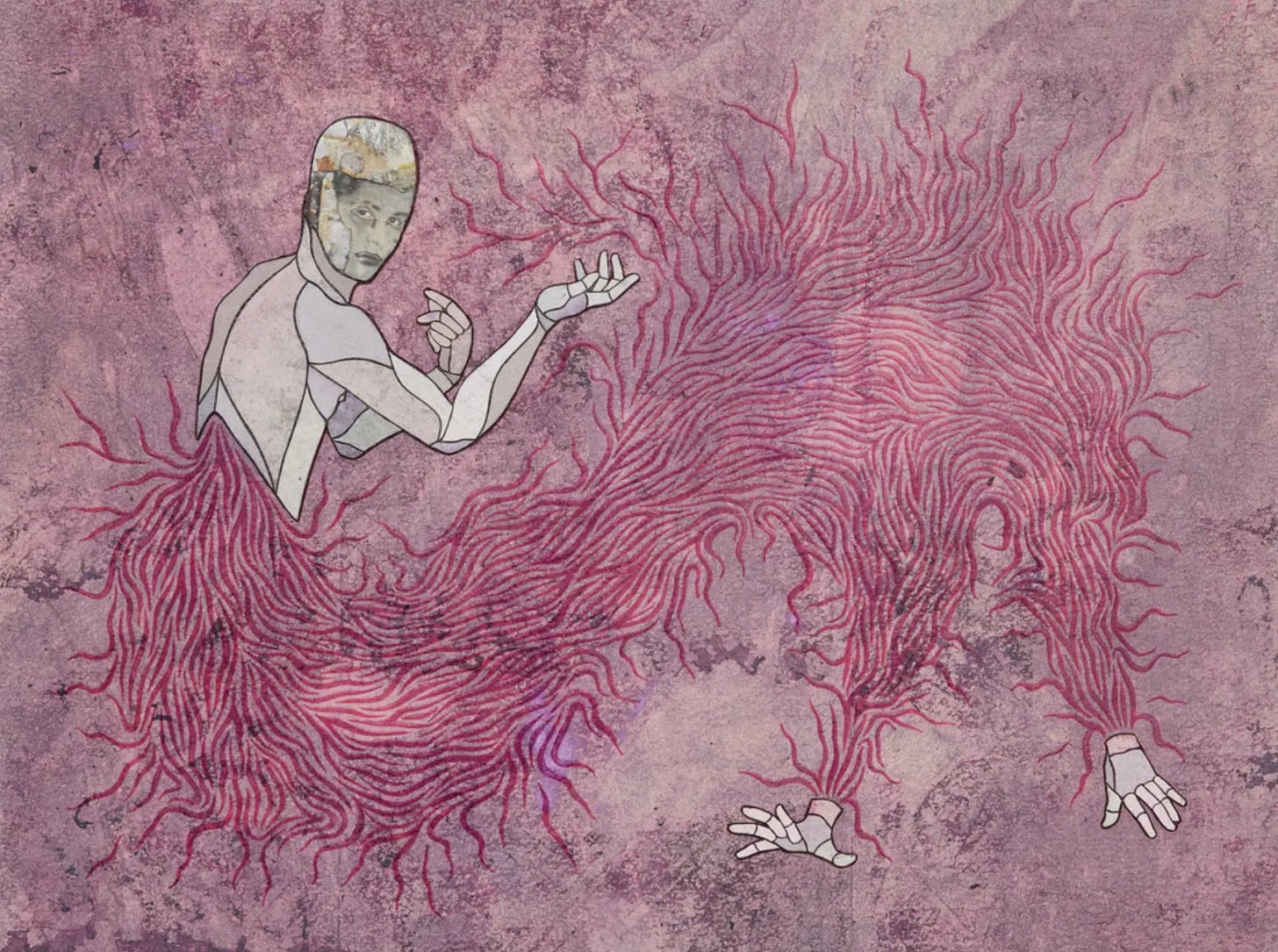
Felipe Baeza, Made Into Being II, 2024
Non-monogamy has a pretty predictable way of pushing on our biggest vulnerabilities and showing us the parts of ourselves we’ve perhaps tried to ignore or avoid. If we have an attachment wound that makes us feel unworthy or insufficient in some way, our culture has taught us to look to our partner to save us from that feeling. They’re supposed to be “the one” who completes us, after all. We hope their unconditional love will finally make it go away.
And non-monogamy complicates that fantasy because it asks us to tolerate a remarkable amount of uncertainty without many of the familiar scripts we grew up with (dating → marriage → growing old together). When we step off the relationship escalator, we don’t necessarily have a map telling us exactly where a relationship is going.
Most of us don’t do especially well with uncertainty to begin with. Then throw in NRE, jealousy, loops of comparison, or the fear of being left behind when someone we love starts bonding with someone new. Of course we can feel incredibly disoriented about where we stand. When we don’t know what’s going to happen, our brains start filling in the blanks and looking for some way to feel safer again.
And when that fear gets big enough, it can be really hard to care about our long-term values or what we said we wanted for our relationships when we were feeling grounded. We want the feeling to stop.
But often the intensity of the reaction doesn’t entirely belong to what’s happening today. The current situation has touched an old bruise, making the reaction feel much bigger than the stimulus.
This is where I’ve found it helpful to slow the whole thing down before making a decision about the relationship.
It takes conscious effort and practice, but if we’re able to pause, we may start to recognize: Oh. I know this voice.
And even that little bit of recognition can create some space between the fear and whatever we do next.
Original Post: Aria Diana

Scan to download
Comments
Join the conversation — create a free account to comment.
Join the conversationLoading comments…